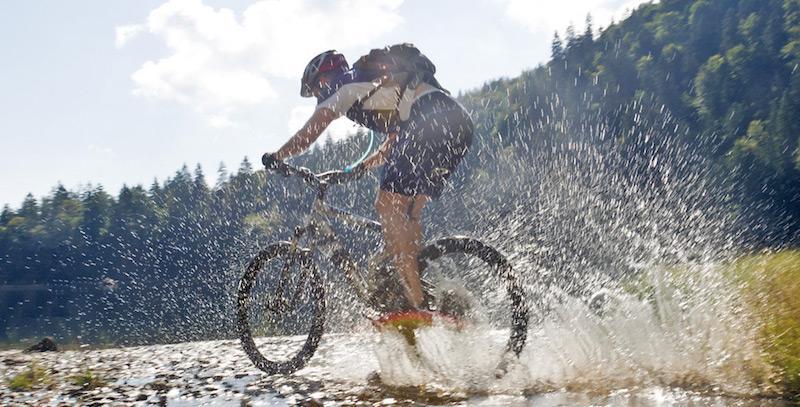
Did you know that the Black Forest was once completely deforested? Or that many mistakes were made during the first large-scale reforestation program, the consequences of which are still visible today? Fortunately, a change in thinking occurred in time. Today, parts of the Black Forest are protected; the region is considered a pioneer in sustainable forestry (according to ForstBW, it regrows 10 m³ of wood per hectare annually) and is ideal for responsible travel.
This very change is what makes the Black Forest so special. Here, you will find a fairy-tale setting of dense forests shrouded in mist, steeped in ancient myths and legends. Yet, the Black Forest also represents modern ways of experiencing the forest and gentle tourism.
In this destination guide, we take you to the Black Forest. We share its stories, showcase sustainable accommodations and unique destinations, and provide inspiration for a trip that blends nature, culture, and the future.
The dark forest that gives birth to stories
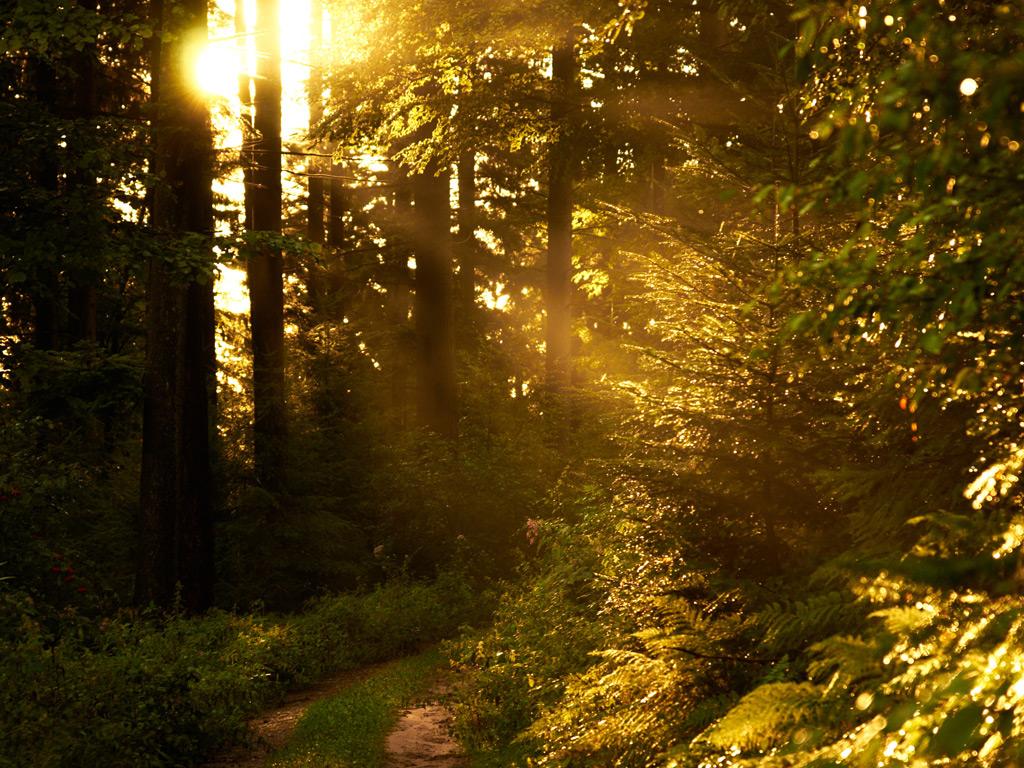
For the Romans, it was a place of the unknown. They called it the “Silva Nigra” – the dark forest. Densely packed fir and spruce trees allowed hardly any light to reach the ground, fog hung between the trunks, and sounds were lost in the thicket. The forest seemed threatening. But that’s precisely why it was so fascinating. Where there is no light, the imagination runs wild.
Darkness has always been a breeding ground for stories. For myths, fairy tales, and legends. Thus, the Black Forest became a projection screen for fears and desires, evil and good spirits, temptation and morality. No wonder so many stories originate here.
My recommendation: Watch The Cold Heart to get in the mood
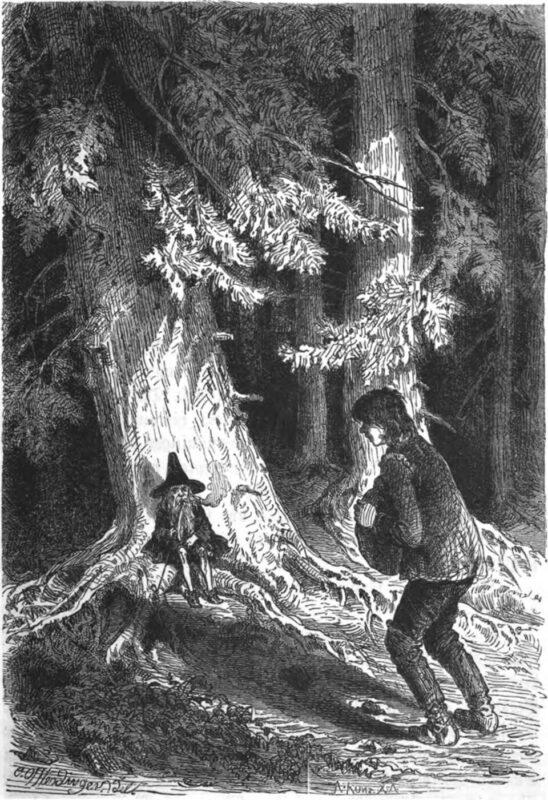
When preparing for a trip to the Black Forest, I don’t start with travel guides, maps, or hotel reservations. I start with stories. One of these stories is the 1950 fairy tale film “The Cold Heart”, based on a story by Wilhelm Hauff.
Set in the Black Forest, the story follows Peter Munk, a poor charcoal burner who trades his heart for wealth and receives a heart of stone in return. It’s a story about greed and blindness that asks what really matters. And it could hardly be set in a more fitting place.
“The Cold Heart” is just one example of the many cinematic portrayals of the Black Forest. From “The Black Forest Queen” to “The Black Forest Clinic,” the forest has repeatedly served as a backdrop for grand emotions, conflicts, and transformations. The fairy tales we all know go even deeper: Little Red Riding Hood, Hansel and Gretel, and Snow White.
Though the Brothers Grimm did not write their stories in the Black Forest, the area is inextricably linked to them in terms of atmosphere. A dark forest that swallows everything—and, at the same time, presents challenges that help people grow.
Would you like to know how I’m further preparing for the Black Forest?
Exactly! While we watch The Cold Heart with the family, we eat—as you might have guessed—a Black Forest cake that we baked beforehand.🙂
________________________________________________________________________________________________________________________________________________________________________________________________
Black Forest cake – a piece of forest history on your plate
The Black Forest cake is much more than just a dessert. It symbolizes abundance, indulgence, and a touch of excess. According to Wikipedia, it is Germany’s most popular cake, and its reputation has spread around the world. I have encountered it in the USA and in Jerusalem as “Black Forest Cake,” each time with a slightly different interpretation, but always with the promise of sumptuous enjoyment.
The original recipe (over 100 years old) is anything but modest, calling for six eggs, a liter of cream, chocolate, cherries, and cherry brandy. This is the exact recipe that SCHWARZWALD PANORAMA in Bad Herrenalb sent us. I recreated the cake almost exactly, only without the alcohol.
________________________________________________________________________________________________________________________________________________________________________________________________
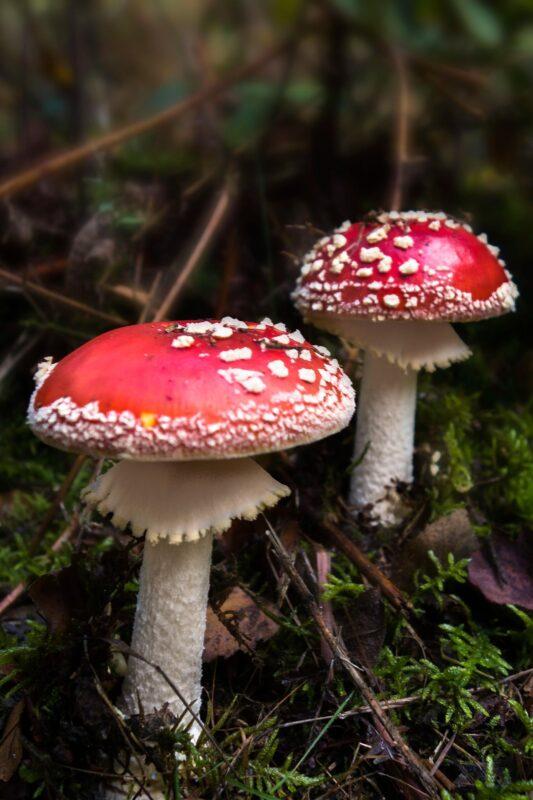
The animal and plant world as a backdrop for a fairy tale
The Black Forest is home to the creatures we know from stories. Deer and stags symbolize gentleness and strength; wolves symbolize danger and freedom; while foxes symbolize cunning. Ravens are considered clever and mysterious, whereas the cuckoo is the forest’s messenger, announcing the time and seasons. These animals are part of an ecosystem, yet they also represent archetypes that have shaped our imagination for centuries.
The richness of the forest — and the moment of crisis
In the fairy tale, Peter Munk eventually realizes where the wealth truly originates. The forest. Michel, the evil Dutchman from the fairy tale, whispers: “Take the wood. Bring it to Holland. There is gold there.” What sounds like a fairy-tale temptation was reality in the Black Forest for a long time.
The Black Forest as an economic factor: When wood turned to gold
Wood had become the most important economic factor in the region by the 18th century at the latest. Iron and glassworks, charcoal kilns, and ore mining consumed enormous quantities of wood: up to 40 cubic meters were needed to produce a single ton of iron. Medium-sized glassworks burned thousands of cubic meters every year. Huge fir trees were tied together to form massive rafts that floated down the Enz, Murg, or Kinzig rivers into the Rhine and all the way to Amsterdam. There, Black Forest fir trees formed the foundation of ships and entire cities. They were known as Dutch fir trees for a long time, and not without reason.
The price for this wealth was high. The Black Forest was cleared. Even cattle were driven into the forest due to a lack of pasture, where they trampled and ate the young trees.
By the end of the 18th century, much of the Black Forest consisted of only grassland and scrubland. In some places, the forest area shrank to barely ten percent. The forest was facing ruin — as were the livelihoods of the people.
The forest on the brink, and a slow shift in mindset
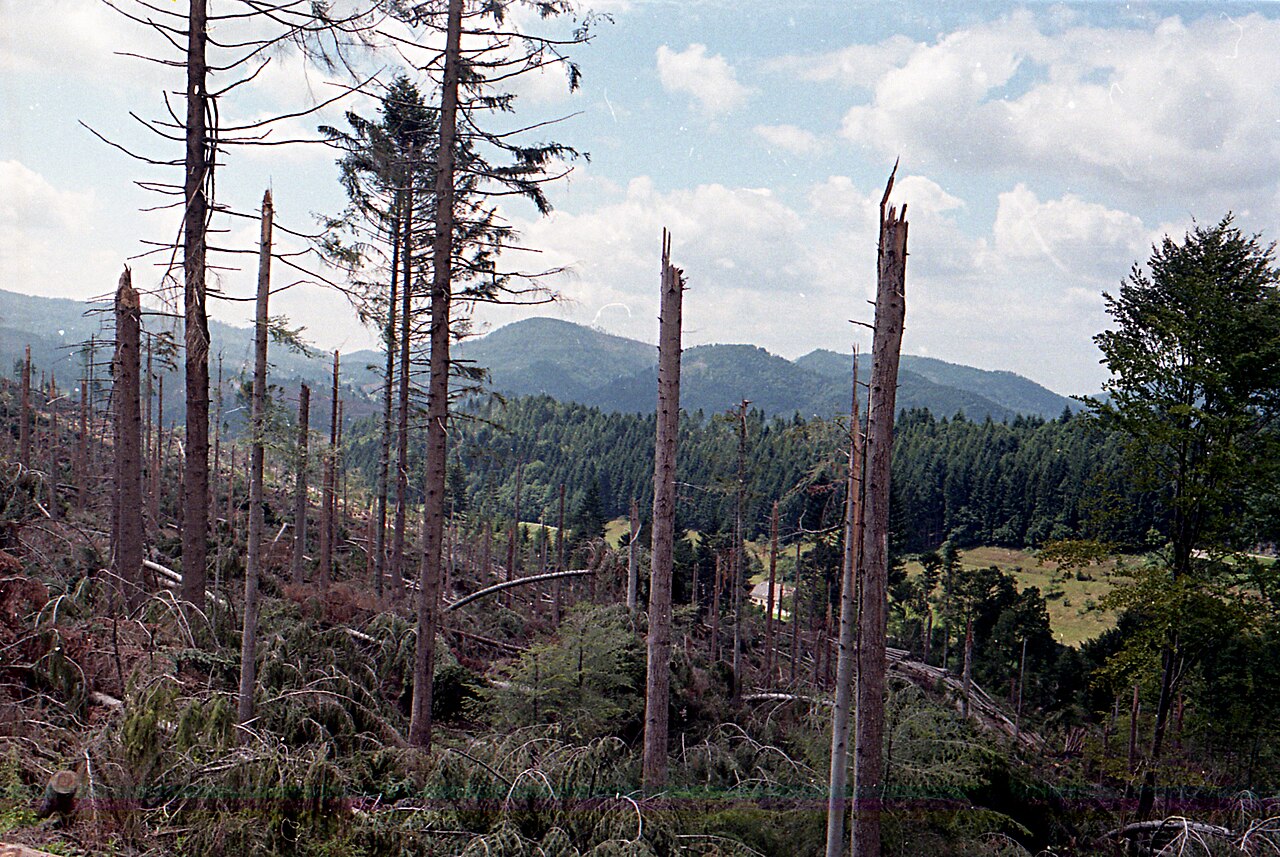
At the beginning of the 19th century, there was a reversal of policy. From then on, timber could only be harvested in a way that ensured the forest’s availability for future generations. Large-scale reforestation programs began. Due to its rapid growth and economic benefits, spruce was the primary choice for a long time. The forest grew, but it became monotonous and vulnerable. When Hurricane Lothar struck in 1999, leaving a trail of devastation in its wake, the vulnerability of this lack of diversity became apparent.
Today, the Black Forest is undergoing another transformation—this time in a more conscious manner. Mixed forests are becoming more important, with beech trees making a particular comeback. This increases the forest’s resistance to drought, wind, and pests while making it more diverse and vibrant. Thus, the circle is complete. The story of a forest that nearly disappeared has given rise to a region that exemplifies the necessity of long-term thinking, protection, and sustainability.
Fun fact: The Black Forest currently consists of 56% spruce, 23% fir, and 9% beech. The remaining 22% consists of other tree species.
Black Forest National Park
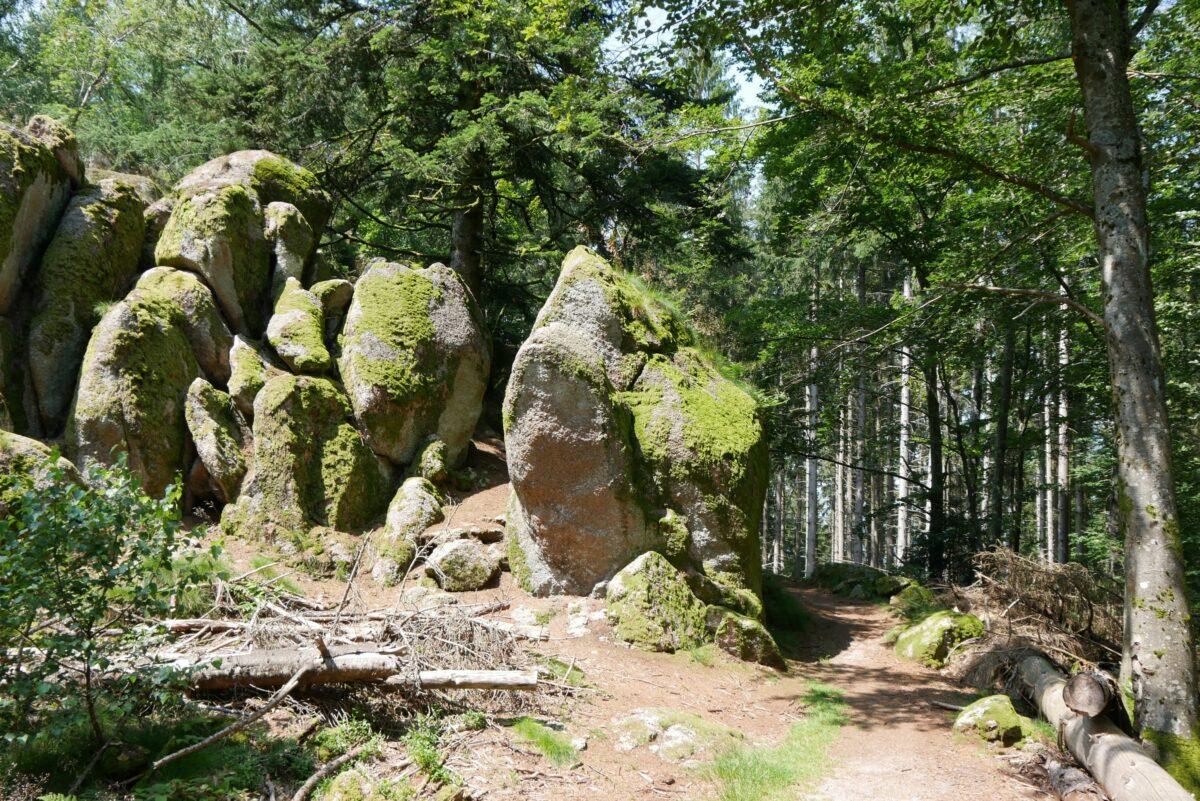
The Black Forest National Park has only existed for around ten years. In 2024, it celebrated its tenth anniversary — and it currently accounts for just over one percent of the total area of the Black Forest. This corresponds to approximately 10,000 hectares. Three-quarters of the park belongs to the core zone, where the forest develops without human intervention. An expansion to over 11,000 hectares is planned for 2026.
Compared to large European national parks — such as Hohe Tauern in the Alps — this is small. All 27 rangers in the young national park are volunteers. This demonstrates that the Black Forest will largely remain under human responsibility in the future.
This is precisely why tourism plays such a crucial role. The way we travel, where we stay, and how we experience nature directly impacts this forest. And that is exactly what matters now.
Travel in the Black Forest with a focus on sustainability
The Black Forest is a popular travel destination for German and international visitors alike. It offers experiences ranging from relaxation to action-packed vacations and culture. To enjoy it sustainably, choose environmentally friendly transportation and accommodations, respect the wildlife and plants, eat local organic products, and buy souvenirs from local artisans.
Bad Herrenalb: A spa town with dual certification for its therapeutic climate
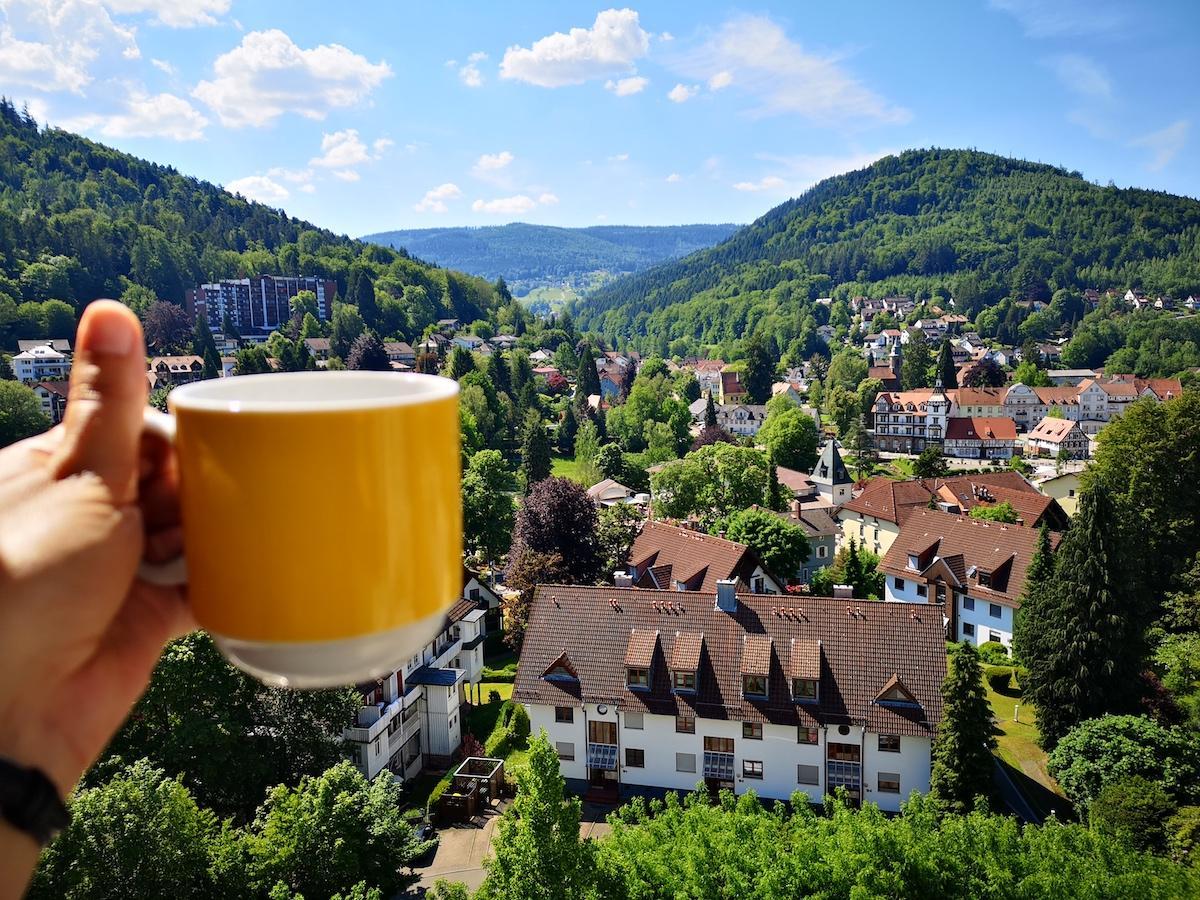
When a town in Germany bears the name “Bad,” (bath) it is no coincidence; rather, it designates state-recognized spa towns and therapeutic baths.
Bad Herrenalb is one such historic spa town with natural thermal springs, healing waters, and proven air quality—officially recognized as a health resort and spa. For decades, people have been coming here to breathe deeply, hike, drink healing waters, and recharge their batteries.
Bad Herrenalb was designated a Fairtrade Town as early as 2012. In addition, the town implements various measures for energy efficiency and regional value creation: buildings have been renovated to improve energy efficiency, the Siebentäler Therme uses a combined heat and power plant, and the town hall in Bernbach is heated with pellets. At the same time, regional agriculture and short supply chains play an important role in the town.
A visible sign of this is the weekly market on Town Hall Square. Here, local producers sell their goods, complemented by many shops that consciously focus on local products.
Experience nature at the climate health resort
Over 150 kilometers of signposted and quality hiking trails await you around Bad Herrenalb, with gentle peaks along the way. You can hike the monastery trail between the ruins of Frauenalb and Herrenalb, walk through the wild forest gorge “Großes Loch,” or explore family-friendly themed trails like the Wildcat Adventure Trail.
As an added bonus, with the KONUS guest card, you can ride buses and trains throughout the Black Forest for free, including direct connections to Karlsruhe.
Spend the night with at hotel SCHWARZWALD PANORAMA with a focus on sustainability
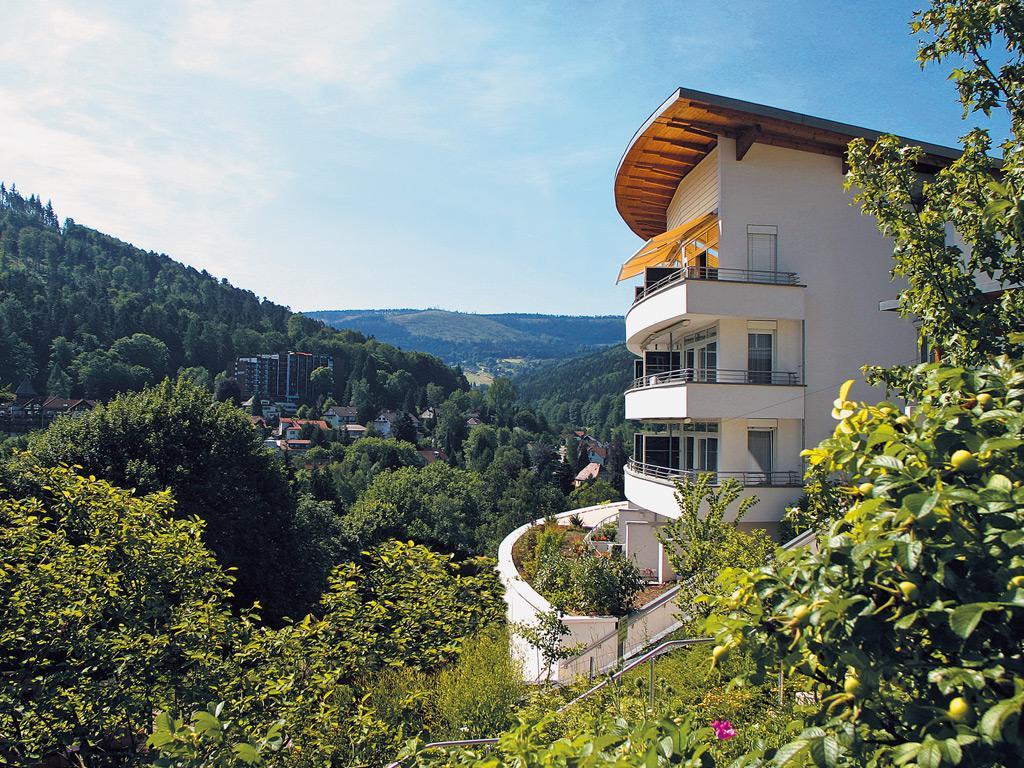
Perched high above the town on the Health Mountain is the SCHWARZWALD PANORAMA, a wellness and health hotel that takes the region’s commitment to sustainability to new heights. All rooms on the newly renovated fourth floor are designed according to the Cradle-to-Cradle® principle. The kitchen in the “La Vie” restaurant is certified organic according to the Bioland Gold Standard, and breakfast is served as a zero-waste buffet. While an expansive wellness area with a panoramic mineral swimming pool, saunas, and relaxation zones offers relaxation with a view.
Furthermore, the hotel’s “Selfness Center” provides activities that cater to the body and mind, including yoga, meditation, Qigong, forest bathing, and guided fasting programs.
Freiburg im Breisgau: a green city with attitude
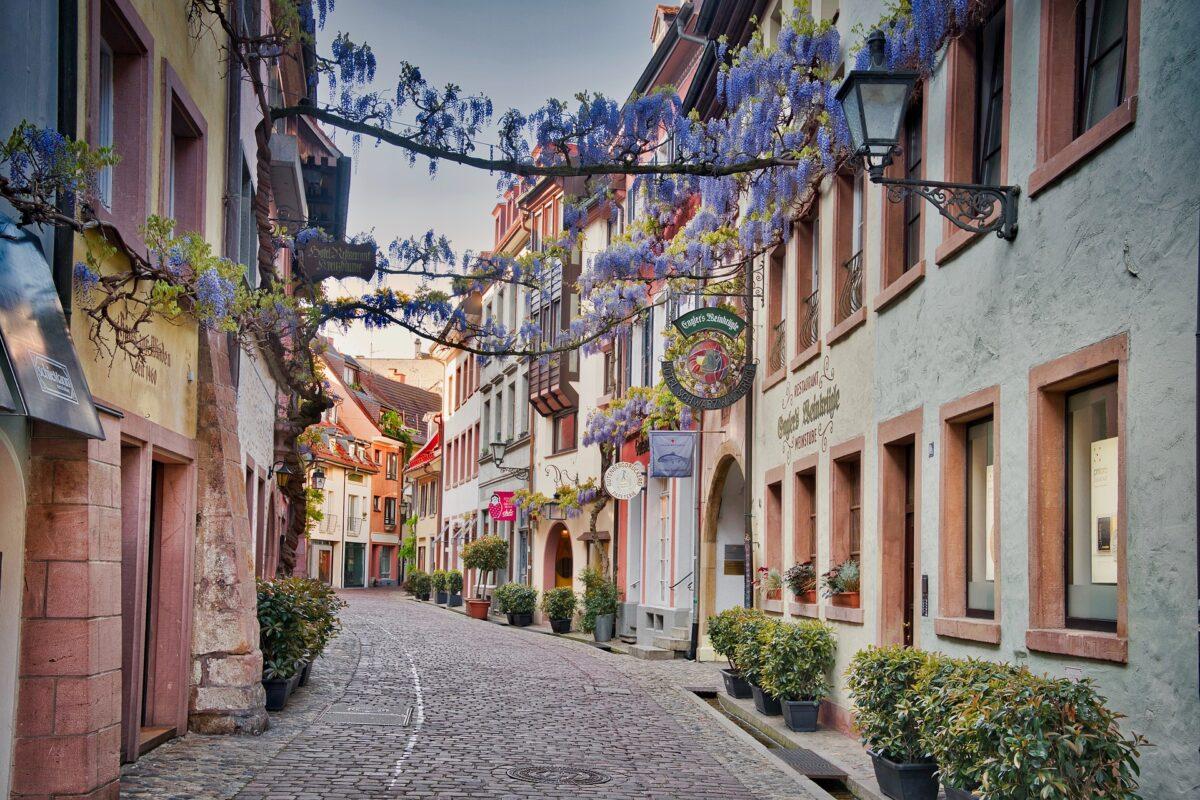
Freiburg is considered one of the greenest cities in Germany for good reason. With its historic cathedral, Bächle canals, and sunny lifestyle, the city developed an early strategy that combines environmental awareness, quality of life, and urban development. Sustainability is an integral part of everyday life in Freiburg, evident in numerous energy projects, well-thought-out mobility concepts, and entire neighborhoods.
The Vauban district: a new approach to urban planning
The former barracks site, now home to the Vauban district, is a showcase for sustainable, socially inclusive and largely car-free living. Solar energy shapes the cityscape, green spaces have replaced parking lots, and community life plays a central role. Two large car parks on the outskirts of the district and direct connections to the tram network mean that cars can be banned (with the exception of loading and unloading) within the district without residents having to sacrifice convenience. Vauban clearly demonstrates how urban spaces can function with a focus on people, nature and the climate.
The Green City Hotel Vauban: not just accommodation, but part of the district
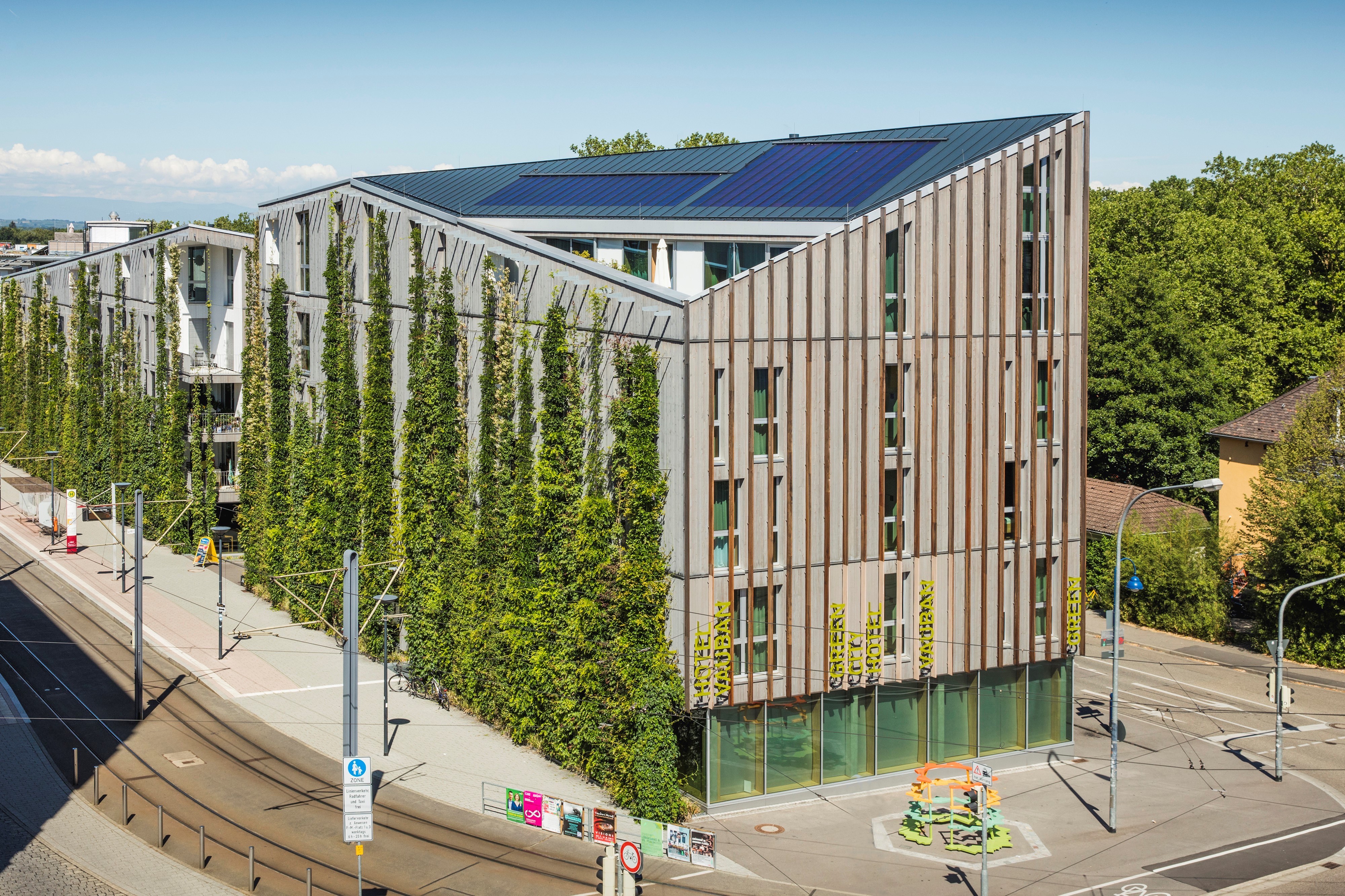
The Green City Hotel Vauban is located in the heart of the district. Just ten minutes from the city centre by tram, it combines peace and relaxation with urban convenience. The green wooden slats on the façade, climbing plants on the exterior walls and minimalist interior made of natural materials allow guests to unwind.
The social approach is particularly striking. The hotel is run by a non-profit organisation and is an integration enterprise, where people with and without disabilities work together. Tolerance, acceptance and social responsibility lie at the heart of the concept, extending to suppliers and partners too.
For more sustainable vacations in the Black Forest – our tips
The Black Forest is not a designated national park, but rather a cultural landscape. This makes the way in which we travel through it all the more important. These tips will help you experience the area’s nature, places and people respectfully, whether you’re visiting from Germany or abroad.
#1 Getting there: A relaxed journey with more climate-conscious travel options
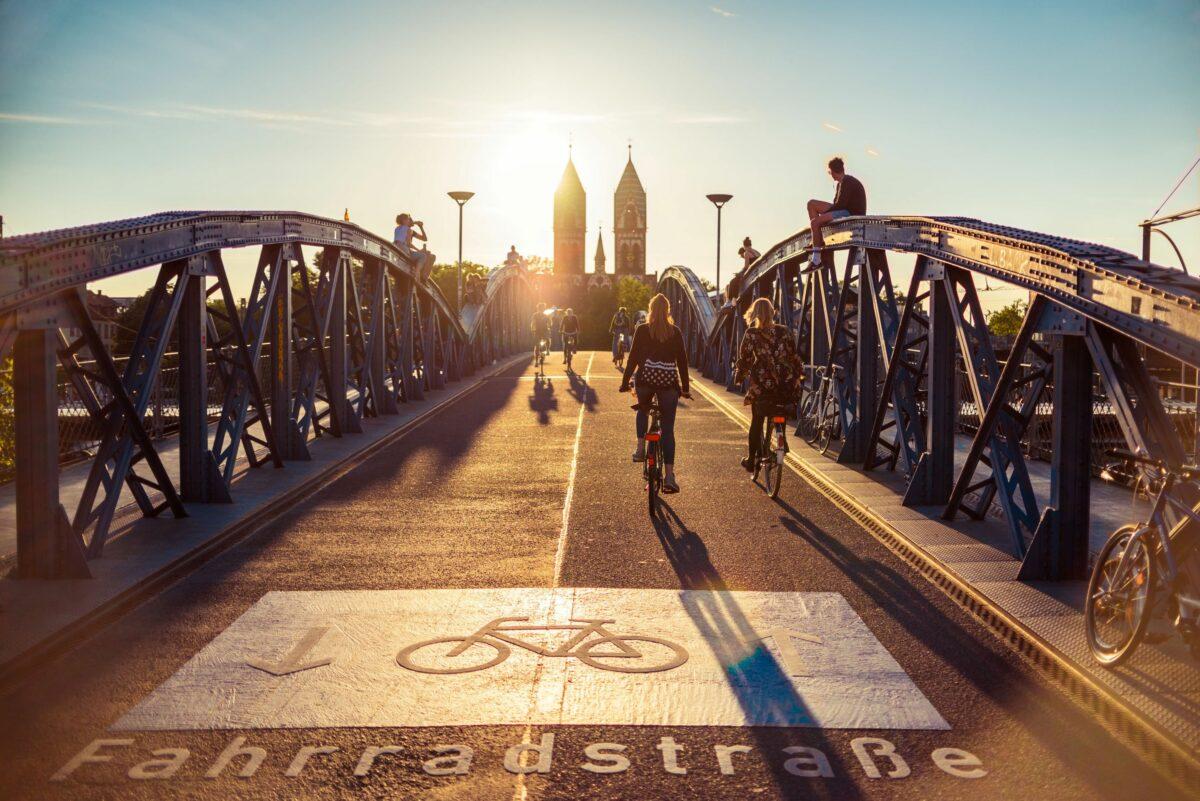
The Black Forest is a great place to explore without a car.
- Arriving by train:
Both Bad Herrenalb and Freiburg have excellent rail connections. Freiburg can be reached directly from many European cities. - KONUS Guest Card:
Overnight guests in many places, including Bad Herrenalb, can use buses and trains throughout the Black Forest region free of charge with this guest card. - Public transportation in Freiburg:
The Green City Hotel Vauban provides guests with a free public transportation ticket during their stay. (Also valid for regional transport.) - Cycling and e-bike holidays:
Ideal for shorter distances and gentle exploration. - Arriving by long-distance bus:
Providers such as FlixBus connect Freiburg with many European cities. This option is often cheaper and more climate-friendly than short-haul flights.
#2 More sustainable accommodation options: Our Green Pearls® recommendations
- SCHWARZWALD PANORAMA | Bad Herrenalb
A sustainable wellness and health hotel featuring circular living rooms, certified organic cuisine, a zero-waste approach, and direct access to nature. - Green City Hotel Vauban | Freiburg im Breisgau
This urban integration hotel is located on the edge of the car-free Vauban district. It has a social focus, innovative architecture, and perfect connections to the city and the Black Forest region.
#3 Conscious travel experiences: Nature and culture in harmony
Black Forest National Park
- 50 km from Bad Herrenalb and 110 km from Freiburg
- Insights into natural forest development with rangers, nature trails, and viewpoints.
- Important to know: The national park makes up only around 1% of the Black Forest area — making every respectful visit all the more valuable
Around Bad Herrenalb:
- Bad Wildbad Treetop Walk:
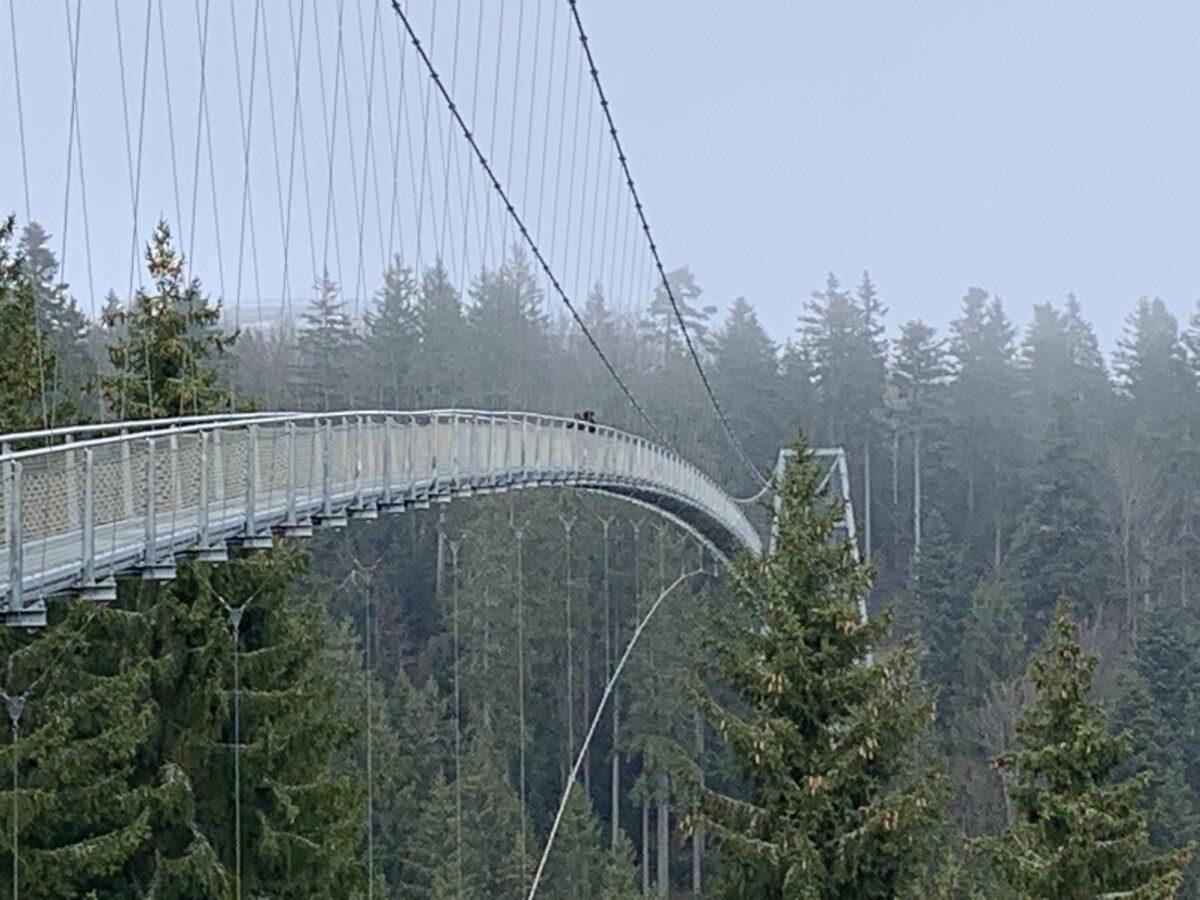
Take a walk through the treetops up to 40 meters high. - Wildline Suspension Bridge:
Suspended over the valley, it offers a spectacular and scenic view. - Pforzheim Gasometer:
Immersive, 360° panoramic installations on various topics, including art and history. - Merkur Baden-Baden:
Take one of Germany’s steepest funicular railways and enjoy panoramic views of the Black Forest. - Baden-Baden:
Culture, thermal baths, spa gardens, and elegant, easy-to-explore architecture — all accessible on foot or by public transportation..
Freiburg & Surrounding Area:
We have created a detailed guide for a more sustainable weekend in Freiburg—including the Old Town, eco-friendly restaurants, the Schauinsland cable car, museums, insider tips from the Green City Hotel Vauban, and suggestions for eco-friendly excursions. Feel free to take a look!
#5 Sustainable cuisine: regional, organic, and full of flavor
Sustainable travel in the Black Forest also means enjoying things consciously. The regional cuisine is down-to-earth and seasonal, and it aligns perfectly with organic and local principles.
At SCHWARZWALD PANORAMA, nearly everything on the plate is organic. The hotel has received Bioland GOLD certification, the association’s highest honor, and sources its ingredients directly from the region whenever possible. The cuisine is characterized by short delivery routes, transparent origins, and a clear focus on quality over quantity.
Sustainability also plays a central role at the Green City Hotel Vauban. Many products come from regional organic farms and social enterprises, and Freiburg itself offers a wide selection of organic markets, zero-waste shops, and sustainable restaurants — ideal for exploring the city through its cuisine.
Typical Black Forest dishes are:
- Black Forest ham
- Maultaschen (Swabian ravioli) with potato salad
- Bibbeleskäs (herb quark)
- Brägele (fried potatoes)
- Fresh trout (nowadays mainly from aquaculture, which is considered more sustainable in Germany.)
Many classics can now also be enjoyed vegan and/or in organic quality.
#5 Tradition lives on: traditional costumes, festivals, and authentic crafts
When you travel to the Black Forest, you experience tradition not in a museum, but in everyday life. Folk and shooting festivals are an integral part of the annual calendar in many places. As a local journalist, I covered many of these festivals and noticed that tradition is not just a folklore program for visitors; it’s part of people’s identity.
Traditional to the Black Forest: the Bollenhut hat
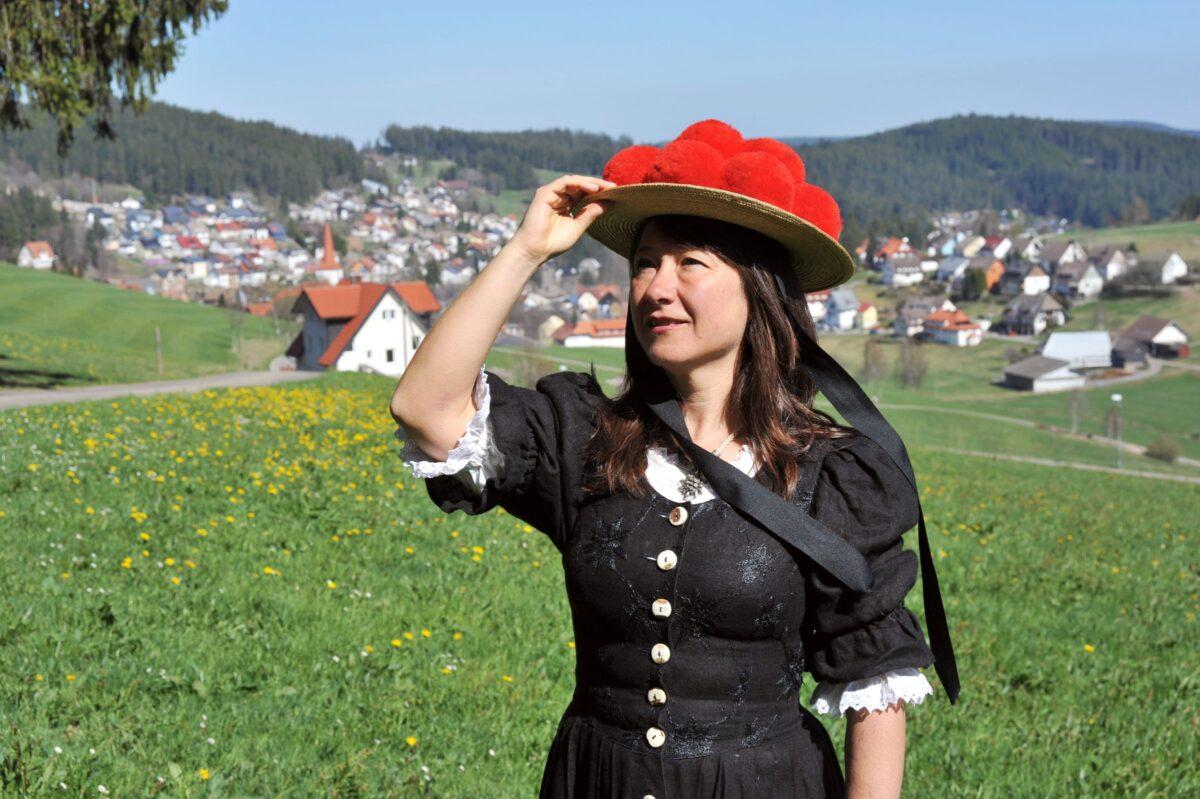
Hardly any other symbol represents the Black Forest more than the Bollenhut. However, what many people don’t know is that it was originally only part of the traditional costume in three villages: Gutach, Kirnbach, and Reichenbach. Today, it has become a global symbol of the region. Its power lies less in historical accuracy than in what it represents: belonging, pride, and recognition. Tradition lives on and evolves.
Traditional crafts as souvenirs
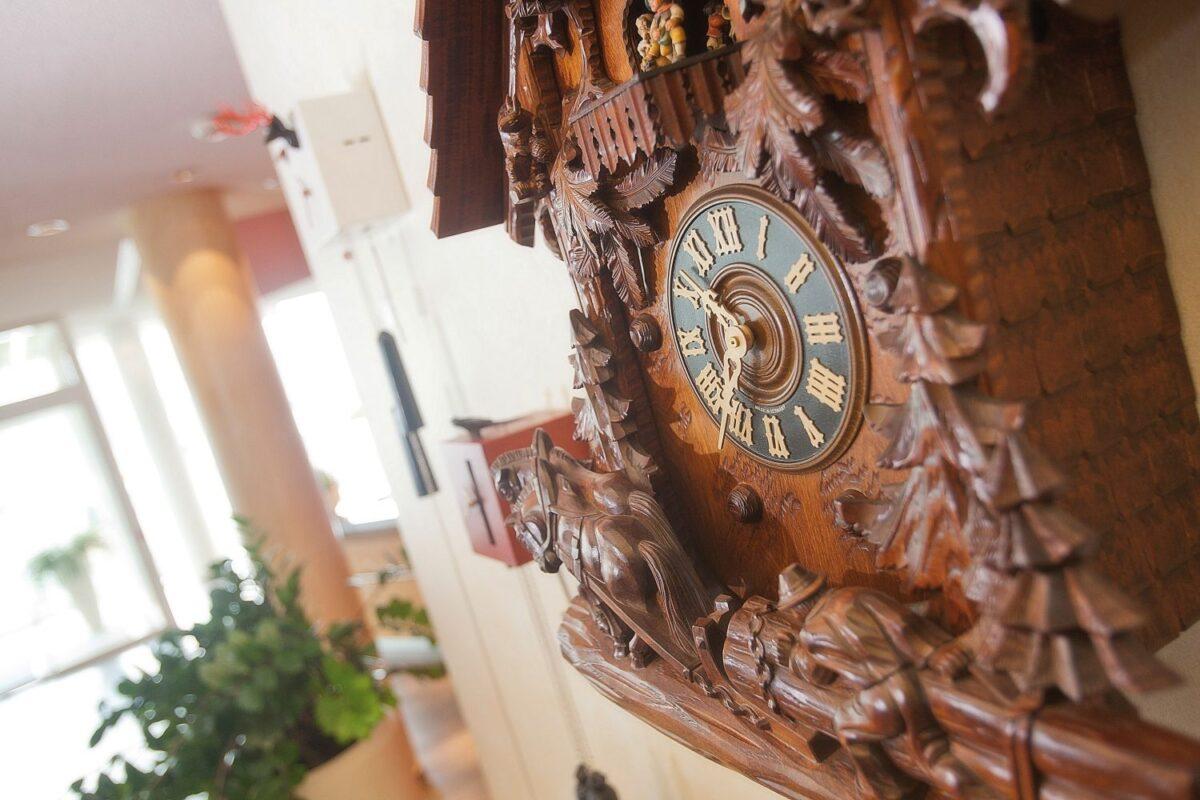
The Black Forest has a long history of cuckoo clocks, wood carvings, and glassblowing. Many workshops now offer tours where you can see the work, skill, and time that goes into each piece. You can often purchase items directly on site, ensuring that they are authentic regional products.
However, a handmade cuckoo clock is not just a souvenir; it’s a purchase for life. For a high-quality model, expect to pay around 700 euros or more. Kitschy? Perhaps. But that is a very personal decision.
If you prefer something smaller, other sustainable souvenirs are available—for example, insect hotels made from regional wood, like those offered in the SCHWARZWALD PANORAMA shop. A souvenir that not only looks beautiful, but also has real added value.
#6 Modern forest rituals: forest bathing & a new closeness to nature
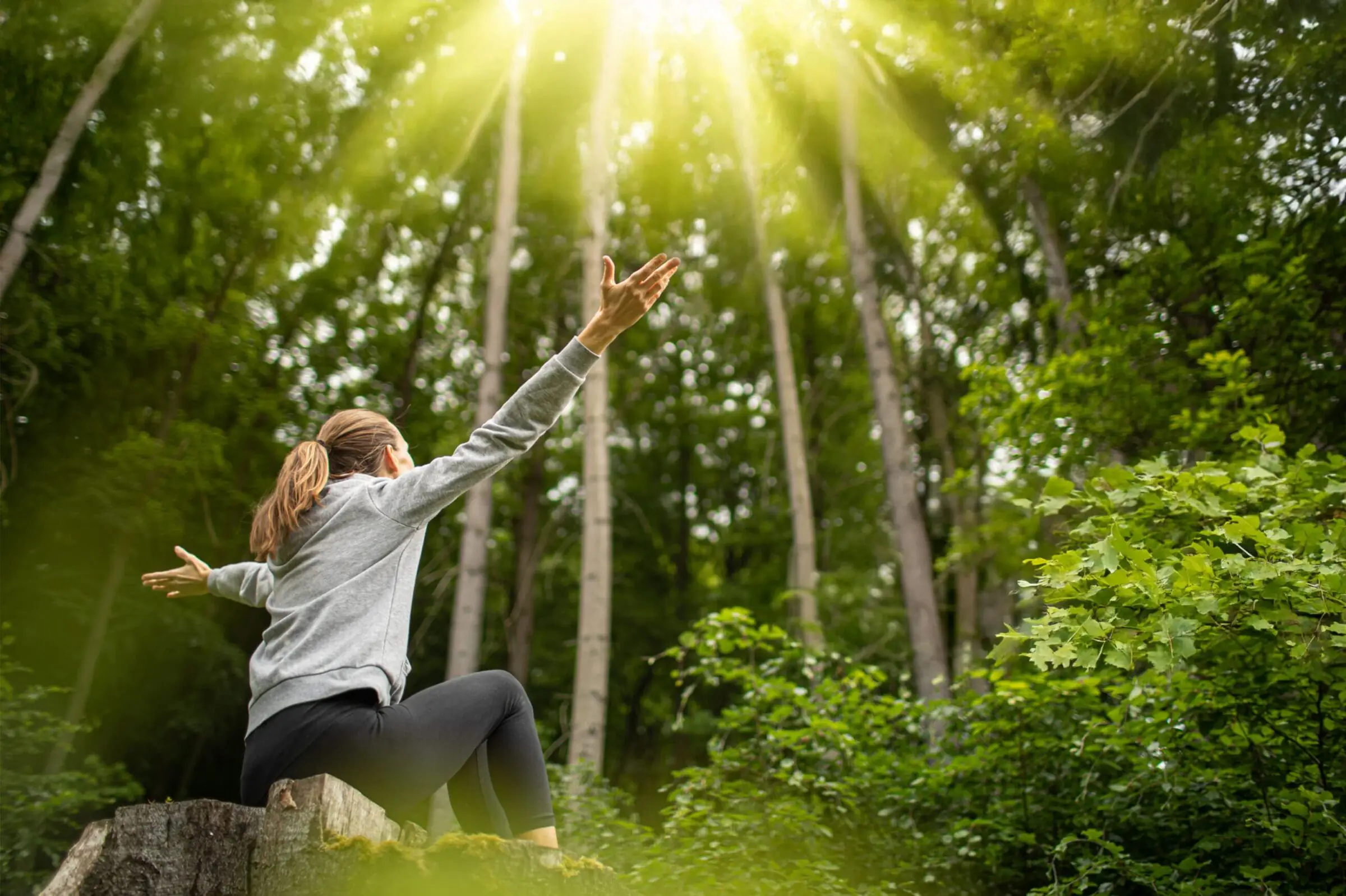
After exploring the stories, traditions, and paths, you will ultimately return to where it all began—the forest itself. Forest bathing, originally known as shinrin-yoku in Japan, takes on a unique meaning here, surrounded by this special forest. Here, it’s not about performance or climbing peaks; it’s about walking slowly, breathing consciously, and feeling with all your senses.
Many hotels and health resorts in the Black Forest offer guided forest bathing, mindfulness walks, and meditation among the trees as a way to experience nature. This may be the oldest and yet most modern way to experience the Black Forest—not as a backdrop, but as a living space that grounds us.
Invitation to the Black Forest
The Black Forest was once dark; then, it was nearly exploited to the point of disappearing. Today, it is a place for reflection and an invitation to take a closer look. A place to slow down. To take responsibility.
Whether you hike through ancient forests, breathe deeply in a spa town, experience Freiburg’s model for a more sustainable future, or find your own way through this region of tradition and modernity, the Black Forest has many stories to tell. Which stories you take with you—or even write yourself—is up to you.
Save this article for your next sustainable vacation in the Black Forest.

 Loading...