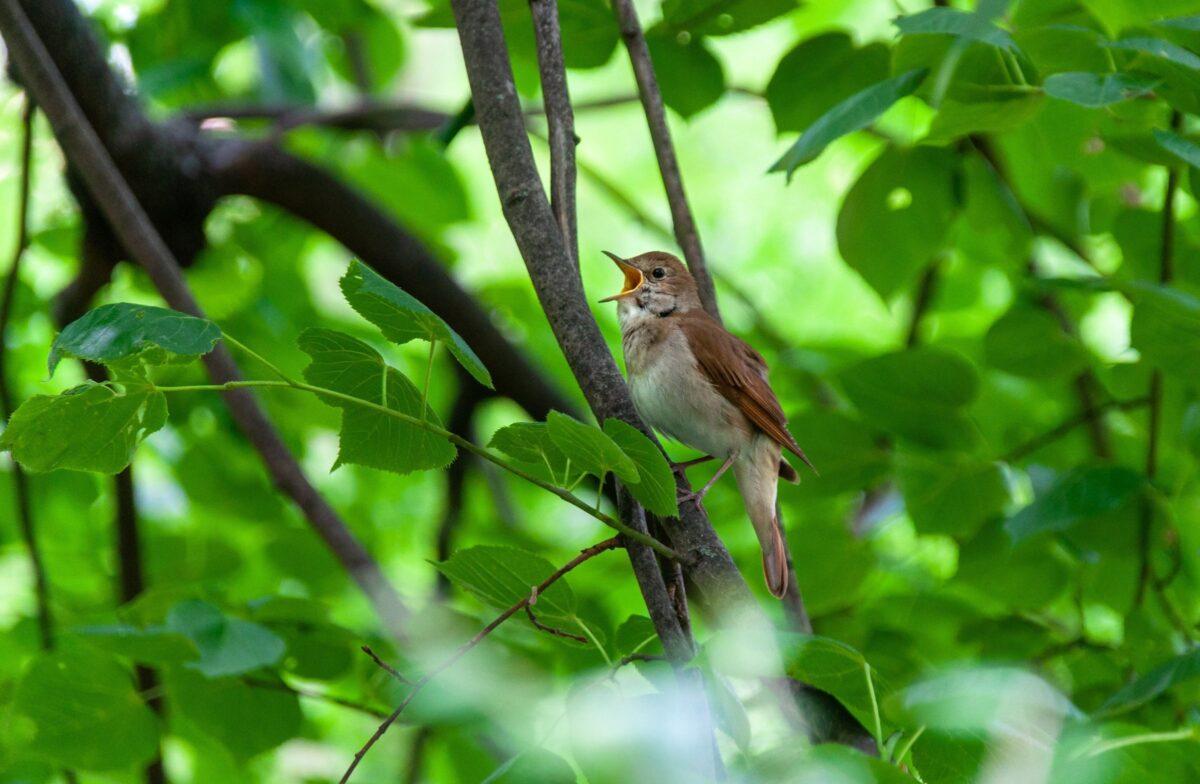
It’s a small sign of progress and a reminder of how sensitive our ecosystems are; the number of nightingales has recently increased in parts of southeastern England. The bird is especially well-known for its melodious song. BILD: Pixabay
According to a recent Guardian report, the number of singing males increased by about 8.9% between 2014 and 2024. In a nature reserve in Kent, for example, the number of male nightingales increased from 15 to 47.
The nightingale population declined by 90%
For a long time, the trend was moving in the opposite direction. Since the 1970s, the nightingale population in the United Kingdom has declined by about 90%. Reasons for this decline include changes in land use, a decline in insects as a food source, and the loss of dense, bushy habitats necessary for nesting and shelter.
Habitat restoration
So why the slight uptick now? Experts attribute this to targeted measures, such as restoring wooded areas and allowing natural regeneration. These habitats provide nightingales with exactly what they need: dense vegetation, places to hide, and plenty of food.
Why is the nightingale so famous?
The nightingale is known for its complex and powerful song, and it plays a significant role in the literature and poetry of many cultures. From Shakespeare to Sufi poetry, the nightingale often symbolizes a lover’s call.
The nightingale’s song can often be heard at night and in the early morning, but the bird itself is rarely seen as it hides in the undergrowth.
Listen to the nightingale’s song here:
Is the nightingale an endangered species worldwide?
The nightingale (Luscinia megarhynchos) primarily breeds in Europe and parts of West Asia and North Africa, spending the winter in West Africa. While some populations are stable, others are in decline in certain regions, depending on habitat and environmental conditions along their migration routes.
- By the way: In this blog post about the decline of insects, we discussed just how important they are with an expert. In it, you’ll also learn how you can help protect them.

 Loading...