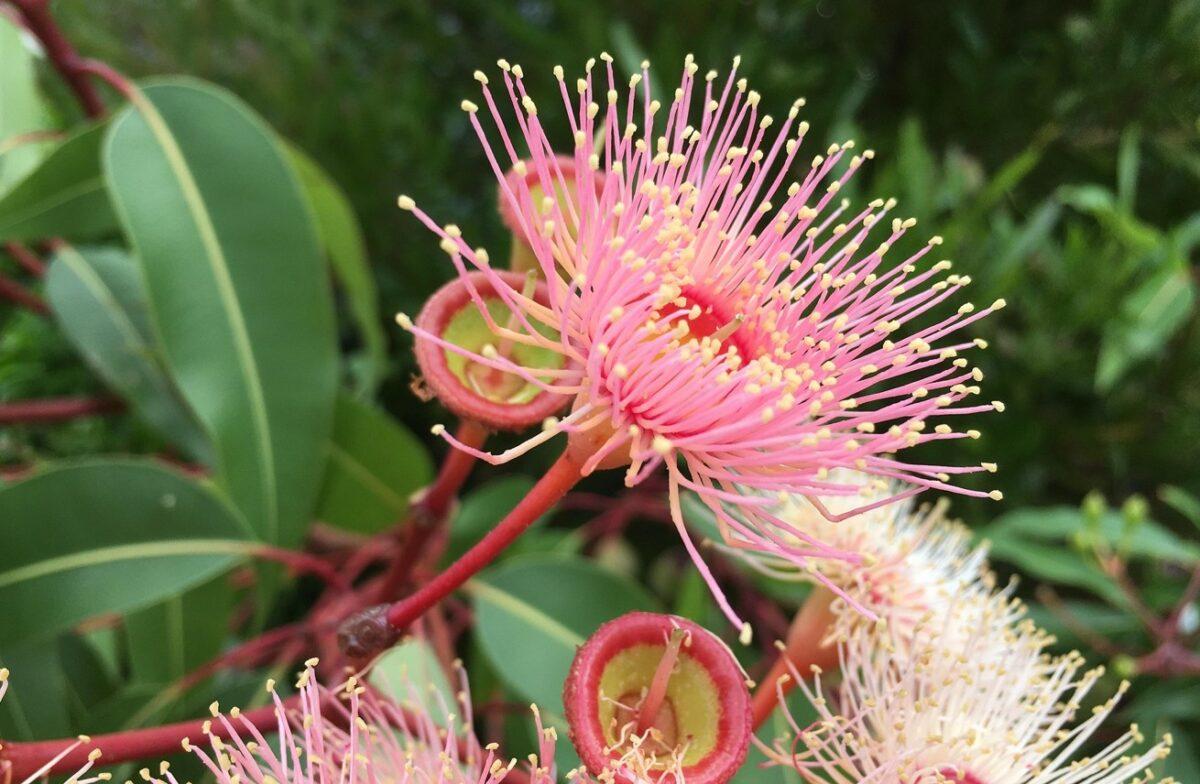
From Monstera to Calathea to Alocasia, houseplants have been booming in popularity in recent years, adding a final biophilic touch to homes. Tropical plants are also becoming more common in European gardens. But how sustainable are exotic plants, really? IMAGE: Pixabay (Flowering Gum)
The problem with exotic plants
In general, exotic houseplants aren’t problematic. However, their sustainability depends heavily on their origin and how they are cultivated, as well as how you care for them at home. Many popular species here come from tropical countries where they are often grown using pesticides. This primarily harms the groundwater, wildlife, and workers in those countries. However, residues can also harm the environment here and you if they remain on the plants.
The cuttings are transported long distances to Europe, generating unnecessary CO₂ emissions. Additionally, they are often grown in peat-based soil, further worsening the carbon footprint. This is because peat extraction causes peatlands to be destroyed and the carbon stored within them to be released. This is particularly problematic because peatlands store about twice as much CO₂ as all the world’s forests combined..
Caution is advised when growing exotic plants in your garden. In addition to the aforementioned problems, there is the potential for invasiveness and the need for insect protection. Some neophytes carry the risk of spreading beyond ornamental gardens into the wild and displacing native species, especially if garden waste from them is disposed of improperly. This, in turn, makes it difficult for insects and animals to find food.
Are exotic plants ever sustainable?
First of all, when shopping, you should look for labels such as Bioland, the EU organic label, Milieu Programma Sierteelt, or Fairtrade. Unfortunately, these aren’t often found in conventional stores. That’s why it’s also a good idea to check the manufacturers’ websites to see if their supply chains are presented transparently. When buying, it’s best to avoid plants that come in plastic pots. The industry’s high waste production is also a problem. Finally, I’d recommend visiting smaller shops rather than big chains. There, you’ll usually get more transparent information and support the local businesses.
However, the best option would be to simply grow your own from cuttings of your own plant or that of an acquaintance, friend, etc.! And, of course, it’s best to do this as sustainably as possible. We’ve compiled some tips for this in this article.
How about you? Do you have any other sustainability tips? Feel free to share them in the comments!

 Loading...