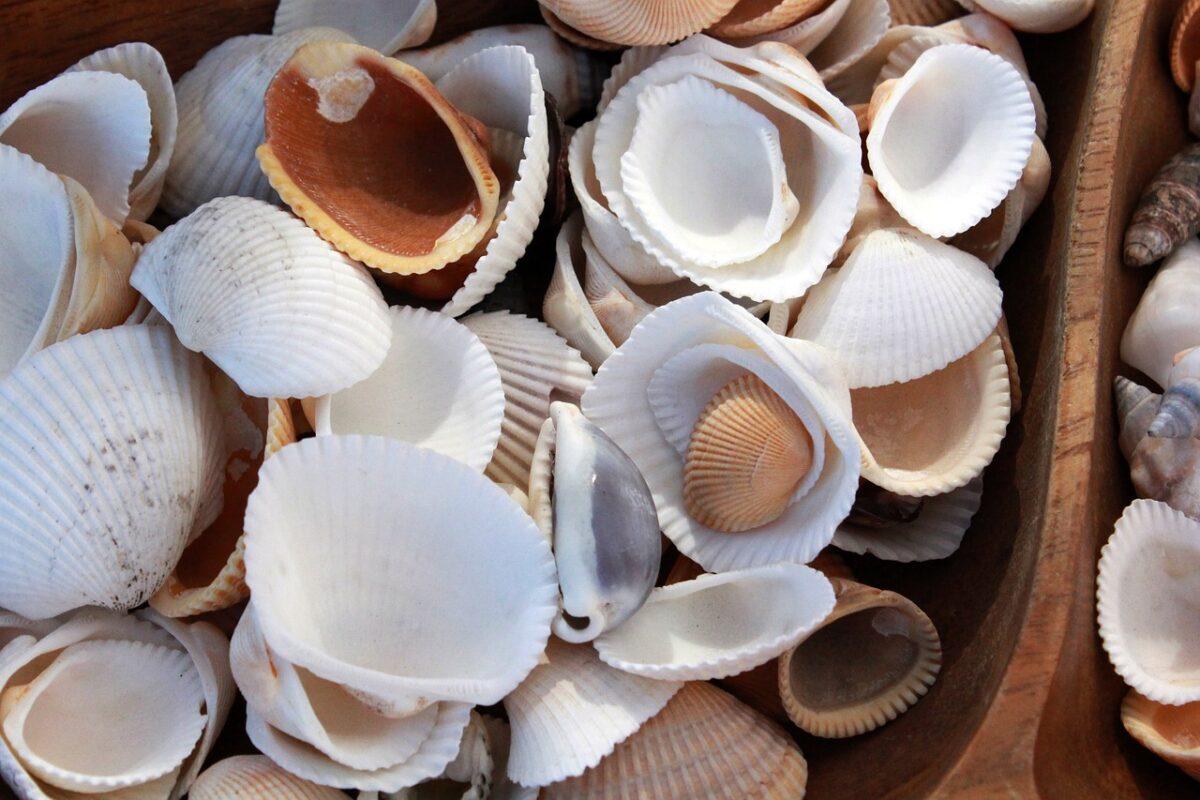
Did you know that hundreds of thousands of tons of mussel shells are thrown away in Europe alone every year? Worldwide, that number is up to ten million tons. This is because the catering industry considers mussel shells “residual waste” and disposes of them accordingly. However, mussel shells are a valuable raw material, and can even be used as a sustainable building material.
Are shells suitable as a sustainable building material?
Given the figures above, it’s not surprising that research into using shells as an alternative to conventional building materials has increased. For instance, an increasing number of studies have investigated using shells as an additive and binding agent in concrete and mortar. These studies have shown that using shells can improve not only their CO₂ and environmental footprint, but also their structural integrity.
During my research, I found Local Work Studios project particularly interesting. The studio produced mortar exclusively from waste materials collected in Brighton and used it to make weatherproof tiles. The shells were sourced from the leftovers of two fish restaurants.
Research has also been conducted on using shells as an insulation material, with positive results. For example, one study shows that complete shell-based insulation systems improve the environmental balance, achieve results similar to those of conventional insulation materials, and could offer additional protection against fire (and biological attacks :D).
Sounds too good to be true? Unfortunately, yes. While these studies and projects demonstrate the potential of shells for sustainability in the construction industry. We are still far from widespread applications in industry and as a building material for private households.
DIY Ideas with Shells for Your Home
Do you still want to try out the potential of shells at home right now? If so, here are at least two ways you can use shells to beautify and insulate your home.
- As shell mulch in the garden: Although it is primarily decorative, it has a few other positive effects: it dries faster after it rains, which prevents waterlogging and persistent moisture. Additionally, it releases lime as it weathers, which benefits herbs such as lavender and sage, as well as other plants..
- As an insulation material for crawl spaces: The only specific application as an insulation material that I could find is for crawl spaces. According to Amangard.com, shells are particularly well-suited for this purpose. Because they provide natural insulation, greatly reduce heat loss through the floor, and regulate humidity. They are also far more environmentally friendly than conventional insulation materials.
Do you have any other creative ideas for using shells? If so, please write them in the comments!

 Loading...