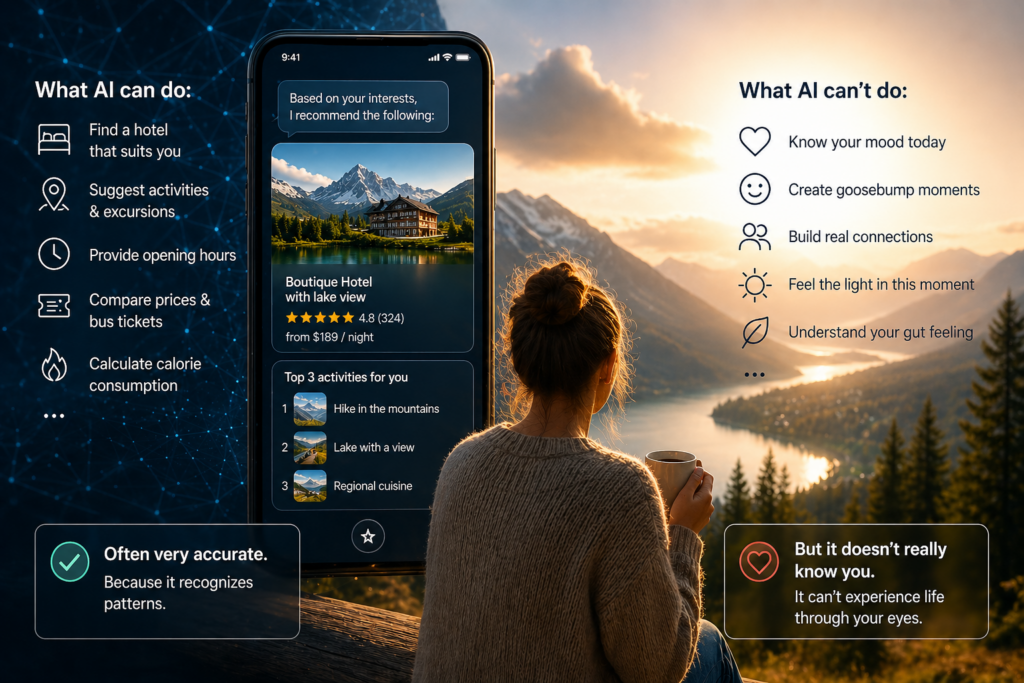
Enter your destination and, in seconds, the AI will provide a complete vacation itinerary: a suitable hotel; excursions that match your interests. Plus, opening hours, prices, and calories burned. It’s efficient, no question. But what effect does that have on our vacation?
Can AI make good travel plans?
Nowadays, many travelers use AI tools to plan their trips. “Our guests today are very well-informed,” says Klaus Pichler, the host of Hotel Weihrerhof on Lake Wolfsgruben in South Tyrol. “They’ve read a lot, compared options, and done their research.” Digital tools and AI play a major role in this.
However, perfectly planned does not equal experience. That’s why Klaus Pichler adds: “AI can structure a lot of things. But it doesn’t know the atmosphere by the lake early in the morning. Or the light after a summer thunderstorm. We’ve found that personal interaction is still highly valued—perhaps even more so than before.”

AI cannot experience
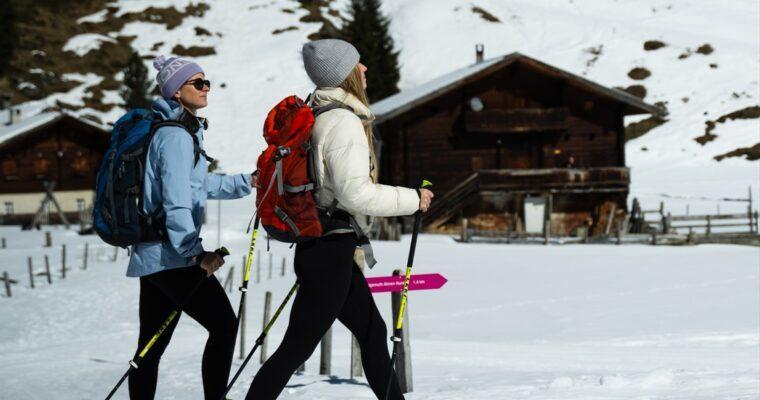
The team at the Paradiso Pure.Living Vegan Hotel on the Seiser Alm sums it up nicely: “the view of the Dolomites, the crisp mountain air, the scent of blooming alpine meadows, the feeling of snow underfoot, sun and wind on your skin—AI can’t predict that.”
Alexandra Huber from My Arbor, a treehouse hotel near Brixen in South Tyrol, says, “Our guests appreciate our intuition for their needs and the small, personal tips.” AI can’t do that either.
Alexandra’s uncles, Günther and Hannes, are the hiking guides at My Arbor. They know the local mountain, Plose, inside and out and are actually out there every day. They don’t just tell you, “Watch out; the weather can change quickly in the mountains.” They’ve experienced it firsthand and can explain exactly what you need to watch out for to be prepared. So feel free to ask them! They can also tell you things that you won’t find on any blog or website (and therefore, AI doesn’t know either). 🙂
Side note: You may think that the AI knows you. But it really doesn’t
When “chatting” with an AI, such as a Large Language Model (LLM) like ChatGPT, you may feel as if the AI knows you inside and out. However, that’s misleading, and you should be aware of that when entrusting your vacation planning to it.
Here’s an anecdote from before AI was popular: A journalist I know was once detained at an Israeli airport for a four-hour interrogation. “You get the feeling they know everything about you,” he told me. “They knew what he ate on which day, who he was traveling with, and where he shopped.” It wasn’t until later, after some reflection (and a conversation with the police), that he realized they’d only had access to his credit card statement and might have briefly checked his Facebook profile (when that was still popular). That was enough to trigger panic, fascination, and unease.
Why AI is often pretty accurate
When an AI says, “This suits you,” it’s usually based on:
- your past behavior (chat history, searches, clicks, bookings)
- data from similar users (what they like, you’ll probably like too)
- reviews and patterns (“People who liked X also liked Y”)
That’s why AI recommendations are effective for things like:
- Hotel style (boutique vs. large resort)
- Price range
- General interests (wellness, hiking, culture))
It’s important to know: The AI provides the answer that is statistically the most likely to be correct. Therefore, in the areas mentioned, the AI’s recommendations are often a good fit for you.
Where AI might go wrong
The problem arises with anything that is difficult to measure:
- Mood & Timing (You might be looking for peace and quiet on this vacation, even though you usually love action.)
- Atmosphere (Whether a place feels “right” for you is something that’s hard to determine from data alone.)
- Interpersonal Factors (Friendliness, conversation, the energy in the hotel)
- Subtle Differences (Two accommodations might look identical on paper, but offer completely different atmospheres.)
Guests appreciate a warm, friendly atmosphere
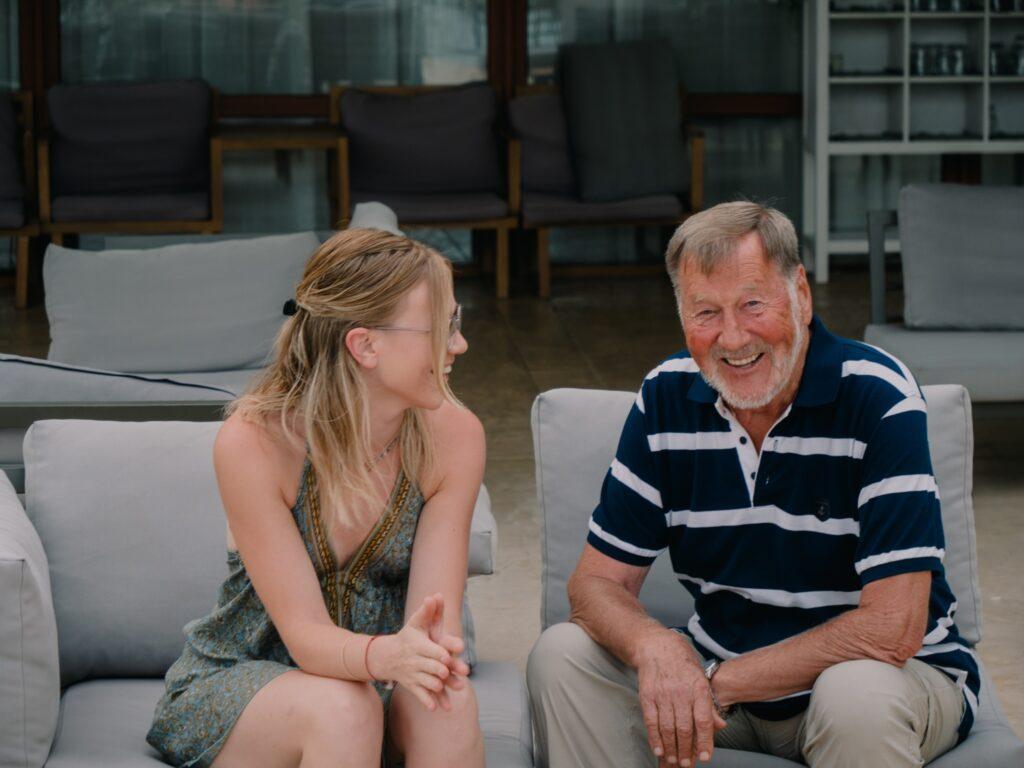
The SCHWARZWALD PANORAMA in Bad Herrenalb has reached a point where personality is prioritized over tips and information. “Guests want to be understood — not just based on data, but on a human level,” they say. “In a digitalized world, there is a growing longing for authentic encounters and personal advice.”
Several hotels have independently reported the same trend: the more digital travel planning becomes, the stronger the desire for real-life interactions grows.
The Hotel Korinjak on the Croatian island of Iž sums it up like this: “In an increasingly automated world, many people feel a growing need for something slower, more tangible, and deeply human. It’s less about efficiency and more about authenticity, empathy, and lived experience.”
Johann Steinwender from Schloss Lerchenhof in Austria reports: “Guests are less interested in facts and more interested in personal recommendations, experiences, and genuine interactions.” In other words, exactly what an AI or a Google search cannot provide.
The role of hoteliers is changing due to the rise of AI-powered vacation planning
Christian Schmidt of the SANDcollection (SANDnature on the Baltic Sea and SANDglow on the North Sea) says: “We’re not getting fewer qeustions; just different ones.”
In his experience, today’s guests are looking for:
- Guidance instead of information
- Dialogue instead of just answers
- Connection instead of just service
This is why new formats are emerging, such as in-person gatherings—like “Meet & Greet” evenings—where the focus is on encouraging conversation between guests and hosts.
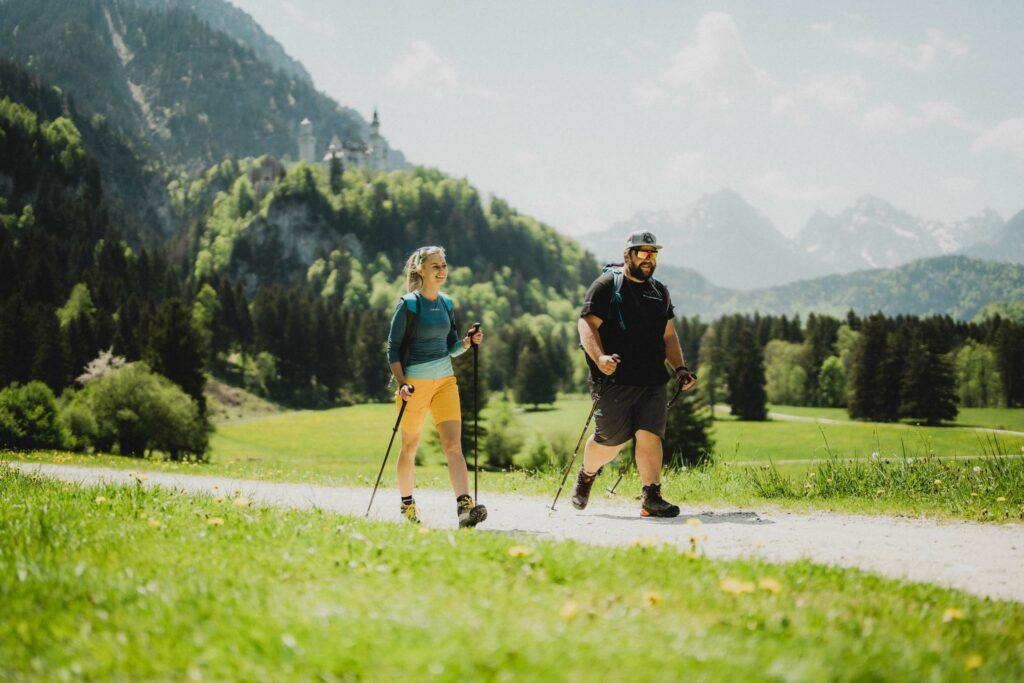
The Hotel Das Rübezahl, located in the Allgäu region, has also observed this trend. “Guests are looking for honest recommendations and a personal touch,” says host Alexander Thurm. The hotel’s hiking guide, Bergbaschdi, has noticed this as well. In an interview, he reports that his personalized guided tours are very well received. While there is a trend of wanting to beat the best time on Outdooractive while hiking, for him, hiking is also about “healing the soul.” This means coming to terms with oneself and consciously taking in the surroundings.
On his tours, he often helps people find the right pace. This is something that can only truly be experienced in person, with hiking boots on your feet and the guide by your side.
More time for on-site guests thanks to AI
Many hotels, however, also use AI specifically for communicating with guests. For example, give Hotel Okelmann’s a call. After just one ring, you’ll hear, “Hello, this is Lena (…) you can talk to me just like you would a real person.” For this article, I chatted with Lena for a few minutes. She checks the prices for a double room for me, suggests several room categories, tells me that I’m allowed to bring a dog, and so on.
“The start was a bit bumpy, but the system is running very smoothly now,” says Kristin Okelmann. You can always ask to be transferred to a human, but many find the AI assistant “really exciting” and enjoy using it.
“(AI) gives us the opportunity to spend much more time talking to and interacting with guests on-site. It’s absolutely perfect for us!” – Kristin Okelmann
Where AI reaches its limits
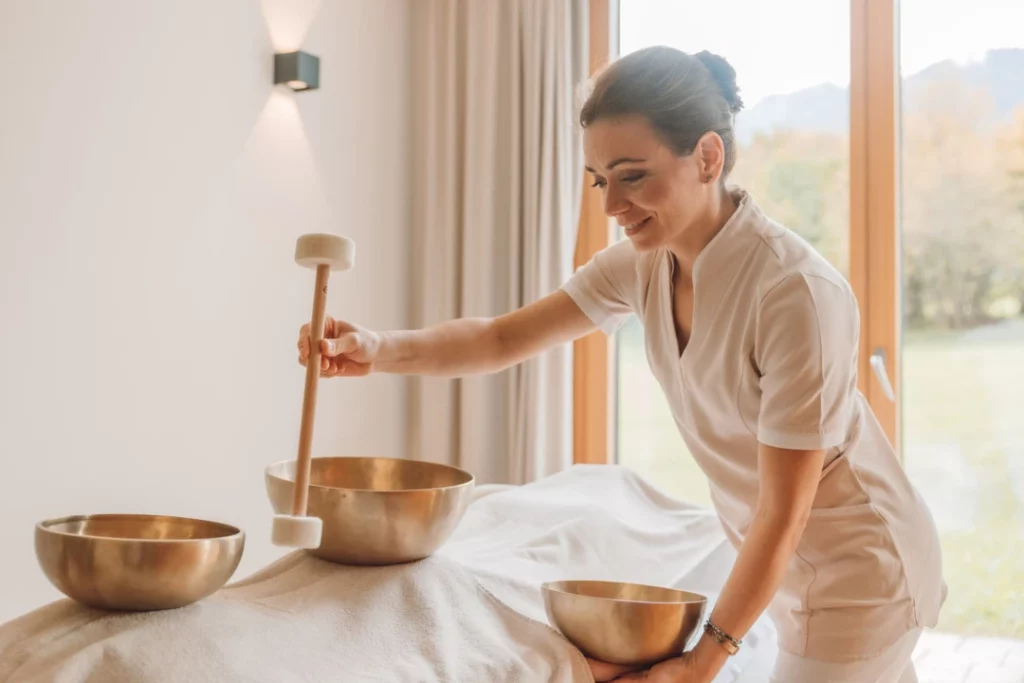
The use of AI isn’t appropriate or advisable in every situation. Certain matters are too complex or personal to be entrusted to AI. This is where hoteliers come in—as advisors and points of contact for your needs, wishes, and concerns.
- Klosterhof — Alpine Hideaway & Spa, located in Bavaria, is a wellness hotel with an on-site health center. When it comes to health-related matters, wellness programs, and therapies designed to enhance your well-being or improve your health, genuine human connection is their top priority.
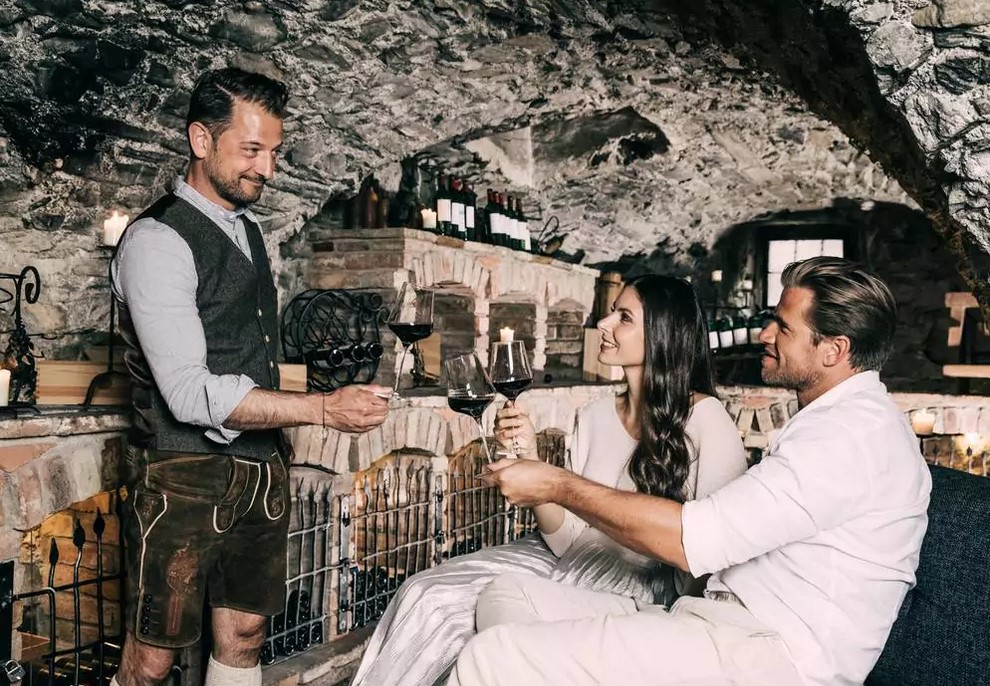
- At the Hotel Klosterbräu in Seefeld, Tyrol, the hosts have noticed that guests simply trust their recommendations more. “Our guests continue to ask for insider tips, such as the best table in the wine cellar or the most beautiful cross-country ski trail,” they say. Thanks to their deep regional roots and a “knack for the right moment,” the Seyrling family—now in its fifth generation of running the hotel—is authentic and unique.
Technological innovations are not a threat, but a step forward
- The Hotel Bella Vista in Zermatt, Switzerland believes that the personal touch of a family-run hotel cannot be replaced by AI. “If you want to hike for ten hours without seeing anyone, just ask me,” says Fabienne Anthamatten. She knows not only the area, but also the tourist traffic and peak times. She can also tell you about changes in the landscape, such as glacier melt, which you can see for yourself. “Our guests really appreciate the personal connection with us, and we’re glad that the human touch still plays such a big role here,” says the Bella Vista.
- “Personal contact is still the most important thing,” agrees Ursula Wagner, hostess at the Naturresort Gerbehof. There, too, the whole family takes care of the guests. For instance, the father and son bring a deer from the forest for dinner, the daughter runs the adjoining horse farm, and Ursula offers therapeutic massages based on the Philippi method.
Bottom line: Your vacation is more than just the result of an algorithm

AI can help you plan more quickly, compare options more effectively, and make better-informed decisions. However, it can’t know what a place really feels like. AI can’t experience goosebump-inducing moments, spontaneous conversations, or gut feelings.
According to a study in tourism research, travelers remember unexpected experiences and personal encounters more than perfectly planned activities in the long run.
Bonus: How to use AI effectively for travel planning
AI is a powerful tool, so as a bonus, we’ve put together a short guide to help you use it effectively when planning your vacation:
AI is well suited for:
- Initial inspiration (destinations, regions, best time to travel)
- Preliminary planning (routes, duration, budget)
- Practical information (distances, transportation options)
- Summaries of reviews or travelogues
Tips:
- Ask the AI to show you different perspectives (e.g., “What do guests criticize about Hotel XY?”)
- Ask for comparisons instead of just recommendations.
- Use it to prepare questions you can ask when you’re there.
- For practical information such as opening hours, prices, the duration of an exhibition, etc., check the website and double-check the details. Errors can creep in here, such as a graffiti art piece being recommended that has long since been painted over, or a special exhibition that only has one week left.
And then: Go there. Talk to people. Leave room for the unexpected.
Save this article on Pinterest.

 Loading...