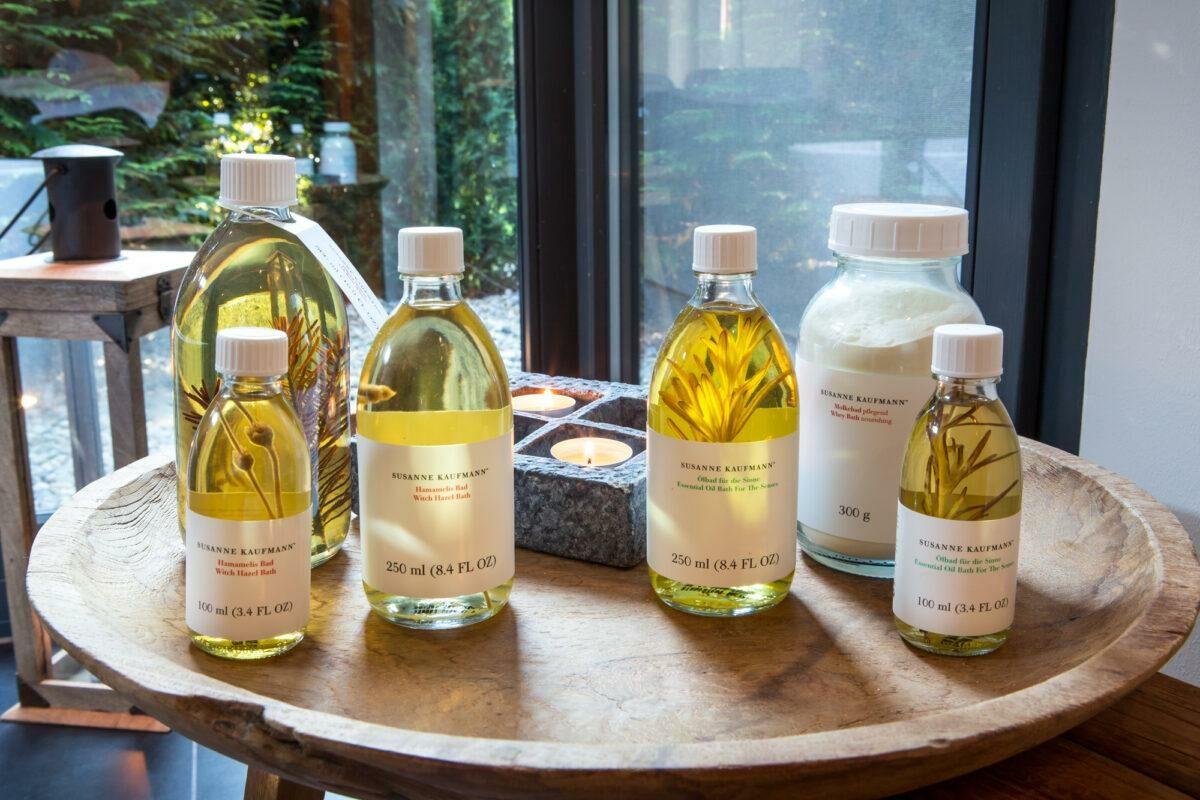
Have you ever heard of Cradle to Cradle® (C2C)? It is based on the simple yet radical idea of creating a world without waste. Rather than letting resources sit in landfills or being burned, materials are designed to be reused repeatedly, remaining in a continuous cycle. What was once primarily an idea for forward-thinking companies is now finding its way into the hospitality industry. In fact, you can incorporate some of these ideas into your daily life. We’ll show you how.
There are billions of tons of trash—and we’re right in the middle
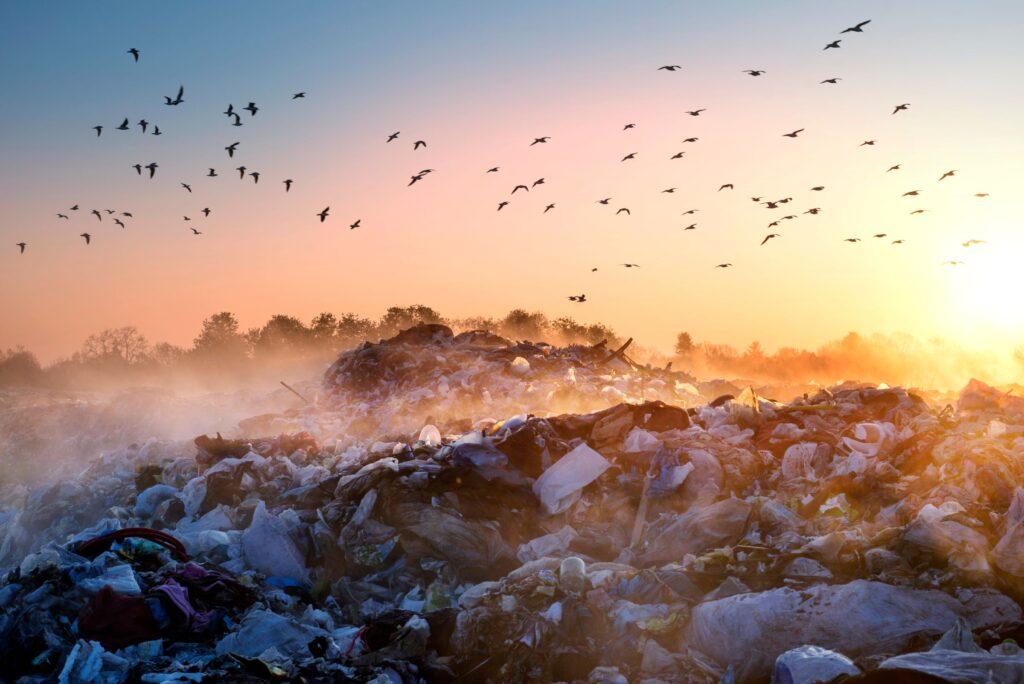
From huge landfills to plastic gyres in the oceans to microplastics in the air, the waste crisis has long been a global issue and a personal problem for each and every one of us. After all, aren’t our basements, attics, and closets full of things we no longer need? And what does your trash can—or cans—look like at the end of an average week?
A look at the numbers reveals just how big the challenge is:
- According to the World Bank, global waste generation could reach 3.9 billion tons per year by 2050 (compared to 2.1 billion tons in 2016)
- Currently, billions of tons of municipal solid waste are generated annually, 760 million tons of which are not disposed of properly.
In short: We produce more waste than our system can handle.
Zero waste? Good, but not enough
Of course, a large portion of waste is inevitably generated by industry and businesses. However, households also contribute significantly to the mountains of trash. When it comes to this issue, we should start with ourselves! One way to do so is to live according to zero-waste principles.
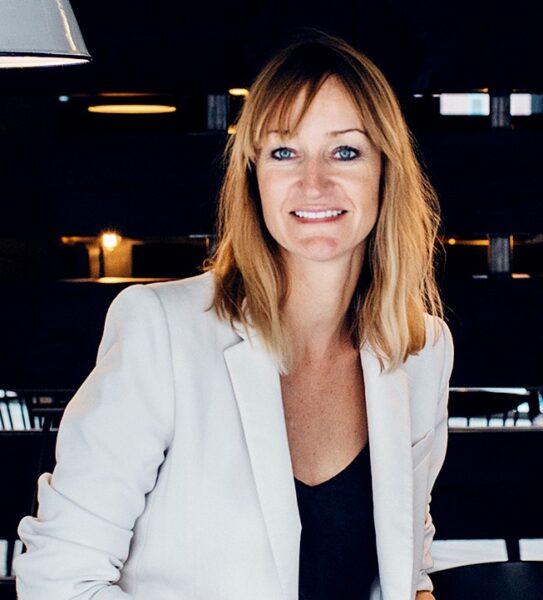
The zero-waste movement has already gained widespread recognition. Its pioneer and founder, Bea Johnson, developed a lifestyle for herself and her family that focuses on consuming less rather than recycling. “Refuse” is one of her famous “R’s.” Does a product come in packaging? She doesn’t buy it. Disposable products? She doesn’t use them.
But is that enough?
The zero-waste movement has already sparked positive changes regarding single-use products and packaging waste. Examples include buying products without packaging, such as taking food from the market or bulk stores home in your own containers and bags, and replacing single-use items with reusable ones, like reusable water bottles and coffee mugs.
However, even the most dedicated zero-waste advocates wear shoes, sleep in beds, and use computers. What do we do when things break or wear out? They have to go in the trash. Or do they?
In an interview with the Green Travel Blog, Anna-Karina Reibold of the Cradle to Cradle NGO said the following: “We often try to act in a slightly less harmful way by cutting back, consuming less, or using less energy. However, this falls short and shifts too much responsibility for the waste crisis onto consumers. Moreover, it merely postpones problems instead of tackling them at the root.”
“C2C does not view waste as an end product, but as a design flaw.” – Cradle to Cradle NGO
What exactly does the term “Cradle to Cradle®” mean?
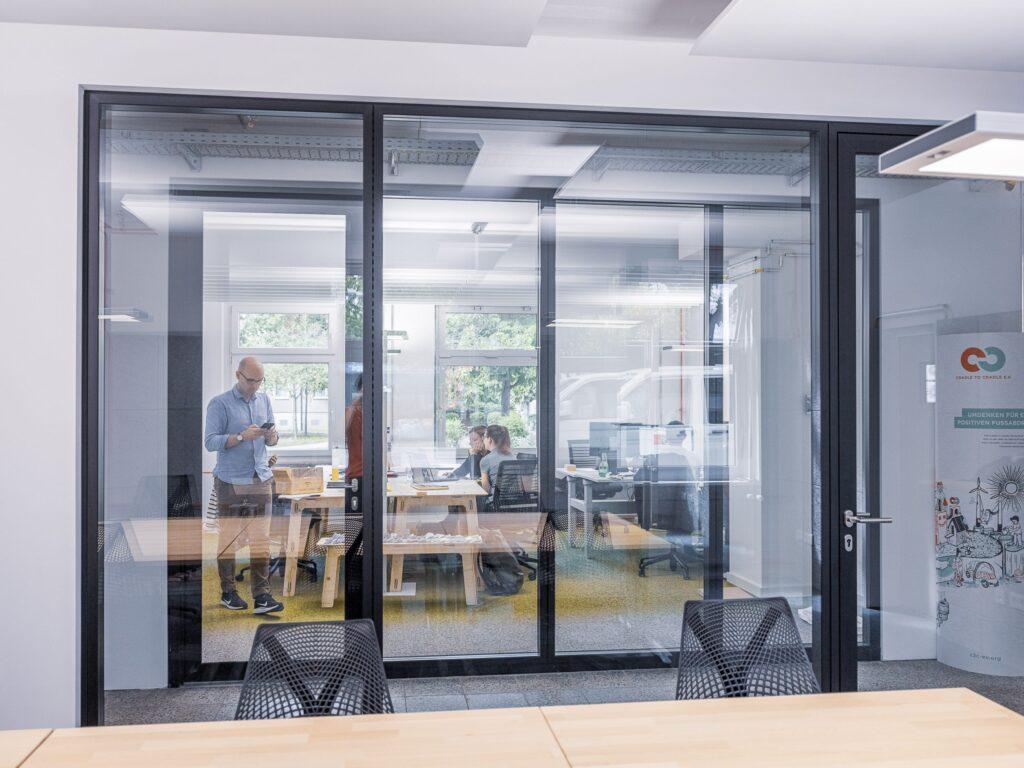
With Cradle to Cradle®, products are designed from the beginning to keep materials in circulation indefinitely. There is no waste produced in the conventional sense. Every material is reused.
There are two ways to do this:
- Biological Cycle: Materials such as wood, linen, and natural fibers can be fully composted and returned to the natural cycle.
- Technical cycle: Products are designed to be completely disassembled so their components can be reused or replaced.
One example of a product designed according to the C2C principle is SWISSFEEL mattresses. They consist of only two components (Swiss mineral foam and cover fabric). After their extended service life, SWISSFEEL takes them back, cleans them, and recycles the material. Initially, the materials are used in other SWISSFEEL products, such as flocking pillows. Later, the mineral foam can be chemically broken down without leaving residue and used for producing new foam. Thus, the material remains in circulation for decades instead of ending up in the trash.
Side Note: Is Waste Incineration Also a Form of Circular Thinking?
Absolutely not. While waste incineration does generate heat and energy, it results in the permanent loss of resources. Crude oil, for example (the raw material for plastic), is a finite resource. Furthermore, waste incineration produces pollutants (primarily CO2, but also highly toxic organic compounds).
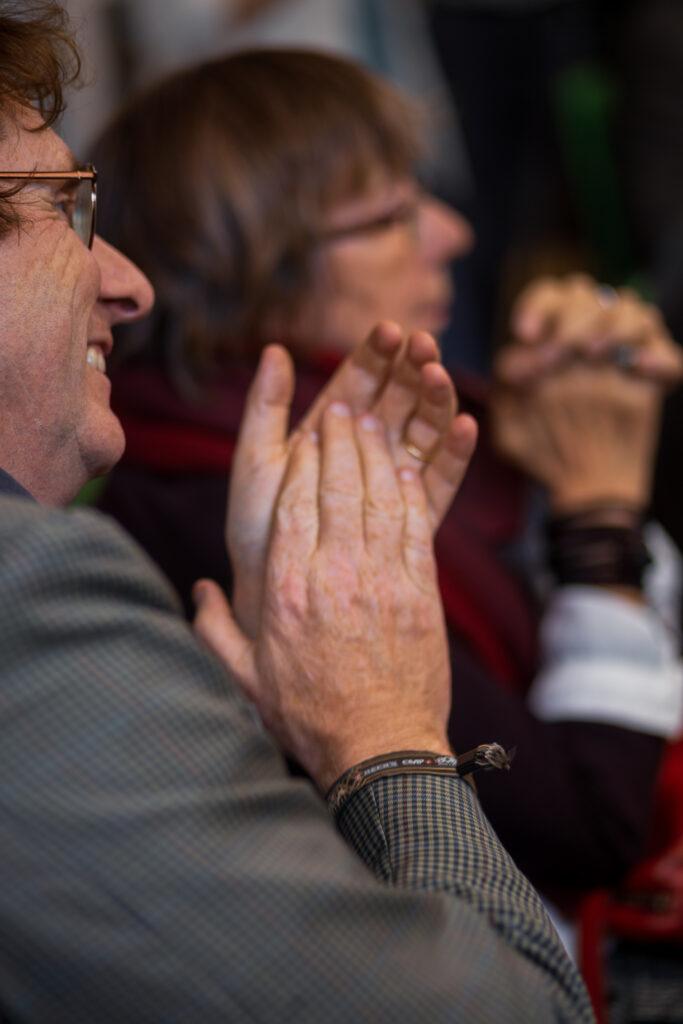
Professor Braungart, or: The Man in the Sneakers
The best-known co-founder of the C2C concept is German chemist Prof. Michael Braungart.
In an interview, hotelier Stephan Bode told us how he first met Braungart in 2008: “I’ll never forget that. Braungart was walking around in sneakers and said, ‘Look at this sneaker: When it’s worn out after two years, it can be taken apart into its individual components and returned to the cycle.’”
Years later, Bode designed an entire floor of his hotel, SCHWARZWALD PANORAMA, based on the C2C principle.
The Hospitality Industry as a Role Model: Experience a Circular Room
In the “Circular Living” rooms at the SCHWARZWALD PANORAMA, all materials have been carefully selected to be recycled into biological or technical cycles, and are characterized by environmental friendliness and fair production practices (free of harmful substances and negative impacts).
“Guests immediately sense the primal forces at work and, through our communication channels, know that the rooms embody the promise of the future.” – Stephan Bode
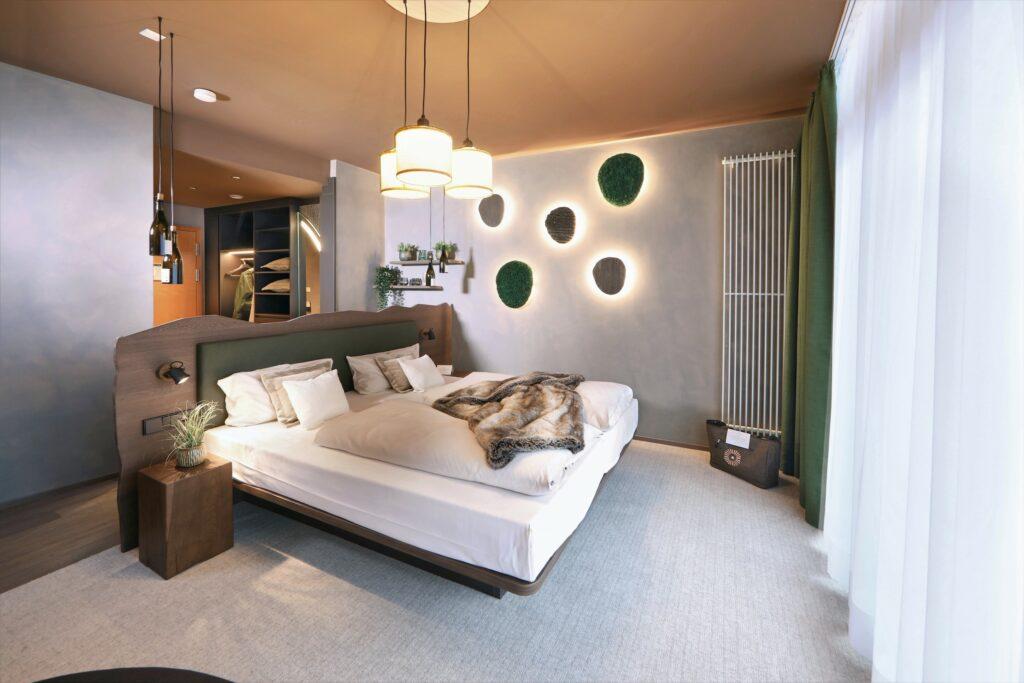
The circular Hotel Room
The Hotel Luise in Erlangen has been practicing the Cradle to Cradle® philosophy for over ten years. With Prof. Dr. Michael Braungart’s expertise, Benjamin Förtsch developed the first “renewable hotel rooms” there.
He recently presented them in the webinar “Cradle to Cradle in Tourism Practice” (March 2026), which was part of the EU project Cross-Re-Tour. The webinar discussed how circular thinking can be implemented in the hotel industry, for example, by using a purchasing guide for materials and products.
Since this was already possible ten years ago, C2C rooms are “not that difficult,” says Benjamin Förtsch.
“The biggest challenge is ensuring the materials can be fully separated at the end without forming composite materials (e.g., due to adhesives).” – Benjamin Förtsch
Here are some examples of how he managed to do this:
- The straw panel ceilings were installed with visible screws so they could be removed later.
- Biodegradable natural paints (e.g., from Keim) were used in the rooms instead of sealing varnishes.
- The cabinet and drawer handles are made of natural latex and are tied at the back, not glued on..
As you can see, C2C demands careful consideration and research from the outset, which is why we refer to it as “next-level sustainability.” 🙂
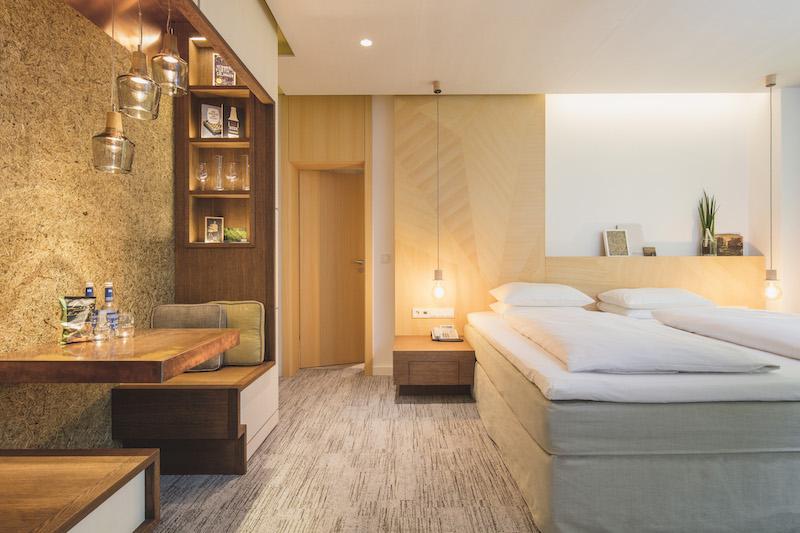
What do Cradle to Cradle® rooms look like?
The answer may come as a surprise: it’s completely normal—and not “eco-friendly” at all. When you stay at the Hotel Luise, you won’t immediately realize that you’re experiencing one of the most innovative concepts in the hotel industry. The TV show Galileo had planned to feature the sustainable hotel rooms, but canceled the segment because the rooms looked “just like normal hotel rooms.”
Sustainability doesn’t have to be flashy to be effective.
Benjamin Förtsch is already planning the next generation of rooms: the “Recycling Center Rooms” and the “Pond Rooms.” These rooms are designed to be more experimental and unconventional. The goal is to make visible what has previously happened behind the scenes.
Ideas range from lampshades made of mushroom mycelium, which Benjamin envisions baking in the hotel sauna, to using coffee grounds from breakfast to create 3D-printed products.
Here you can stay in Cradle to Cradle® rooms
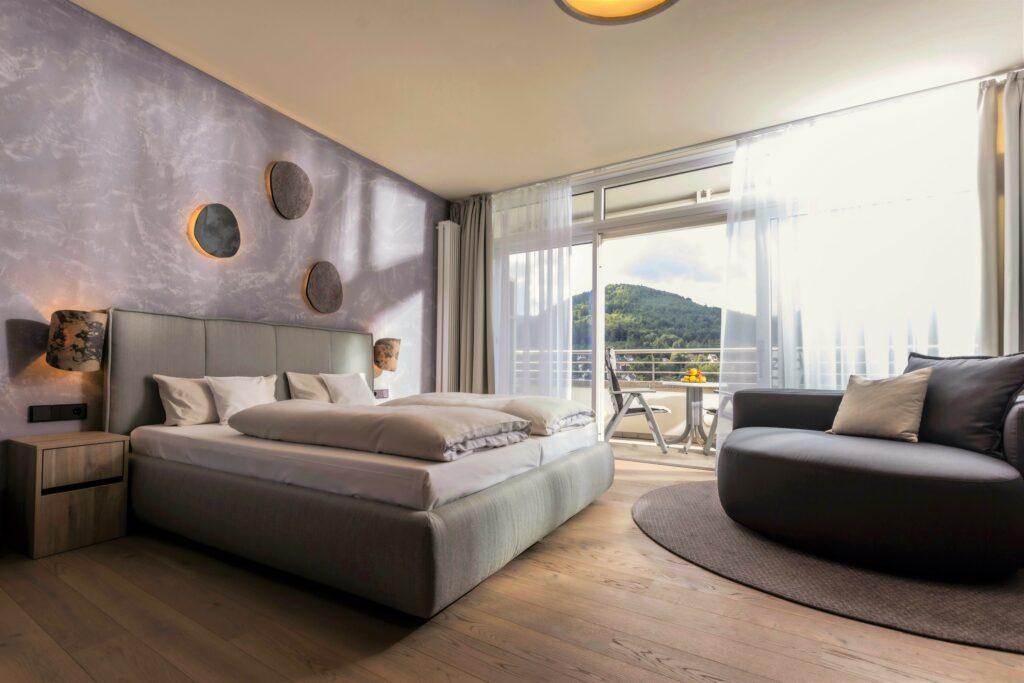
If you’d like to experience a sustainable room firsthand, we highly recommend visiting Hotel Luise or SCHWARZWALD PANORAMA. Would you like a few more suggestions for day trips?
- Click here for the blog post on things to do in Erlangen near Hotel Luise.
- Click here for inspiration for a sustainable vacation in the Black Forest.
Cradle to Cradle® at home – is that even possible?
The short answer: Yes. In addition, there are an increasing number of ideas, resources, and even products that make it easier for us to implement C2C in our own homes, as more and more people are actively exploring how to apply this principle in their daily lives.
Anna-Karina Reibold of the Cradle to Cradle NGO confirms:
„People often reach out to us. Over 1,000 volunteers are involved in approximately 35 initiatives across the German-speaking world on behalf of the Cradle to Cradle NGO (C2C), helping to bring the Cradle to Cradle philosophy to society. Together, we are driving chang.“ – C2C NGO
And she makes clear:
„Cradle to Cradle is not just an industrial concept; it affects every aspect of our lives.“
Inspiration from real-world examples: A Cradle to Cradle® apartment
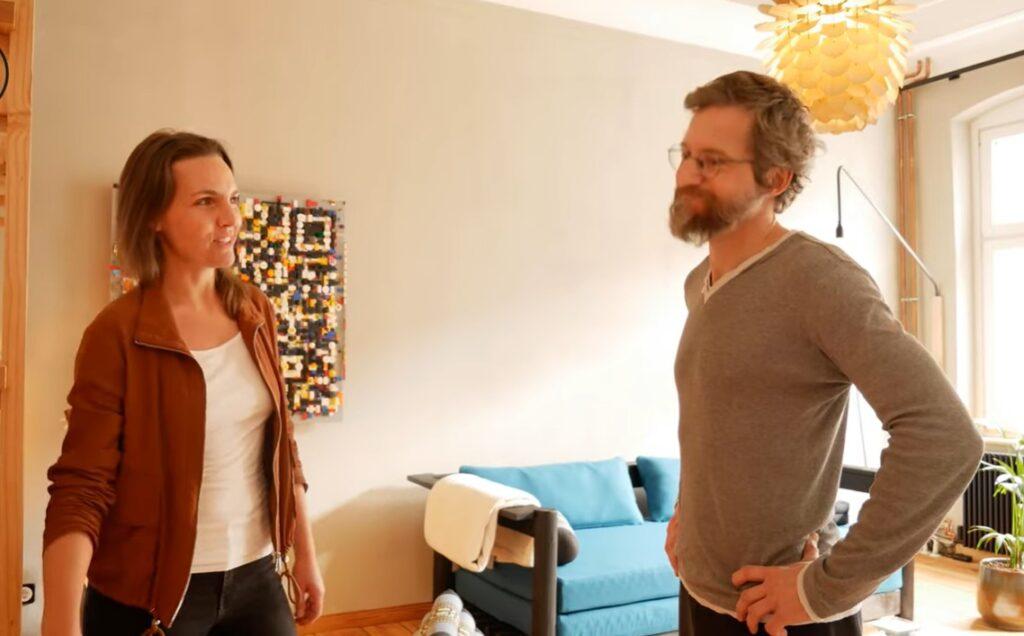
An exciting real-world example illustrates exactly how this can work. Stefan Otto and Sven Urselmann renovated an apartment in an older building according to Cradle to Cradle® principles.
During the YouTube room tour, one thing becomes clear:
- natural materials such as lime and FSC-certified wood
- locally sourced materials (e.g., wool from German dyke sheep for seat cushions)
- pure, separable building materials wherever possible
recyclable and reusable materials
- Products are designed according to Cradle to Cradle® principles (which is why he ordered his chairs specially from Spain, for example).
- Upcycled products are used as design and art elements in the home.
Berit Weiß from the Cradle to Cradle seminar says, “I wondered if individuals could implement this, and I noticed that the shopping guide for hotels includes many points that can be applied at home.” Here are those points:
Cradle to Cradle® Shopping Guide for Home
Many principles from the hospitality industry can be applied directly to your daily life. Here are a few simple ways to get started:
- Choose materials thoughtfully: Opt for pure fabrics (e.g., clothing, bedding, or towels made from 100% organic cotton) instead of blended fabrics whenever possible.
- Consider recyclability: Choose products that are compostable, easy to repair, or for which the manufacturer has a solid take-back and recycling strategy.
- Avoid composite materials: Items firmly glued together often cannot be separated. Therefore, sustainable floor tiles alone aren’t enough—you should also consider the adhesive!
- Prioritize durability: Pay special attention to quality and repairability, especially with electronics. Some electronics manufacturers already embrace the circular economy. Have you heard of Fairphone, for example?
- Use take-back systems: Choose manufacturers that take back and demonstrably recycle products.
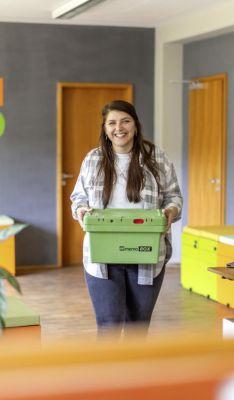
- Use reusable systems: For example, when you order from the online retailer Memolife, they ship your order in a reusable box that you can send back for free. This saves tons of cardboard (and thus forest resources). The sustainable marketplace is also a great place to find C2C products. Many restaurants, cafés, bakeries, gas stations, and even movie theaters now use the Recup system. You borrow a reusable cup and return it to any other participating location.
- Strengthen biological cycles: Compost food scraps and use natural materials, leaving them untreated (e.g., a garden path made of natural stones).
- Rethink: Don’t just ask yourself, “Do I need this?” Ask yourself: What will happen to this product at the end of its life?
Conclusion: A change of perspective, not sacrifice.
Cradle to Cradle® is a different way of looking at things: not as tomorrow’s waste, but as the resources of the day after tomorrow. It might sound complicated at first, but, as Benjamin Förtsch describes, you develop a knack for recognizing circularity over time.
„At some point, you just know—the same way a vegan knows that a banana is vegan.“ – Benjamin Förtsch
What about you? Have you embraced circular thinking, or would you like to try it? Let us know in the comments!
Save this article on Pinterest.


 Loading...