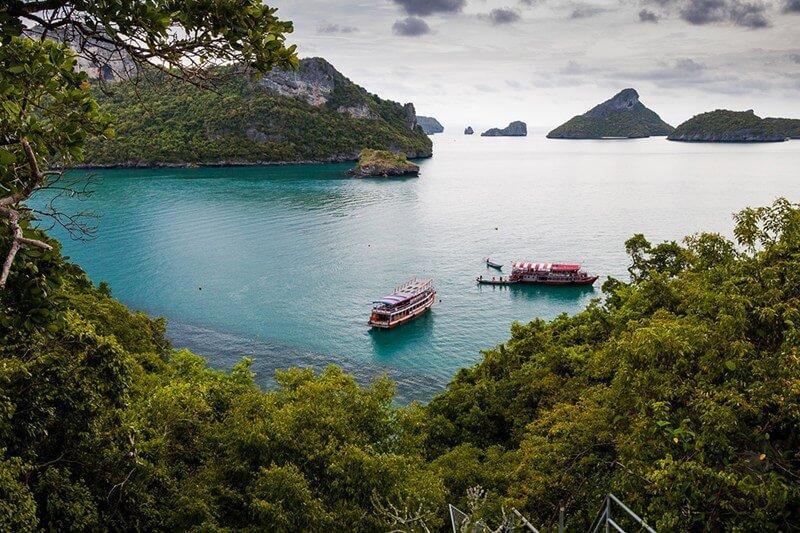
Pristine white sandy beaches, turquoise waters, palm trees and tropical scents are what most Europeans think of when they imagine paradise. However, these places are neither paradise nor dreamed – they’re real, and they’re right here on Earth. And they are in Southeast Asia! Unfortunately, the beautiful nature and biodiversity that exists there is under threat. First and foremost, by human beings. Tourism is often seen as helping to solve this. But if done right, it can also be part of the solution. But how? In this blog post on sustainable travel in Southeast Asia, we’ll show you.
Southeast Asia: A travel paradise surrounded by water
Southeast Asia includes all the countries east of India and south of China. These are: Thailand, Indonesia, Malaysia, Cambodia, Laos, Philippines, Vietnam, Singapore, East Timor, Myanmar and Brunei.
Many of these countries are islands or archipelagos, so the sea is very important. You can find whales, sharks, manta rays and all the “most wanted” sea creatures down to the seahorse in the Indian and Pacific Oceans.
The famous Coral Triangle (between the Philippines, Indonesia and Malaysia) is home to around 75 per cent of all known coral species, if you like diving.
The problem of mass tourism: the example of “The Beach” Maya Bay
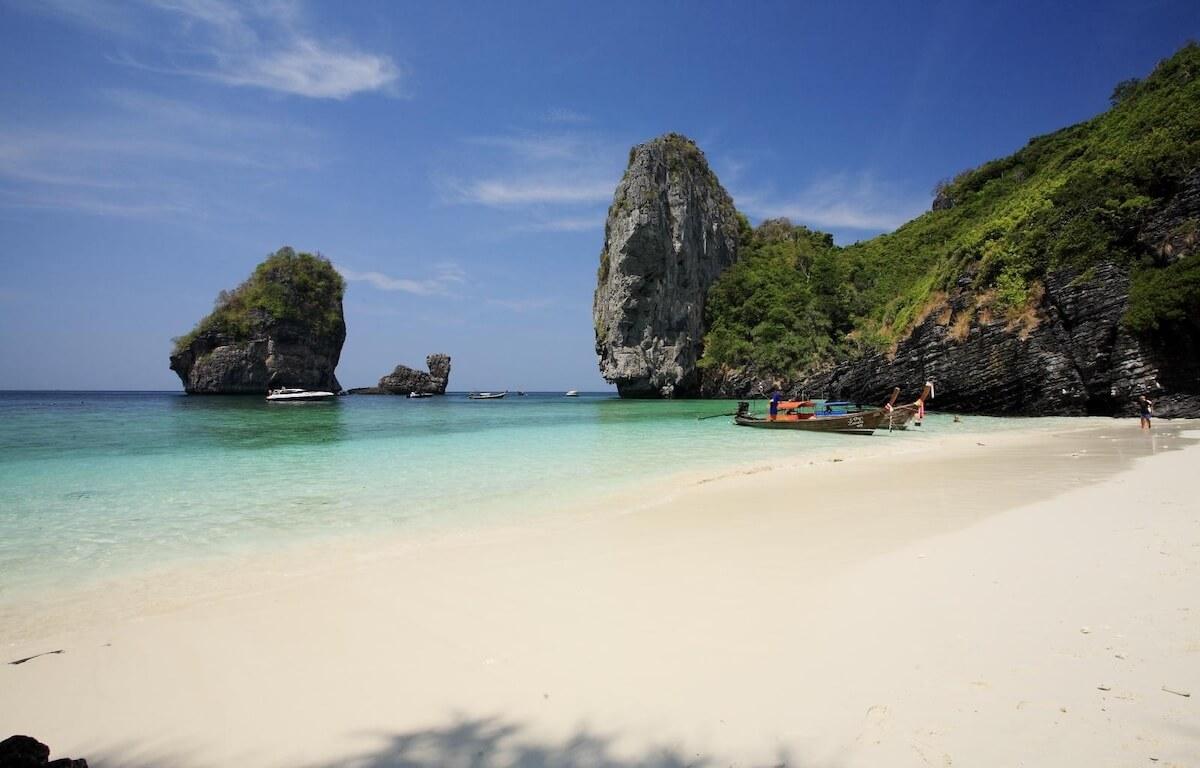
Maya Bay in Thailand was made famous by the 2000 Hollywood film “The Beach” starring Leonardo DiCaprio. In the film, Richard (Leonardo DiCaprio), an American backpacker, learns of a secret island, a paradise, which he eventually finds: Maya Bay on the Thai island of Ko Phi Phi Leh.
Since The Beach, the island has been overrun by tourists and is only about an hour’s speedboat ride from Phuket. Maya Bay was visited by up to 5,000 people a day. The results were devastating: by 2018, 90 per cent (!) of the coral there had been damaged. Closing the bay to tourism was the only option for the Thai government. As CNN Travel and the BBC report, it was the only right decision. After almost four years of closure, the bay has begun to recover. Blacktip reef sharks have returned. But the corals will take decades to regenerate. But at least they are regenerating! Some are already growing again.
Maya Bay has reopened to tourists in 2022. But you still can’t swim there
Coral protection on Ko Phi Phi Leh at Zeavola Resort
Our Green PearlsⓇ partner Zeavola is located in another beautiful bay on the island of Ko Phi Phi Leh. This eco-resort focuses on sustainability and teaching tourists to treat the underwater world with respect.
You can book a variety of PADI (Professional Association of Diving Instructors) snorkelling and diving courses. If you are a beginner, you will start in the resort’s saltwater pool and then be expertly introduced to the fascinating underwater world.
Experienced divers can also help the Zeavola team with coral conservation. For example, the team removes marine plastic from marine life. Zeavola has also replanted over 10,000 coral fragments.
Caution: Never touch coral when diving or snorkelling! With just one touch you can damage the delicate creatures and destroy hundreds of years of growth!
Another project you can get involved with at Zeavola Resort is the weekly food distribution for sea nomad children at the local school.
Litter prevention at Keemala in Thailand
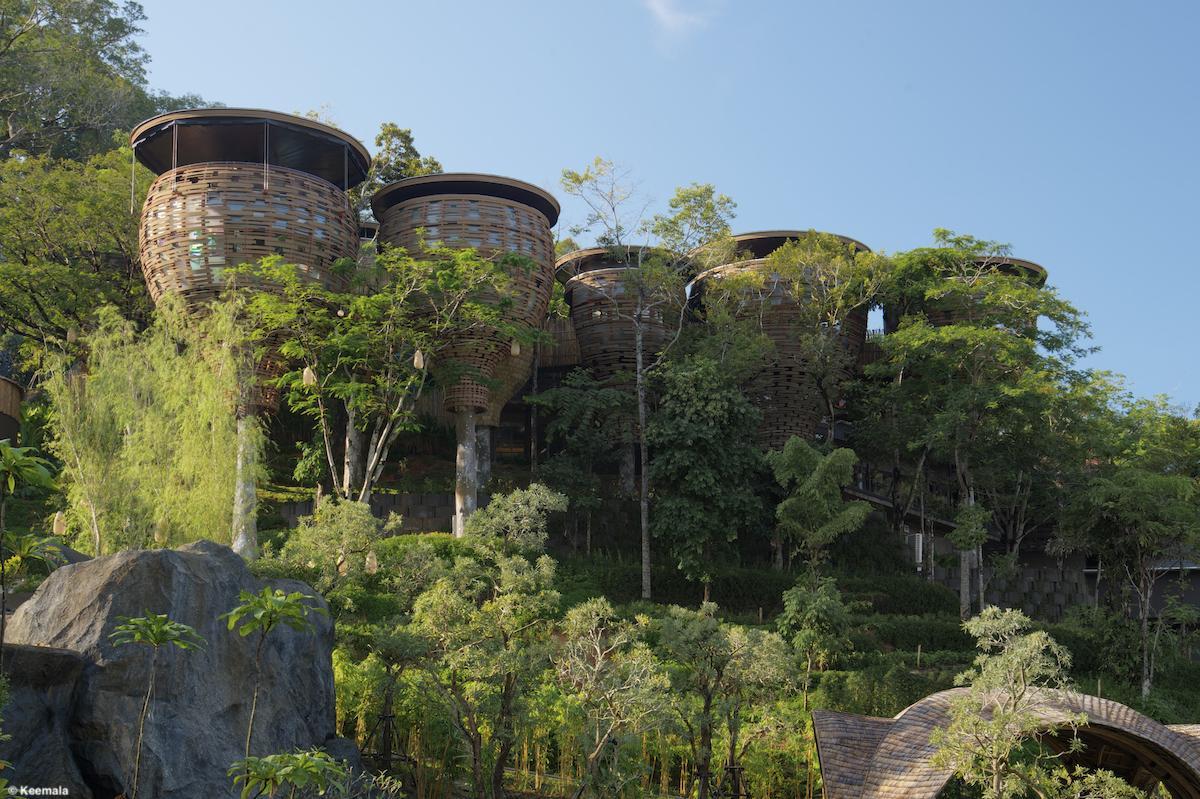
In the tourism industry, waste is a big problem. Keemala, a sustainable villa resort on the island of Phuket, took action back in 2015. The resort has eliminated all plastic waste. “We don’t have plastic bottles or straws,” says Keemala. In 2023, they were able to tell us that this measure had already eliminated 50,000 plastic bottles and 20,000 plastic straws.
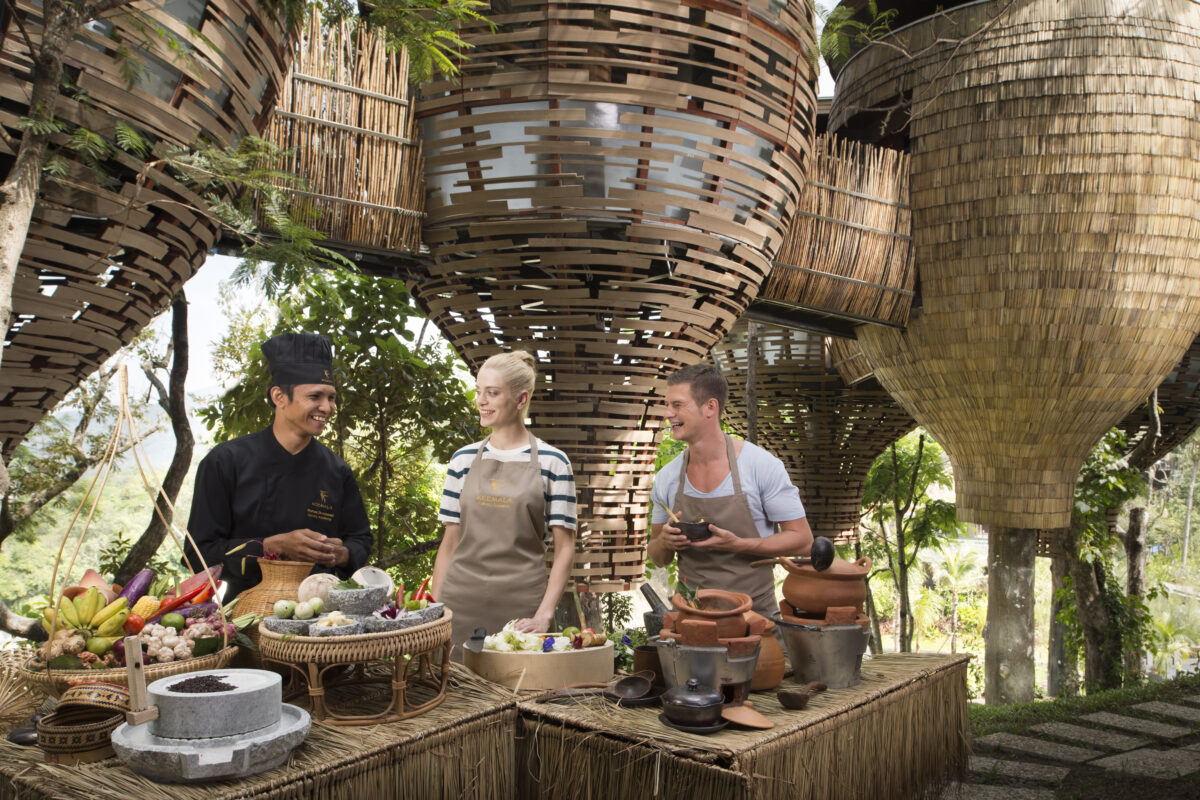
Keemala also avoids packaging waste by growing its own fruit and vegetables. They are used directly in the kitchen without having to be transported. As a tourist, you are welcome to stroll through the gardens. You will find lemongrass, turmeric, bananas, coconuts, jackfruit and much more.
A cooking course at Keemala will teach you how to prepare these exotic ingredients. It’s not just about taste, it’s about health and zero waste.
Sustainable holidays in Indonesia
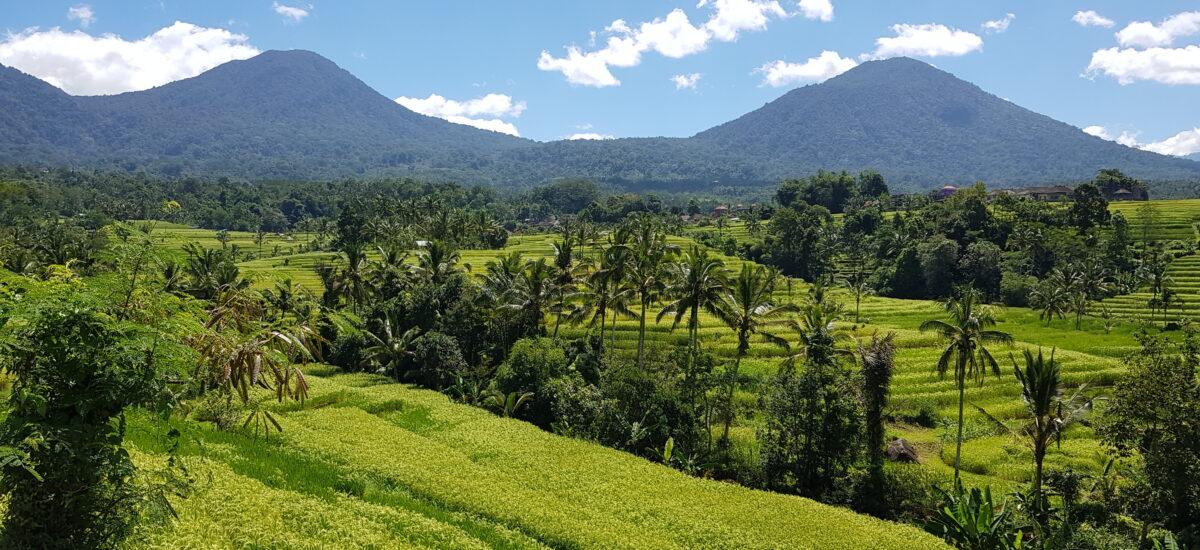
At Puri Dajuma Cottages & Spa in Bali, Indonesia, the resort is using guest communication to make vacations more sustainable. For example, guests staying in the Balinese wooden cottages can opt out of air conditioning and use fans instead, which the resort says are 16 times more energy efficient. When it comes to water consumption, you’ll be told that people in Europe use about 7 times more fresh water for each person than Balinese. The information is meant to encourage people to rethink their own behavior and perhaps shift down a gear. Guests are also encouraged to reduce waste.
Learn more about Puri Dajuma Cottages & Spa and sustainable holidays in Indonesia in our article Sustainable Indonesia.
Garbage problem in the national park
National parks also have to face the fact that rubbish is a big problem. In 2020, Thailand’s Khao Yaimedial National Park attracted a lot of attention when staff sent some of the holidaymakers from the national park’s campsite home with the rubbish they had left behind.
Khao Yai National Park is Thailand’s oldest national park and a UNESCO World Heritage Site. The park covers an area of more than 2,000 square kilometres. It has beautiful waterfalls and is home to elephants and gibbons.
Animal welfare rules for sustainable travel in Southeast Asia
The climate in South East Asia is predominantly tropical. It is humid and warm all year round – very different from ours! That’s why we find the wildlife to be so exciting and exotic. Elephants, tigers, monkeys, whales, seahorses, coral – these are all living creatures, not souvenirs! So here are some rules for dealing with animals in Southeast Asia:
- Do not buy souvenirs that contain animal products such as snake wine, scorpion liqueur, ivory carvings and so on.
- Do not take paid photographs of animals outside of their natural environment (e.g. baby gibbons on the beach or in bars).
- Feeding of wildlife is a no-no!
- Follow the rules in the national park. Stay in the designated areas.
- Leave no litter. Avoid plastic waste. (You can also refuse plastic bags when shopping and bring your own jute bag instead). Plastic ends up in the sea with devastating consequences for the local flora and fauna.
- When snorkelling, do not touch the coral.
Read more about animal welfare when traveling. See this blog post
Gibbon Project
Very popular with tourists are the funny monkeys. But their numbers are declining. This is mainly due to habitat loss in Southeast Asia. The IUCN lists all 20 gibbon species as endangered or threatened.
Under no circumstances should you be photographed with a baby gibbon on one of the beaches, where the monkeys are used as a source of income among the tourists and are taken from their natural environment for this purpose.
Instead, you can see (and photograph) gibbons in the various national parks. The Gibbon Project also offers the opportunity to adopt a gibbon if you would like to make a difference. Currently, “Rumthai”, “Tam” and “Bo” are waiting for a sponsor.
Stray gibbon sponsorship
If you would prefer to adopt a stray dog, Four Paws works with several organisations in Indonesia, Thailand, Cambodia and Vietnam that care for street dogs and cats.
Combine sustainable travel in Southeast Asia with social projects
In Southeast Asia, you will travel to many emerging countries that are still struggling with poverty and many other problems after years of colonial exploitation. There is still a lack of healthcare and clean drinking water in rural Cambodia, for example. Unfortunately, child poverty and the (sexual) exploitation of children are not uncommon in Cambodia either.
You can report sexual exploitation of children to Tourism Watch worldwide.
Create sustainable prospects
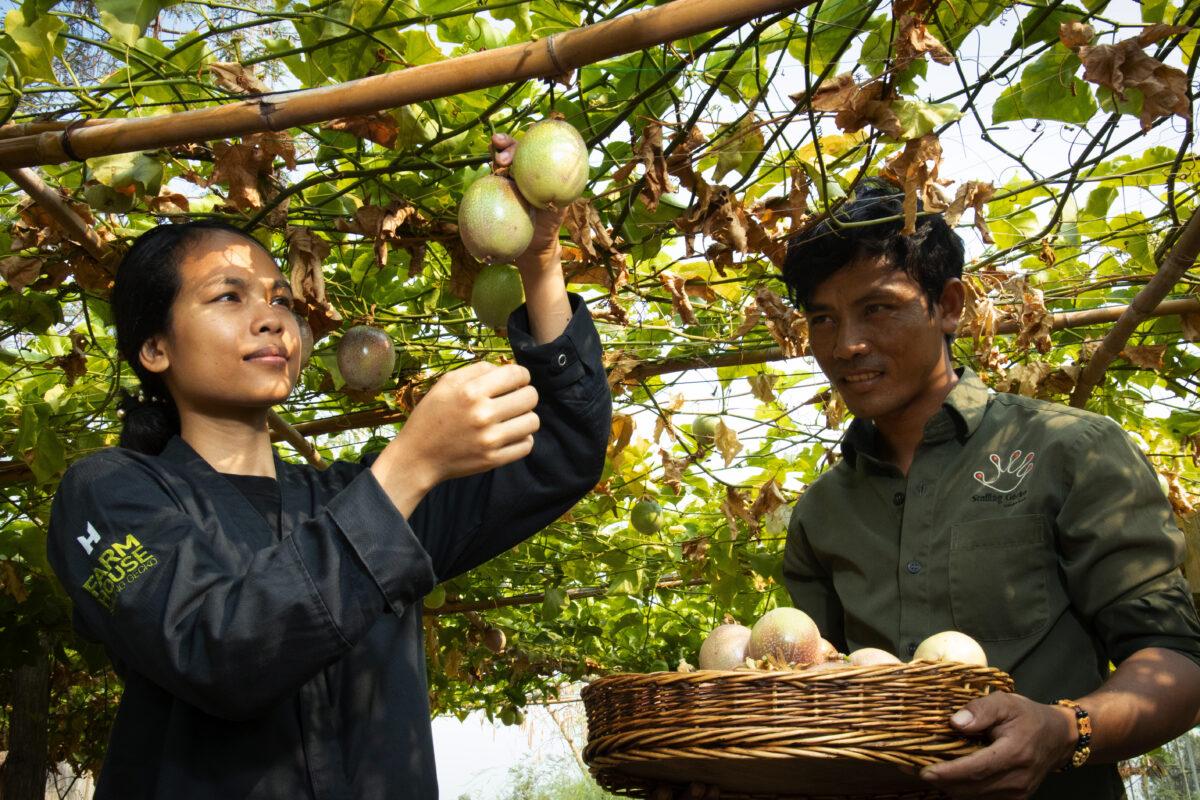
If you want to make a positive contribution to fair labour, you can book accommodation at Farmhouse Smiling Gecko. This sustainable bungalow resort actively engages with the local community through training, education, child and family development and employment. Farmhouse Smiling Gecko runs a farm, handicraft workshops, catering facilities and classrooms. It is located in Samaki Meanchey district, Kampong Chhnang province. Local guides will show you around the area and the social projects.
The 4 Rivers Floating Lodge on Koh Andet also works to ensure that local Cambodians have fair jobs and are well integrated into all areas of the resort. 4 Rivers Floating Lodge is a unique accommodation – the lodges float on the water!
Read more about social sustainability in tourism
Southeast Asia etiquette guide: Respect local culture
When traveling in Southeast Asia, you will notice that religion is very important and means a lot to the people. As a tourist, you should be careful not to hurt the feelings of the local people. There are many different religions:
Buddhism is the main religion in Cambodia, Thailand, Laos, Myanmar, Vietnam and Singapore.
Islam predominates in Indonesia, Malaysia and Brunei.
Christian is the majority religion in the Philippines and East Timor.
Because the various temples and temple complexes are a popular tourist attraction, it is important to familiarise yourself with the rules that apply there. In Cambodia, the Angkor Wat temple complex is certainly one of the most popular destinations. The national symbol, which appears on the flag and banknotes, was built by the Khmer rulers around 1,200 years ago and was long a Hindu Vishnu temple before becoming a Buddhist temple. Around 90% of Cambodia’s population is now Buddhist.
The fact that religion is so deeply rooted in the culture and everyday life of the people means that there are things for travelers to consider.
Codes of conduct in South-East Asia:
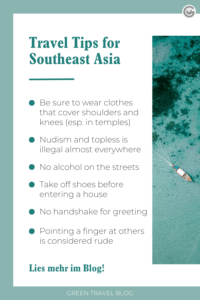
- Clothing: When packing your suitcase, be aware that you should dress a little more “conservatively” in Southeast Asia than in European countries.
- Beach: It is advisable to wear shorts and a T-shirt if you are at a beach where locals go into the water in full costume (burkini).
- FKK and going topless is forbidden almost everywhere in South East Asia. It is a violation of the country’s customs.
- Drug abuse is severely punished in many Southeast Asian countries. This also applies to tourists.
- Alcohol is forbidden in Islam. Buddhists avoid it. However, Islam allows complete freedom for other religions, so alcohol is available in all tourist accommodation in Malaysia, Indonesia and Brunei. However, you are not allowed to drink alcohol on the street.
- Food: Some bizarre things are eaten in countries such as Vietnam and Thailand: Dogs, cats, mice, snakes, worms and blood. But you don’t have to eat them! On the contrary, Buddhism offers a wide range of vegan/vegetarian dishes, and in countries like Malaysia, food and restaurants are “halal” (meaning no pork, no carnivores, and no blood).
- Knives don’t belong on the table, use a fork and spoon instead.
- Blowing your nose is considered very obscene in Asia. (You withdraw discreetly).
- Kissing and hand-holding are rarely seen in public.
- Before entering a house, shoes are often taken off.
- When criticising, praise should always be given.
- In countries such as Thailand and Malaysia, pointing fingers is considered very rude.
- Touching of locals is often inappropriate. Also, the handshake is not usually a form of greeting and is a sign of respect. In Thailand, people fold their hands flat against their chest and bow slightly (wai); in Malaysia, people nod to greet each other. In Indonesia, the nod is accompanied by a hand over the heart.
Tourists not affected by ban on extramarital sex
In 2022, the tourism industry was in turmoil. A new law was passed in Indonesia banning extramarital sex from 2025. The law means that unmarried people will not be allowed to book a hotel room together. However, foreign tourists will NOT be affected, as both the Indonesian government and the popular holiday destination of Bali have already pointed out. Religiously, sex before marriage is forbidden in almost all religions. This is the case in Christianity, Judaism, Islam and Hinduism. Only Buddha did not comment on sexuality, so there are different interpretations. Interesting to know: Most Buddhist marriages in Southeast Asia are arranged.
Tourists are not expected to know all the rules of behaviour, as is always the case when on holiday. We recommend: Research, observe, ask questions and stay relaxed 🙂
Traveling to Southeast Asia – can we still fly?
From Europe, unfortunately, flying is often the only realistic way to travel to Southeast Asia. Whether this is still justifiable from a sustainability point of view is something we put up for discussion in the following article.
We hope we’ve made it clear that Southeast Asia offers many opportunities for traveling sustainably.
These include:
- Sustainable accommodation (such as our Green PearlsⓇ partners in Asia )
- Animal welfare/environmental protection (national parks, coral protection, sponsorship)
- Community involvement (promoting training opportunities, jobs, education)
- Waste prevention (zero waste movement, clean-up projects, etc.)
Ultimately, you can play a big part in making your trip more sustainable.
Do you want to save the guide for your next trip? Then use our Pinterest images or the button at the end.

 Loading...