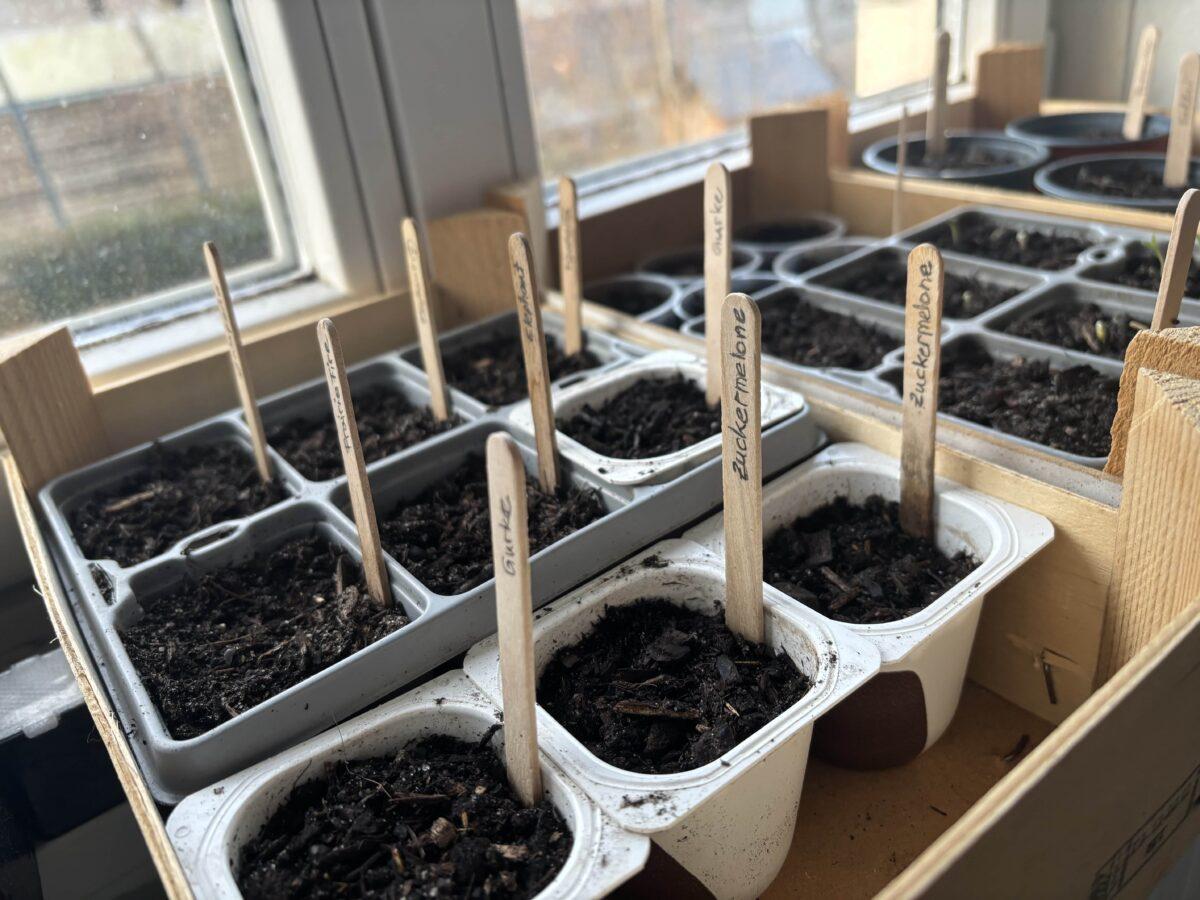
Even if it’s still gray and cold outside, if you’re itching to get started, you can already begin gardening—even without a greenhouse—right on your windowsill. We’ve selected a few plants that you can start sowing at the end of January to give your vegetable patch an early start to the season. IMAGE: ©Mara Biebow
Which plants are suitable for sowing at the end of January?
Before we begin, I would like to offer a few general tips. If you decide to grow your plants on a windowsill, the best option is a bright window that faces southeast. Since light is important for growth, it is also advisable to use a grow light. You should also use nutrient-poor potting soil and keep it moist, but not wet. A constant temperature is crucial for success as well. Therefore, it is best to avoid placing the plants directly above the heater. However, you should research each plant or vegetable individually to determine the right conditions, regardless of whether you grow them on your windowsill or in a greenhouse or garden bed.
For the windowsill:
- Chili peppers – With chili peppers in particular, the earlier you start growing them, the better the results! This makes them particularly well suited for early cultivation.
- Eggplant – Eggplant is also particularly well suited for early cultivation, as the vegetable needs a lot of time to develop.
- Bell peppers – The same applies to bell peppers. However, they need a lot of light, so it is better to use a grow light.
- Chives – Chives are also well suited for growing in January, as this culinary herb is very undemanding and germinates even in cooler temperatures.
- Lamb’s lettuce – Another classic worth growing early is lamb’s lettuce. Its robustness and resistance to cold temperatures make it particularly suitable.
For the greenhouse:
- Spinach – When planting spinach, it is best to choose frost-resistant varieties such as “Matador” and “Winterriese” and sow them directly into the field as soon as the ground is frost-free.
- White cabbage – White cabbage is also suitable for sowing at the end of January. Again, use early varieties and plant them in the field from March/April onwards.
- Winter cress – a herb that you can even harvest in January if you start early enough. It is important to note that cress is a light germinator. Therefore, you should not bury it deep in the soil.
P.S. This article offers tips on DIY cultivation.
Are there any other plants you start sowing in the spring? If so, feel free to write about them in the comments!

 Loading...