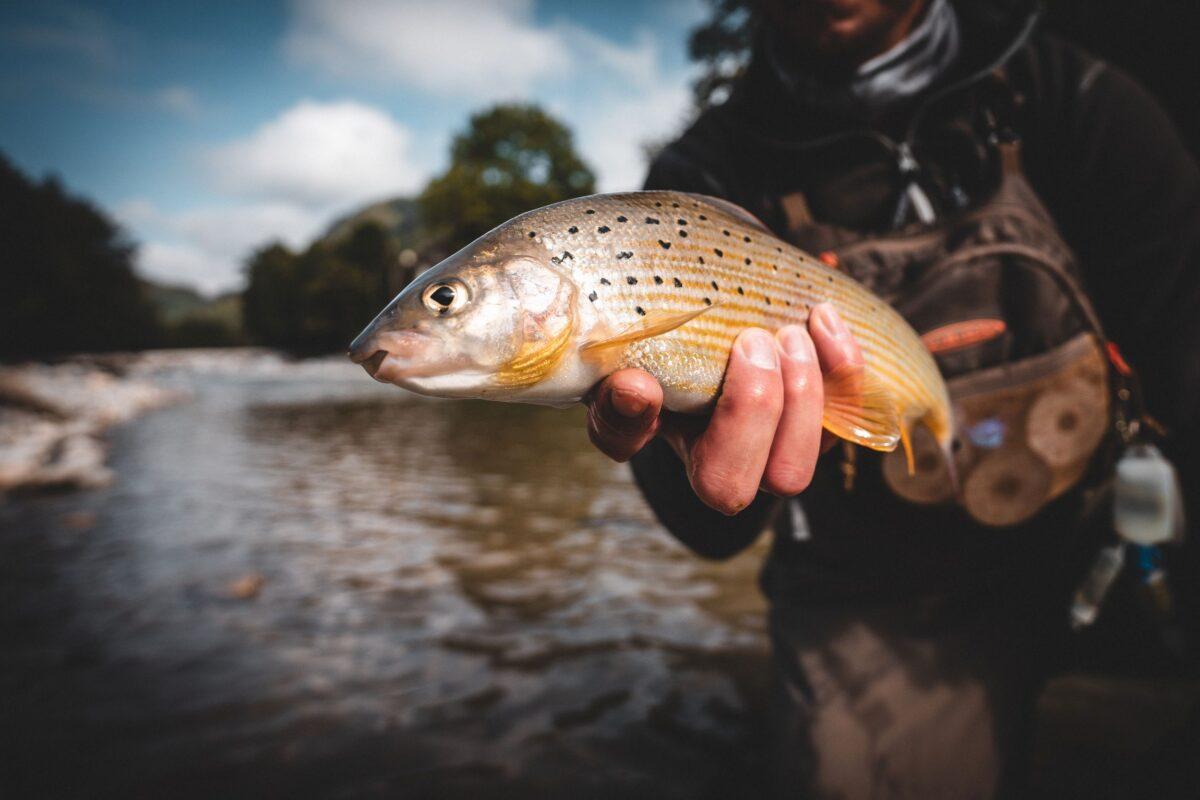
Fish simply tastes good—and has done so for centuries. Here, too, especially in the north, fish consumption is almost a cultural institution. It’s something I’ve become very aware of since moving to Hamburg, where people are always trying to persuade me to eat fish sandwiches! But, in contrast to traditional fishing, the heavily industrialised fishing sector has now reached a scale that is pushing natural ecosystems to their limits. According to the WWF, 37% of all commercially fished species worldwide are now overfished. This has devastating consequences for biodiversity and the food chain. So, unfortunately, fish consumption is often anything but sustainable. (IMAGE: Grayling is a tasty but endangered fish, that you should avoid eating ©Kaufi | Stock.Adobe.com)
So, what types of fish can you still eat without feeling guilty?
The answer is complex and depends on several factors. Including the type of fish, its origin, and the fishing method used. Ideally, we would stop consuming fish altogether, or at least reduce our consumption. However, for those who don’t want to give up fish entirely, the “Guter Fisch-Liste” (Good Fish List) published by German organizations such as NABU provides guidance. It shows which types of fish are currently considered comparatively sustainable. Additionally, it is best to consume locally sourced fish. Not only are they fresher, but they also have shorter delivery routes.
Incidentally, Germany requires the labeling of the fishing area and method for unprocessed or fresh fish. Unfortunately, this is more difficult with processed fish products. These are often labeled with seals, but they tend to be not very informative.
Some good news, tho: for the first time, the list has grown longer!
German fish:
Flounder: Whether you fry, bake, steam, or smoke it, flounder offers versatility and a pleasantly spicy flavor. If fishers caught it with traps or nets in the Baltic Sea, Kattegat, Belte, or Öresund, you can eat it without hesitation.
Plaice: This flatfish ranks among the best-known native species. You can safely consume it if the meat comes directly from the Baltic Sea, Kattegat, Belte, or Öresund.
Haddock: This small fish features a high protein content and a strong seafood flavor. You can safely eat it if it comes from the North Sea, Scotland, or the Skagerrak and was caught with hooks or lines.
Lumpfish: Also known as ice flounder, it is native to the Baltic Sea and tastes very similar to plaice. You can buy it without hesitation if it comes from the Kattegat, the Belte, the Öresund, or the Baltic Sea.
By the way: If you’re interested in taking a vacation to the Baltic Sea to enjoy fresh seafood, I highly recommend our Baltic Sea culinary guide and the article about a sustainable weekend at Timmendorfer Strand.
International:
Pollock: Despite its misleading name, pollock actually belongs to the cod family and often comes from Alaska. Unfortunately, however, it is only recommended to a limited extent when sourced from there. It is better if it comes from the Barents or Norwegian Sea, Spitsbergen, or the Bear Islands, and is caught with purse seine or lift nets.
Albacore tuna: Thanks to sustainable fishing practices, tuna from almost all areas can be purchased without hesitation if it was caught with handlines, fishing lines, or trolling lines. Exceptions are stocks from the Mediterranean Sea and the Indian Ocean.
If you want more recommendations, feel free to take a look at the list!

 Loading...