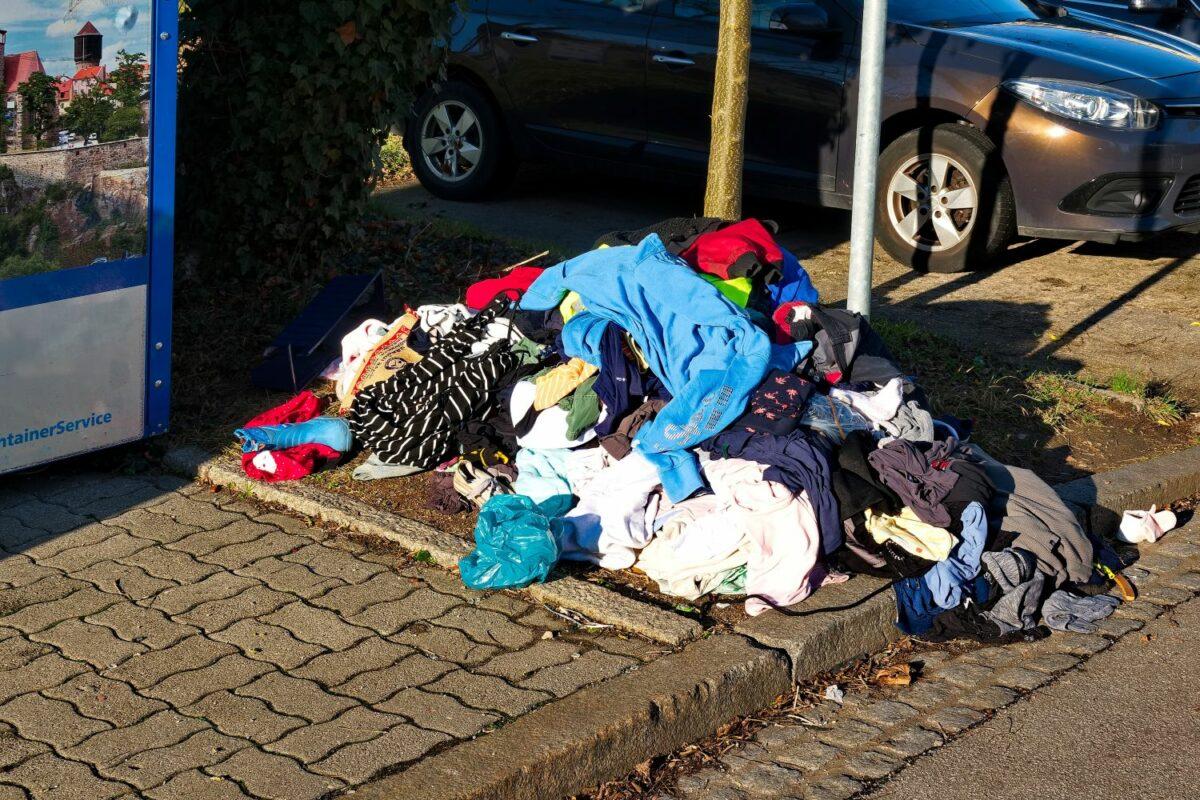
A new regulation has been in force in the EU since the beginning of 2025: used clothes may no longer be disposed of in residual waste. The goal is to promote textil recycling and reduce the enormous amount of waste produced. According to the European Commission, only about 22 percent of old textiles in the EU have been disposed of via special collection systems; the rest have ended up in incinerators. In Germany, the collection rate is between 50 and 65 percent. However, a new problem has emerged. BILD: Karin Jähne | Stock.Adobe.com
Containers are disappearing and there are not enough collection points
Paradoxically, a growing number of used clothing containers are disappearing from German cities. According to a dpa report, charitable organizations such as Johanniter and Deutsche Kleiderstiftung are pulling out of the collection business.
The reason: many containers are overflowing with trash. Since apparently, many people find it convenient to dump their bulky waste, electronic waste, and other rubbish in them as well. Disposing of these items is expensive and time-consuming for charitable organizations, and it leads to problems with the city.
At the same time, the quality of donated clothing is declining—a consequence of fast fashion resulting in cheap, short-lived textiles. Nowadays, many items are unusable and must be incinerated. All the effort spent collecting and sorting them ends up being in vain.
There is no system for genuine textile recycling
In Germany, the rule that damaged or heavily soiled clothing belongs in residual waste still stands. However, wearable clothing should be placed in the collection. Shoes should be tied together (e.g., by the laces) to prevent them from getting lost. Unfortunately, the reality is that there is a lack of functioning collection and recycling structures.
The situation is difficult in other countries as well. In spring 2025, The Guardian reported on British activists who were sending their old clothes back to brands with a message. “You sold it — now recycle it.” This protest shows that consumers are demanding greater responsibility and transparency from brands.
Here, wearable textiles are typically given to social department stores or sorting companies, which export them to other countries, primarily Eastern Europe and Africa. There, the textiles are sold or disposed of if they are unsaleable.
Damaged textiles are recycled into cleaning rags, insulation materials, or fleece, but they are also often incinerated.
Practicing conscious consumption helps the most
The Consumer Advice Center points out that throwing away wearable clothing with residual waste does not have any immediate consequences — but that does not make it a long-term solution.
For the new EU regulation to be effective, we need a comprehensive, modern textile recycling system and a change in mindset:
- Only buy what you need
- Choose durable clothing that is produced fairly
- Repair or upcycle broken items
- Build a capsule wardrobe. Having fewer, higher-quality items reduces overconsumption and waste. Read more about my capsule wardrobe tips here.

 Loading...