1.05 billion tons of food. According to the 2024 UNEP Food Waste Index Report, that is how much food was thrown away worldwide in 2022 alone. That equates to over a billion meals thrown away—every single day. Disturbingly, 60% of this food waste comes from private households. Not from industry or supermarkets, but from our own homes. It’s in our refrigerators, in forgotten vegetable compartments, and on plates that we’ve overfilled.
Here’s another surprising fact: food waste is no longer just an issue for the wealthy. The report shows that the amount of food wasted per person is remarkably similar across all income levels. This means the problem affects everyone—regardless of income or location.
2030 is not far away, yet the goal is still a long way off
Through the Sustainable Development Goal (SDG 12.3) the international community has committed to halving food waste by 2030. Sounds like a problem for the future? 2030 is closer than it seems, and this goal will not be achievable without real change in our everyday lives.
After all, food waste is not a marginal issue. It is a major driver of the climate crisis, resource consumption, and economic losses. Every piece of food thrown away represents wasted water, energy, labor, and emissions.
You are currently viewing a placeholder content from Default. To access the actual content, click the button below. Please note that doing so will share data with third-party providers.
How is this related to travel?
The topic of food is particularly important in the sustainable hotel industry: changing guest flows, buffets, individual dietary requirements, and seasonal fluctuations. Places that cater to large numbers of people on a daily basis are precisely where it becomes clear whether circular thinking works. And that is precisely where we are now drawing some inspiration for our own lives. 😉
Less is more: How smart shopping prevents food waste
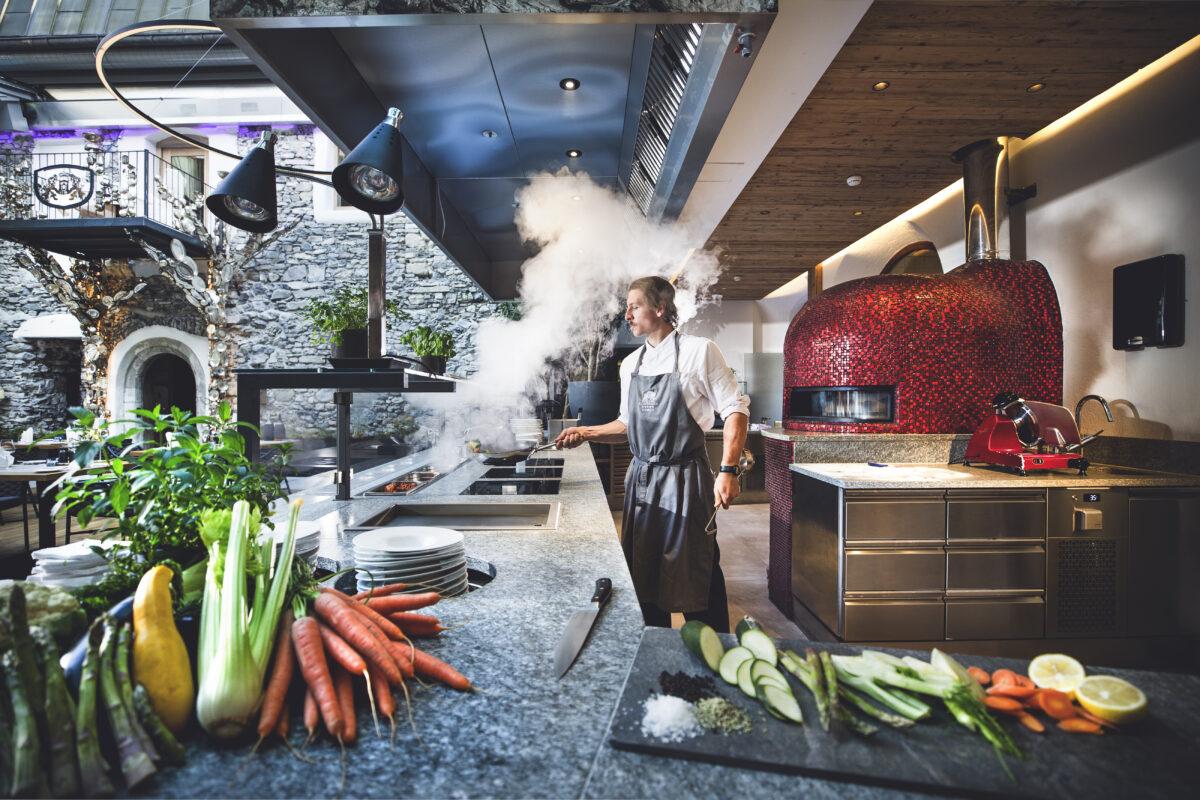
Circular food doesn’t start with cooking; it starts with production and purchasing. Many of our Green Pearls® partners demonstrate the importance of this initial step.
At the Hotel Klosterbräu in Tyrol, at least 80% of the food is sourced locally. Moreover, much of it is produced in-house: eggs from their farm, homemade jams and compotes, herbs and honey from their garden, and hay milk from local cows. This results in short supply chains, minimal packaging, and full control over quality and quantities.
The Tree Hotel My Arbor, the energy-self-sufficient OLM Nature Escape aparthotel, and the sustainable Lifestylehotel SANDnature on the Baltic Sea all rely on targeted, demand-oriented purchasing from regional organic producers. Orders are not placed “for stock,” but rather according to capacity utilization. The result? Hardly any expired products in the pantries.
What can we learn from this?
- As we explained in our blog article on organic food, using (more expensive) organic products automatically leads to more conscious eating. Furthermore, you can eat the peel of organic products (if possible).
- Focus on seasonal products from your region (seasonal recipe calendars offer guidance).
- According to Hotel Klosterbräu, it is important to avoid prepared products because “this preserves complete ingredient cycles and enables the use of leftovers.”
- Shop with a list and plan your meals carefully. Consider meals that use “leftovers,” as well as breakfast and snacks, and plan realistic quantities. Don’t just tell yourself, “I’ll use it for something.”
Planning beats perfection—and buffets are not mandatory
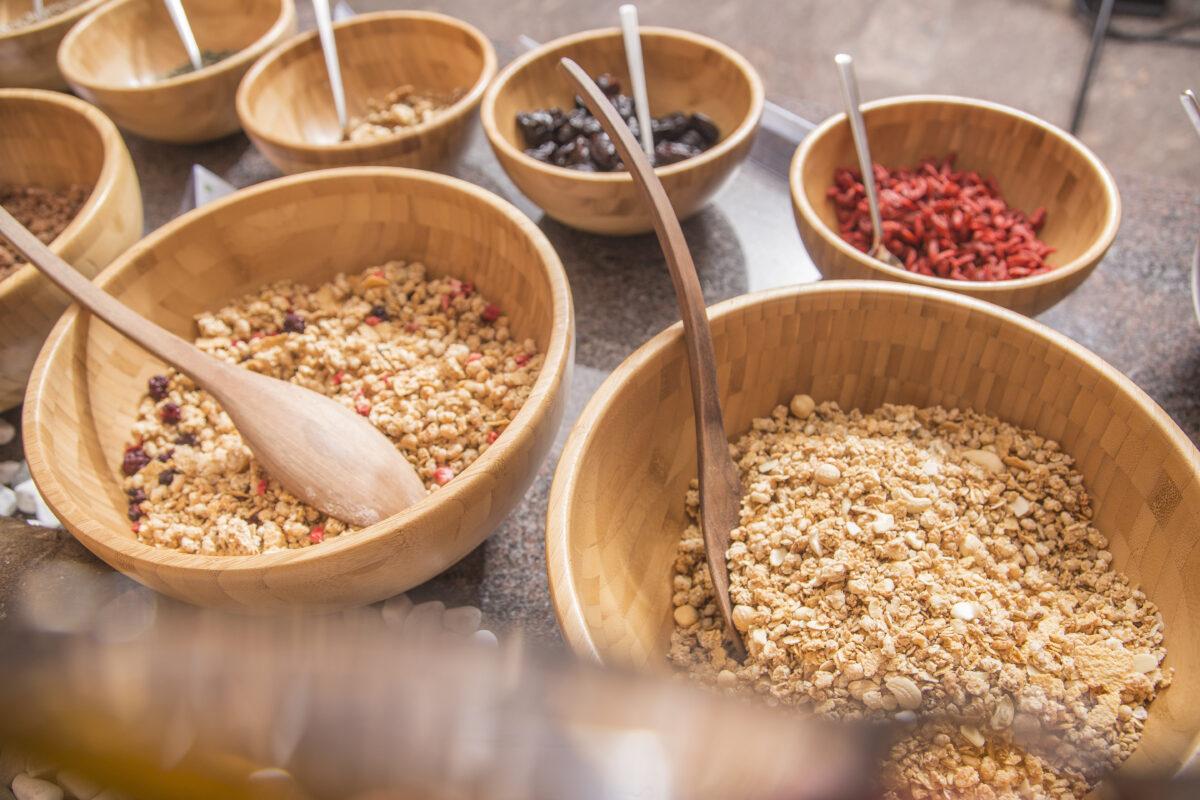
Another lever against food waste: planning. And the courage to do things differently.
At the Canvas & Orchids Retreat in Cambodia, there is a set daily menu (i.e., no à la carte options). Meals are cooked using whatever is freshly available—creatively, seasonally, and with every part of the ingredients. This reduces waste and allows guests to experience sustainability through a culinary journey of discovery.
Another thing few hotels “dare” to do is offer flexible portion sizes. This means that the staff is trained to provide half portions (or second helpings) upon request. The Naturhotel Outside focuses on smaller portions. Any surplus food does not end up in the trash but rather at the afternoon buffet or with the employees. The SCHWARZWALD PANORAMA operates similarly, using intelligent menu planning and adjusted portion sizes to prevent food waste from the outset.
The Hotel Luise in Erlangen is a real best practice example:
On average, only five grams of food waste per guest per meal are left over. This is made possible by smaller buffet plates that are refilled as needed. At the end of breakfast, staff ask guests specifically what else the guests would like. They then fetch a single slice of cheese from the kitchen instead of putting out another 20 slices.
For you at home:
- It’s better to replenish than to overfill. Unlike in a hotel, you won’t have the problem of not being able to serve food that has already been on the table. However, you should also make sure the food remains appetizing. No one wants rice mixed with sauces and other foods, but you can use leftover plain rice in many ways.
- You don’t need a huge selection or a something new every day. (It’s better to finish an open container of hummus or jam before opening something new.)
Leftovers become flavor — when creativity is part of the concept
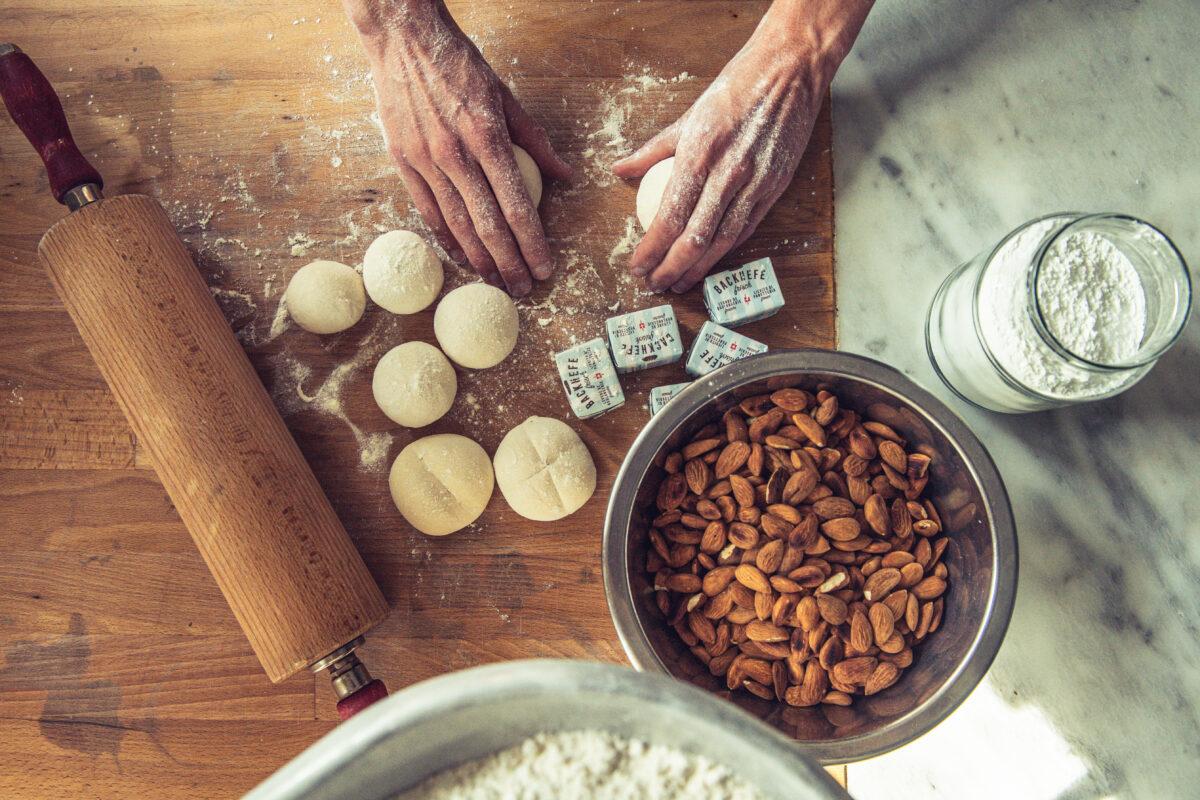
“Leftover utilization” is a part of cooking as an art form, as well as a firm part of professional gastronomy.
- At the Hotel Bella Vista Zermatt, orange peels are made into syrup, stale bread is given to the sheep, and coffee grounds are used to fertilize flowers.
- The three South Tyrolean hotels, My Arbor, Hotel Weihrerhof, and OLM Nature Escape, transform vegetable peelings into stock and use stale bread to make dumplings or croutons.
- The SCHWARZWALD PANORAMA uses leftovers to make soups, stews, and fresh salads.
The advice for you at home:
Learn how to cook creatively with leftovers. Our tips from the web:
- Zucker and Jagdwurst: This vegan food blog provides a straightforward list of recipes for everyday ingredients like rice, bread, and soft fruits.
- Familienkost also offers ideas for more unusual foods, such as asparagus and lemons, and has a search function for ingredients.
- Der Restegourmet is a sophisticated website and app for cooking with leftovers. It takes a little while to get used to, but it offers useful tips and recipes.
When food returns to the earth: Thinking circularity through to its logical conclusion
Food that can no longer be eaten does not have to be wasted. Many of our partners close the loop by composting.
- STURM composts all organic waste and uses the resulting soil in its snack garden.
- At the Naturresort Gerbehof, food waste is also converted into fertilizer through composting.
- The SCHWARZWALD PANORAMA collaborates with ReFood, which collects cooking oil and food scraps from restaurants and transforms them into biodiesel, biogas, heat, and organic fertilizer.
The Hotel Korinjak on the Croatian island of Iz stands out in this regard. Here, food scraps are processed on site using a professional composting machine. The nutrient-rich compost is used in the hotel’s garden and given to guests as a small gift. “A gift from our little island to your gardens and plants at home,” they say.
“To us, cycles are systems that nature has always operated according to. We see ourselves as part of this natural rhythm.” – Hotel Korinjak
At home:
- Reheat and enjoy leftovers from the previous day (follow hygiene rules).
- Use the organic waste bin wisely. Plastic and meat scraps do not belong in it. In many places, this also includes “plastic” made from natural materials, such as corn starch.
- Make your own compost (you can even do this in a small container, with a worm bin, or with a bokashi on your apartment balcony).

Cooking Oil: The invisible food waste with massive consequences
One often-overlooked issue is used cooking oil. Frying and cooking fats should never be poured down the drain.
Machu Picchu Pueblo, Peru, is an example of just how serious the consequences can be. There, the pollution of rivers by used cooking oil from restaurants in this popular tourist destination was so severe that it measurably deteriorated the water quality. In response, the Inkaterra Machu Picchu Pueblo Hotel partnered with the community to build a facility that collects and processes cooking oil from restaurants, households, and local businesses into biodiesel. An environmentally friendly project that involves the local community.
How to properly dispose of cooking oil:
- Old cooking oil, frying fat, and similar substances belong in the residual waste bin. Small amounts can be wiped up with kitchen paper and disposed of in the residual waste bin.
- For larger amounts, allow the oil to cool, then place it in a well-sealed container. Dispose of the container in the residual waste or take it to special collection points in your region.
You are currently viewing a placeholder content from Default. To access the actual content, click the button below. Please note that doing so will share data with third-party providers.
Circular Food only works when we work together
Whether it’s the Hotel Klosterbräu, Naturhotel Outside, SANDnature, or Hotel Luise, one thing is clear: circular thinking only works when employees and guests are involved. This also applies at home—to you, your family, and your guests. And it’s probably much easier here. “Would you like me to pack that up for you? Would you like to finish that?” Would you like to take some radishes from our garden with you?” Nowadays, even at weddings and other large celebrations, it’s becoming common for guests to bring containers so they can take home leftovers from the buffet.
Conclusion: Circular thinking begins in the mind
Our Green Pearls® demonstrate that a circular food system can work even under complex conditions. That’s why it’s clear that if it works there, it works here, too.
Households are responsible for the largest share of food waste, so they also have the greatest leverage for change. Circular thinking starts with a mindset of responsibility.
2030 is approaching. Let’s get started.
Save this article on Pinterest.

 Loading...