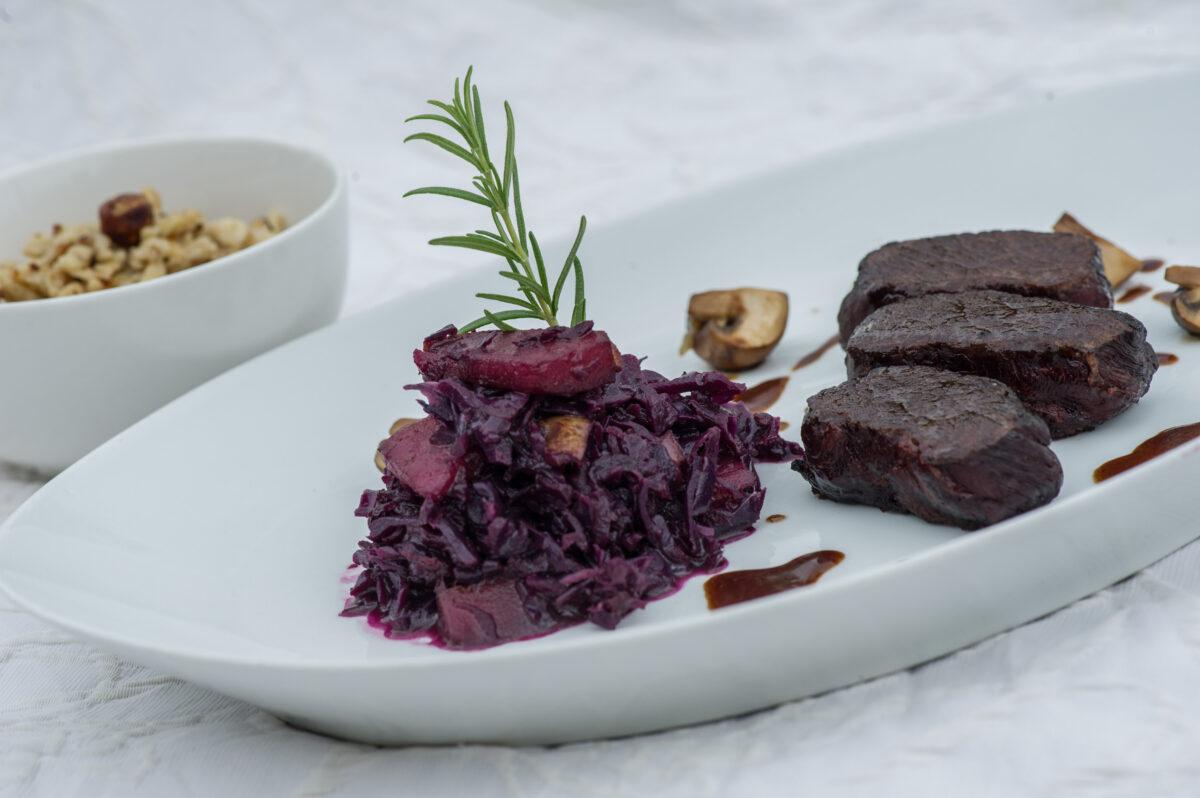
If you’re going to serve meat, it should be carefully selected and treated as something special. That’s exactly how they do it at Naturresort Gerbehof on Lake Constance. This family-run, organic hotel has shared its recipe for “Venison Served Two Ways” with us.
Straight from the region
The venison comes directly from the area surrounding the resort: in addition to their roles as hosts and organic farmers, hotel co-owners Bruno Wagner and his son Ralph are hunters. Short supply chains and direct connections to the origin of products play a central role at the hotel. This applies not only to the meat but also to all other products used in the kitchen. Organic quality and close partnerships are extremely important to the Wagners. Their advice: Do the same at home. Buy the ingredients you need for your recipe at the weekly market, from a local hunter, or at a regional farm stand.
Is game meat better?
Game meat differs from conventionally produced livestock meat in several ways. The animals live in the wild, move about freely, and feed on the resources of their natural habitat. This eliminates factors such as confinement in barns, feed production, and medications, all of which contribute to environmental impacts in the meat industry.
However, the specific context is always crucial, including regional populations, adherence to closed seasons, proper hunting practices, and complete processing. When these aspects are taken into account, as they are at the Naturresort Gerbehof, game meat is the (slightly) better choice for the environment and animal welfare.
Spices typically used in venison stew
The classic spices that European cuisine has used for centuries define this ragout’s flavor profile. Juniper and bay leaves—also grown in Germany—play a particularly prominent role and enhance the robust flavor of the game meat.
Allspice and cloves complement the blend with warm, slightly sweet notes. These spices originate from tropical regions and must be imported, so look for organic spices with the Fairtrade seal.
Tip: The hotel recommends adding a spoonful of lingonberry jelly for a fruity touch. The combination of hearty game and sweetness has a long tradition in German cuisine.
Venison ragout and steak from the Gerbehof Nature Resort (German organic cuisine)
Ingredients
- 500 g Venison
- 4 pieces Venison steak
- 1 l Game stock
- 100 g Carrots
- 100 g Celery
- 100 g Onions
- 100 g Leek
- 200 ml Red wine
- 1 tbsp Tomato paste
- Wild spices (or allspice, bay leaves, juniper berries, cloves)
- Cranberry jelly
Instructions
- Cut the meat into 1-cm cubes.
- Wash, trim, and cube the vegetables.
- Season the meat with salt and pepper, then sear it in hot oil, and finally add the vegetables and cook them together.
- When everything is browned, add the tomato paste, stir briefly, and let it simmer for a moment.
- Deglaze with red wine, scraping the mixture off the bottom. Repeat this process two or three times.
- We only add the game seasoning and all the other spices now.
- Add the game stock and let it simmer over medium heat.
- After about 20–30 minutes, the meat should be cooked through; season to taste if necessary.
- Ten minutes before the ragout is ready, season the steaks with salt and pepper, sear them in a hot pan. (Depending on their thickness, cook them for two minutes on each side, then let them rest, wrapped in foil, to retain the juices.)

 Loading...