
A week’s holiday for 500 euros, including flights, accommodation and all-inclusive meals. Sounds like a bargain . But can something like that really be sustainable? Or is someone (or something) else paying the price for it?
Is it possible to tell if a product is sustainable just by looking at the price?
The clear answer is: No, even though we humans tend to equate quality—and sustainability, for that matter—with a higher price. “What costs more is worth more” is a common misconception. And a look at current data confirms that it’s not that simple.
A 2025 study by the Federal Environment Agency shows that there is no clear correlation between travel costs and sustainability.
Sometimes, more sustainable trips are cheaper; other times, they are more expensive. There is no evidence of systematic price increases due to more sustainable measures, accommodations, or activities. This is primarily because sustainability accounts for only a small portion of total expenses. How you travel matters much more: shorter distances, different modes of transportation, and the accommodations you choose often influence the price more than sustainability factors themselves.
Especially interesting is that travelers for whom sustainability is a key factor actually spend less money per day, on average!
“The price isn’t the problem”
Professor Harald Zeiss (research focus: sustainable tourism) shares this view. For him, price is not a reliable indicator. He says gut feelings, such as the suspicion that arises when seeing a “green” 500-euro trip and thinking “something’s not right here,” can be misleading.
Low prices aren’t always the result of poor conditions and indifference toward the environment; sometimes they stem from political or economic factors, such as when countries actively promote tourism.
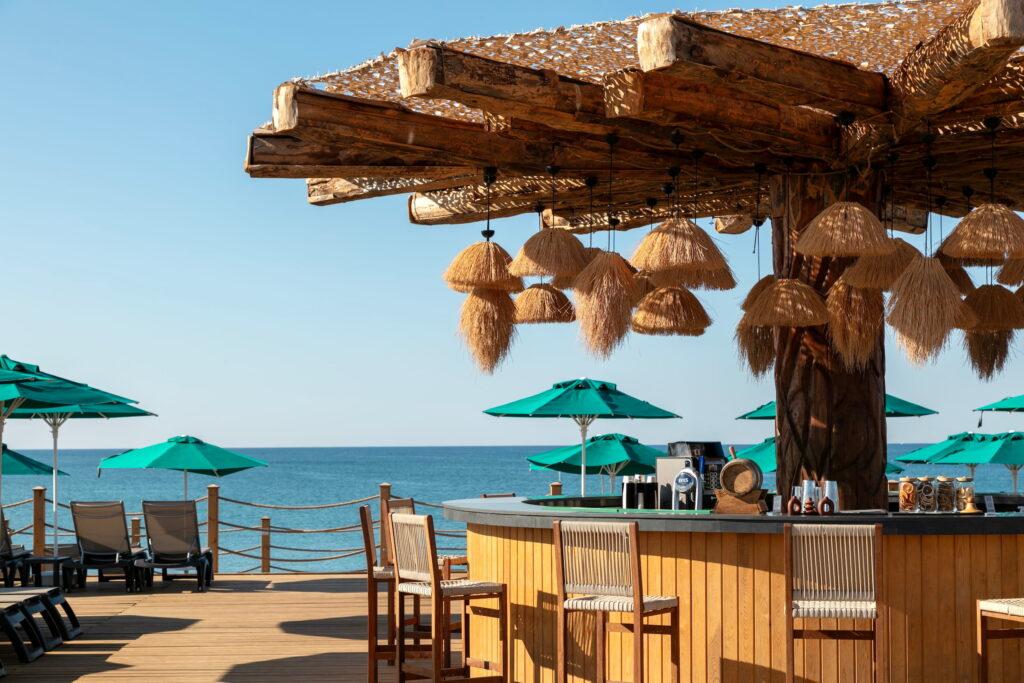
All-inclusive resorts are not automatically unsustainable either. A large portion of the money often stays in the country. Employees are paid, and in the best-case scenario, food is sourced locally.
With the addition of the Megasaray Club Belek on the Turkish Riviera, Green PearlsⓇ now includes an all-inclusive resort. At first glance, you see a massive hotel complex with every amenity imaginable: plenty of pools, a spa, various restaurants, fitness and sports facilities, and a beach. However, the resort’s commitment to sustainability becomes clear upon further inspection: electricity comes from its own solar park, regional products are sourced, green spaces are largely planted with native, drought-resistant plants, and employees are treated fairly and paid well.
- If you’d like to learn more about their sustainability efforts, you can find them listed under “Green Initiatives” on the Megasaray Club Belek microsite.
So, what is our conclusion? Just because something is cheap doesn’t mean it’s unethical. And expensive does not necessarily mean sustainable.
But…
… is it really as simple now as looking for the cheapest deal and heading off on vacation? Not quite. Price can certainly be a clue, especially if it’s extremely low for what’s included. For example, consider the €500 package tour that includes flights and all-inclusive meals. But what counts as “extremely low,” and what’s reasonable? To find out, we reached out to hoteliers in the Green PearlsⓇ network and gained interesting insights into how prices are calculated in the hospitality industry.
What factors determine the price of a vacation package?

(Unsurprisingly), a large portion of the cost of a vacation goes toward paying people a fair wage.
Marion Muller from the SANDcollection explains:
“The most significant cost factor is labor costs, followed by the cost of goods sold—that is, food, materials, and products.”
When an offer is extremely cheap, this is often where the low price originates. In other words:
- Lower wages for employees
- Cheaper or imported food
- Simpler, cheaper materials
- Lower quality service and facilities
Host Marion believes that responsibility comes at a price. This belief is reflected in the accommodations, such as the quality of the materials, food, and working conditions. At SANDnature on the German Baltic Sea coast, for instance, guests sleep on handmade (and therefore quite expensive) COCO-Mat beds made from natural materials, enjoy regional organic products for breakfast, and the staff are paid fairly and receive a wide range of benefits and training.
For that reason, Marion Muller does not offer “dumping prices.” Nevertheless, a night’s stay with breakfast at SANDnature starts at just 99 euros—a bargain for such a popular vacation spot as Timmendorfer Strand on the Baltic Sea.
An overview of the main price components for your vacation
The price of a trip usually consists of several components:
- Transportation (air, rail, and transfers — often one of the biggest cost drivers in terms of both price and sustainability)
- Accommodation & Infrastructure (buildings, maintenance, energy, water)
- Staff (service, kitchen, housekeeping, and management—one of the biggest cost drivers in a hotel)
- Food & Supplies (regional vs. imported, organic vs. conventional)
Sustainability measures (e.g., waste management, certifications, and training)- Occupancy and business model (quantity versus quality, seasonal fluctuations, pricing strategy)
- External factors affecting price (e.g., government grants or subsidies, global events).
You can either cut costs or make strategic investments in each of these areas. So, when you see an extremely low-priced offer, ask yourself this simple question: In which area are they likely cutting costs to offer this price? Because, as the hoteliers in the Green Pearls® network agree:
The cost doesn’t disappear. It just gets shifted.
Hidden vacation costs: “Someone always ends up paying.”
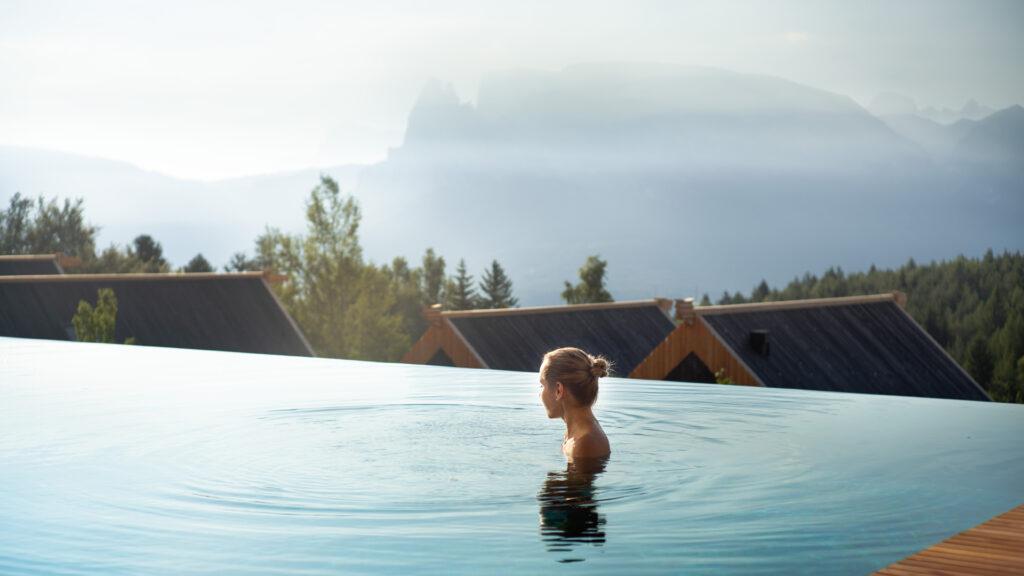
Caroline Pescoll, the sustainability officer at ADLER Spa Resorts & Lodges, says, “Very low prices often suggest that the real costs are being passed on elsewhere.” Sustainability also means paying fair wages, investing in environmental and climate protection, and supporting the local economy.
Johann Steinwender of Schloss Lerchenhof in Carinthia, Austria and the team at Croatian Hotel Korinjak agree: if prices were too low, they would be unable to uphold their commitment to fair labor practices and regional economic development.
“Responsibility comes at a price—not in the sense of being “expensive,” but in the sense of fair and realistic prices that support quality, sustainable business practices, and regional structures.” – Johann Steinwender, Schloss Lerchenhof
Fair wages and quality: Areas where compromises should not be made
As you now know, a large portion of travel costs goes toward staff. Food and other supplies are also major expenses for hotels. This is often where you can see how sustainable an offer really is.
Ursula Wagner of the Naturresort Gerbehof on Lake Constance speaks of “appreciation”: for employees, high-quality food, and the work that goes into producing it. According to her, organic products, fair pay, and quality cannot be achieved at rock-bottom prices.
Alexander Thurm, the owner of Hotel Das Rübezahl in the Allgäu region, agrees. “Extremely cheap trips can hardly be sustainable,” he says. In addition to fair wages and regional economic benefits, quality is also a factor. Opting for high-quality, durable products that are free of harmful substances is better for the planet, but it’s not cheap.ig.
Quantity over quality: The problem with the “cheap is best” principle

Low prices in the tourism industry often rely on the principle of “quantity over quality.” Marco Spiss of Summit Lodges Pfunds highlights this. His two vacation log cabins (each with a sauna and a fireplace) are nestled in the heart of the Tyrolean Oberland, a popular tourist region. Low prices are usually only possible through high occupancy rates and large volumes. The well-known consequence of this is overtourism. In an interview with us, Spiss discusses how overtourism threatens nature and how we can steer tourism in a more sustainable direction.
Ben Förtsch of the Hotel Luise in Erlangen is very clear about his position:
“Cheap all-you-can-eat-and-drink vacations tend to ruin tourist destinations rather than promote them. Being cooped up in hotel complexes with nothing but fresh air and sunshine, yet never venturing outside, cannot be the point of traveling. Going on vacation should be accessible to everyone. But that doesn’t mean flying should be so cheap. It doesn’t mean cheap, cheap, cheap.” – Benjamin Förtsch, Hotel Luise
Price is one factor to consider in the tourism industry, but it’s not the only one. When planning a trip or choosing accommodations, it’s important to understand the system behind it and pay attention to where your money goes. This is not just a matter of budget travel; it’s a universal principle.
The SCHWARZWALD PANORAMA in Bad Herrenalb recommends the following approach:
“Instead of asking, “How cheaply can I travel?” ask yourself, “What impact do I want my trip to have?” – SCHWARZWALD PANORAMA
“Travel deserves to be affordable”

The Relais del Maro also emphasizes: “Travel should be affordable, but not at the expense of the planet.” Built in the small village of Borgomaro in Liguria, the 4-star hotel is an “Albergo Diffuso.” This means that it is spread across several former residential and commercial buildings in the village. Here, tourism is part of the solution, not a problem. Tourism has prevented residents from leaving the countryside, and the empty buildings have been given new purpose. The village has been preserved.
Despite the sustainable renovation of the buildings and numerous initiatives focused on regionality and the environment, the Relais del Maro’s starting rates are well below the Italian average at 115 euros per night. According to Momondo, the average cost of a double room in Italy is between 159 and 220 euros per night.
Cheap travel at the expense of people and the environment: When should we worry?
Finally, we would like to point out that cheap travel deals can sometimes be a cover for scams or exploitation. According to the Consumer Advice Center, travel is the fourth most common topic in which consumers feel they have been deceived. For example, Oliver Buttler, a travel expert at the Baden-Württemberg Consumer Advice Center, told the Berliner Morgenpost that people repeatedly fall for fake offers. They book and pay for extremely cheap flights, only to later discover that these flights never existed.
This often happens through sites like Skyscanner or other third-party providers that do not accept liability for fraud. Therefore, Oliver Buttler recommends booking directly with the airline or accommodation provider. This ensures that the offers are legitimate.
Direct bookings are fair
At Green PearlsⓇ, a platform that clearly and transparently outlines a hotel’s commitment to social, environmental, energy, and food initiatives, we also recommend booking your stay directly on the hotel’s website.

This ensures that your money goes entirely to the accommodation (i.e., without any commission deductions). In some cases, the hotel will also reward you with a small extra (e.g., a welcome drink at the Relais del Maro, free parking at the Klosterhof – Alpine Hideaway & Spa in Bayrisch Gmain, or other benefits).
Red Flags with Low-Cost Offers
When booking a trip, the following factors should prompt you to do some research, especially if you prefer sustainable travel:
- Flight + Hotel + All-Inclusive at an extremely low price
- Unrealistically perfect photos + little real information
- Pressure (“only today,” “last seats available”)
- No information on the origin of food
- No transparency regarding working conditions
We also recommend avoiding tour operators or platforms that promote extremely unsustainable travel options, such as “fly to New York for a shopping weekend,” “skiing in Dubai,” or “elephant riding in Thailand.” Common sense can often help you determine if a travel option is responsible.
Taking responsibility for one’s own decisions
Ultimately, it’s not about the cost of your trip, but its impact. You can spend a lot of money traveling—there’s no upper limit. However, you don’t have to do that to travel more sustainably. You can choose an affordable hotel that supports the environment and the local community. At the same time, you can skip the cheap flight and buy the more expensive train ticket. The important thing is to make conscious travel decisions and not just go for the cheapest option.
Save this destination guide on Pinterest.


 Loading...