Biohacking sounds like a high-tech, control-freak activity that requires a lot of money. Like people who treat their bodies like a startup: measuring, optimizing, and debugging. Think ice baths in the garden, sleep trackers on your wrist, and the belief that the right morning routine can easily help you live to be 180 years old.
One of the founder of this movement is Dave Asprey. A Silicon Valley legend, inventor of Bulletproof Coffee (coffee with butter from grass-fed cows) early biohacker—and someone who openly admits to having been an overweight jerk in the past. Today, his home in Canada is filled with over a million dollars’ worth of equipment. Examples include vibration machines, cold chambers, infrared cabins, and nicotine sprays for the tongue. French fries? Never.
Asprey traveled the world to learn about different life philosophies—from ayahuasca in Peru to yak butter tea in Tibet. He experimented with his body the way others in Silicon Valley experiment with ideas. As crazy as it sounds, this mindset has given rise to a global trend. (Even though not everyone knows who he is.)
Biohacking or biotracking — we’re already well into it
Before we continue, an important distinction.
Biotracking means observation. Counting steps. Analyzing sleep. Measuring heart rate. Using cycle apps. Wearing smartwatches. Many of us have been doing this for a long time, more or less consciously.
Biohacking takes it a step further. Here, intervention is necessary. Heat, cold, light, food, routines. The goal? More energy, better regeneration, and a longer life.
The good news is that you don’t need to use nicotine spray or live in a laboratory to find yourself somewhere in between. Most people consciously choose which elements to include and which to leave out.
Infrared: Wellness, science, and wishful thinking
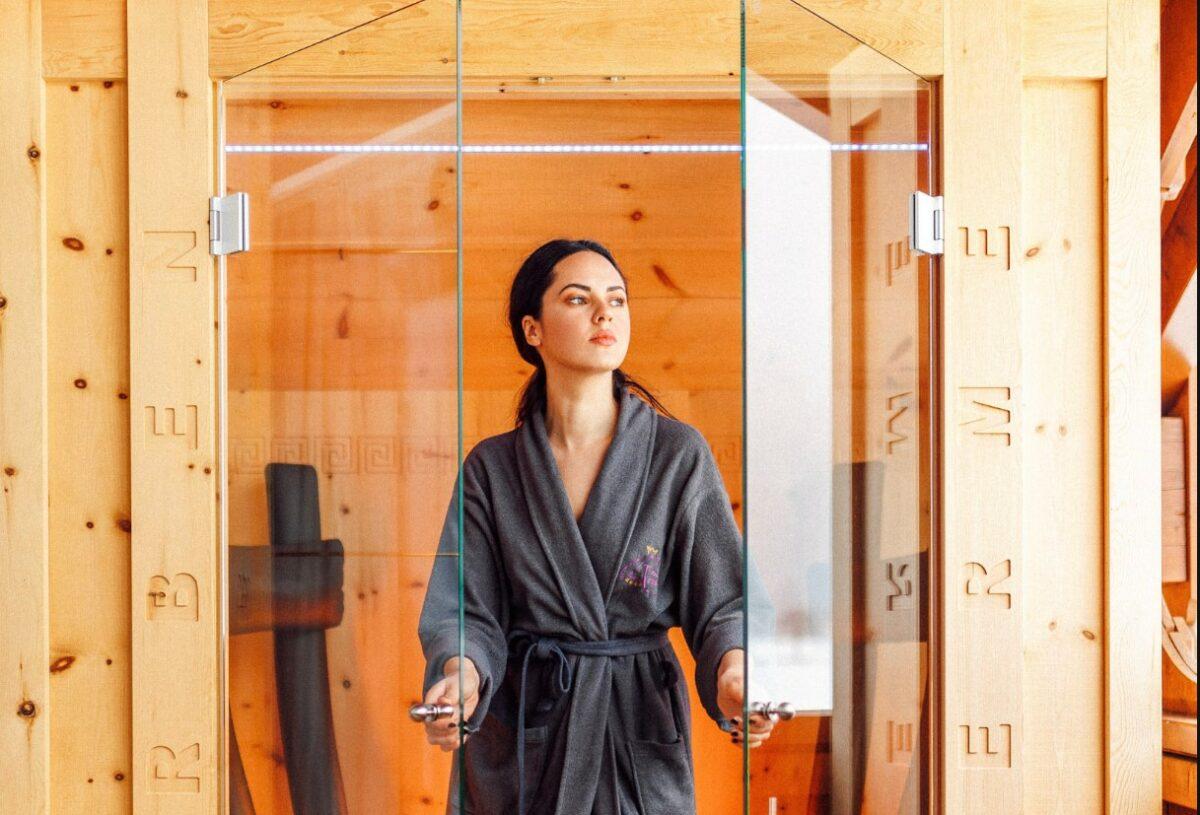
One popular topic in the biohacking community (after ice baths) is infrared saunas. They are considered gentler and more effective than traditional Finnish saunas. It is said that the heat penetrates deeper into the body, promoting regeneration, detoxification, and cell repair.
Sounds impressive. But, as is so often the case, it is only partially true.
What infrared can actually do:
The following are well documented:
- Muscle relaxation
- Promotion of blood circulation
- Enhanced subjective well-being
- Support for regeneration and relaxation.
Especially for those who find traditional saunas too strenuous due to their high temperatures, infrared saunas can be a pleasant alternative.
What infrared cannot do:
Not proven, even though it is often claimed to be:
- Detoxification through sweat (Sweat is almost entirely water. The liver and kidneys are responsible for detoxification.)
- Repair of damaged proteins
- Miraculous anti-aging!
In other words, infrared is not a magic remedy; rather, it is a reliable wellness tool when expectations are kept realistic.
Infrared on the go: Why traveling can be a better biohack
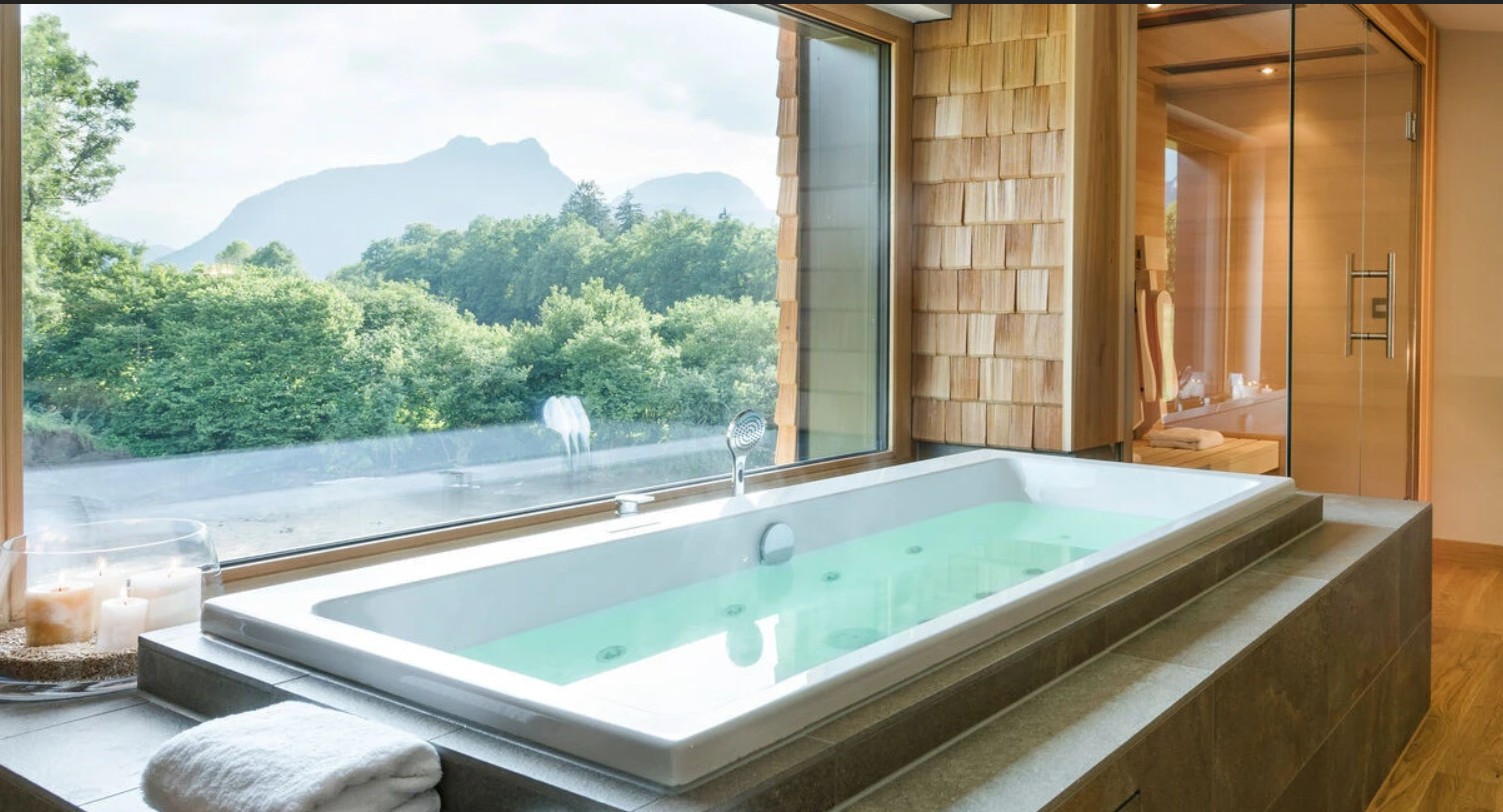
While some people install private infrared saunas in their basements (which requires high electricity consumption, maintenance, and technology), the practice is often more relaxed and sustainable when traveling.
Here, infrared is not used in isolation but rather as part of a lifestyle that includes movement, rest, water, good food, and conscious downtime. There is no pressure to optimize, no permanent measuring devices, and no pressure to perform. Instead, there are offers that you can try out and then let go of.
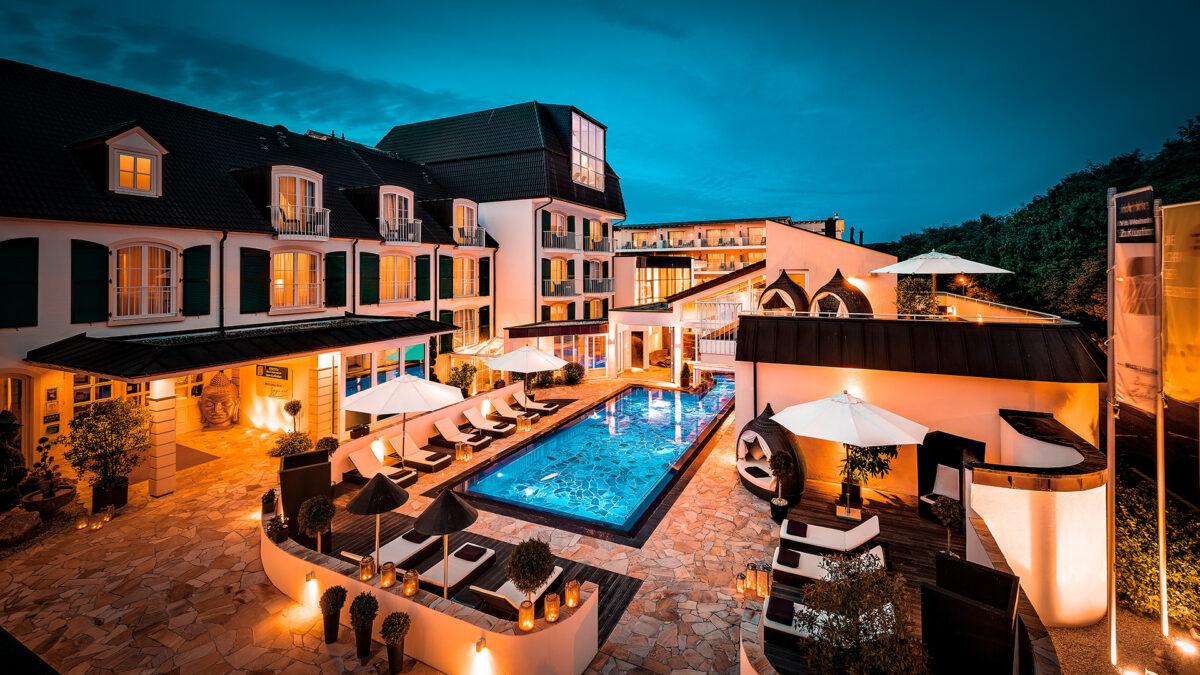
One exciting example is the Lifestyle Resort Zum Kurfürsten in Bernkastel-Kues on the Moselle.
Lifestyle instead of label: The Lifestyle Resort Zum Kurfürsten on the Moselle
Host Heiner Buckermann has never referred to himself as a biohacker, at least not to us. However, his interpretation of the lifestyle is extremely fitting.
Over the years, a former zero-star bush hotel has grown into a holistic resort with a consistent focus on health, prevention, and well-being. The architecture and water cycle, in particular, were designed according to the principles of a Chinese Feng Shui master—a detail that demonstrates the seriousness with which the interplay of energy, space, and movement is approached.
The heart of the resort is its four water worlds:
- Three year-round, heated pools with modern, resource-saving Ospa technology
- A 20-meter-long, chemical-free natural swimming pond
- Indoor and outdoor areas for every season
In addition, there is an exceptionally diverse sauna area offering everything from an energy forest infrared sauna to a bio-energy sauna, a Himalayan salt sauna, a Chinese herbal sauna based on TCM, an earth sauna with temperatures up to 110°C, a wood-fired sauna, and steam baths.
TCM, technology, and controlled experiments
The resort’s TCM Center has a particular focus on biohacking. Its specially trained TCM therapists create individual nutrition plans and offer classic traditional Chinese medicine treatments, among other services.
Then there are the devices. Three of them. High-tech, yet deliberately designed for temporary use—not ownership.
- HydraFacial: An anti-aging treatment that uses radio frequency technology to improve skin texture, hydration, and elasticity. It includes a cooling mode to soothe the skin.
- BEWEI: A radiofrequency application for the wellness sector developed from arthrosis therapy. The treatment begins with a body analysis (including muscle mass, body water, and BMI) and combines electromagnetic impulses with a mechanical air pressure massage to activate the lymphatic system—while you lie relaxed and fully clothed under mats (a bit of a Silicon Valley vibe, after all).
- BrainLight: A 4D shiatsu massage chair that promises deep relaxation without the need for a meditation app or pressure to self-optimize.
This is where the difference from traditional biohacking becomes clear—you can test, experience, and compare everything without owning it. No need for equipment at home or five-figure investments. Just conscious experiments in a safe environment.
In addition to the infrared sauna, the hotel uses infrared technology in the form of deep heat infrared blankets before and during every massage. The combination massage alternates between infrared heat and massage.
More examples of infrared technology in travel
In addition to Zum Kurfürsten, there are other hotels that have successfully incorporated infrared technology into their wellness and health programs.
- Paradiso Pure.Living Vegan Hotel on the Seiser Alm: Here, you can find rooms with private infrared cabins as part of a holistic, plant-based lifestyle — with plenty of nature and exercise right outside your door, and relaxation inside. You can also book a “Zerobody Floating Experience” in the “relaxation capsule.” This experience combines perceived weightlessness, music, and light.
- The Hotel Das Rübezahl is located in the Allgäu region, directly opposite Neuschwanstein Castle: Here, you can book a romantic hotel room with its own infrared sauna, offering a retreat of warmth and views of the mountains and castle.
- Klosterhof – Alpine Hideaway & Spa in Bayerisch Gmain: The hotel’s “Best Rooms” are two-story spa suites with private infrared saunas and whirlpool tubs. The hotel also features a modern health center located directly inside.
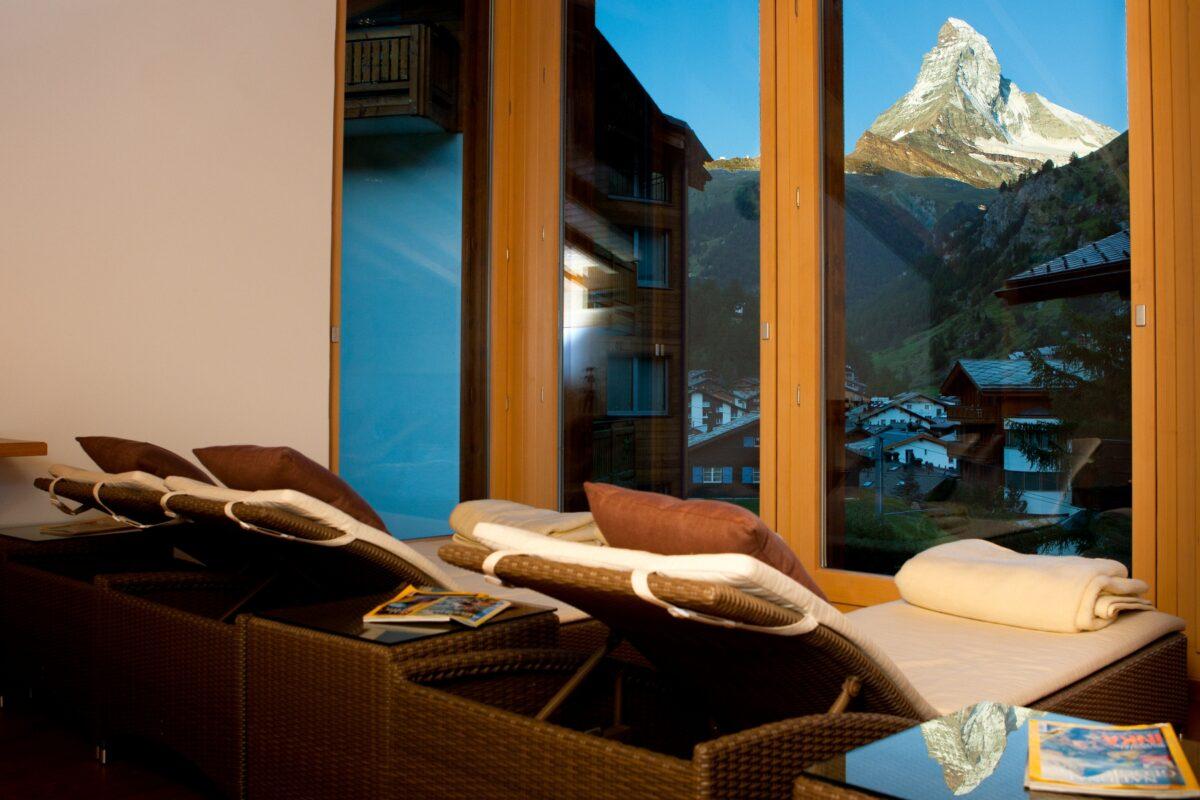
- Bella Vista Zermatt in Switzerland: This family-run boutique hotel has an infrared sauna in its spa area with a fantastic view of the Matterhorn — no biohacking vocabulary necessary, just plenty of peace and quiet.
- Naturresort Gerbehof on Lake Constance: You can reserve the infrared sauna in the wellness area for private use. The Bio Hotel combines nature, organic food, and naturopathy.
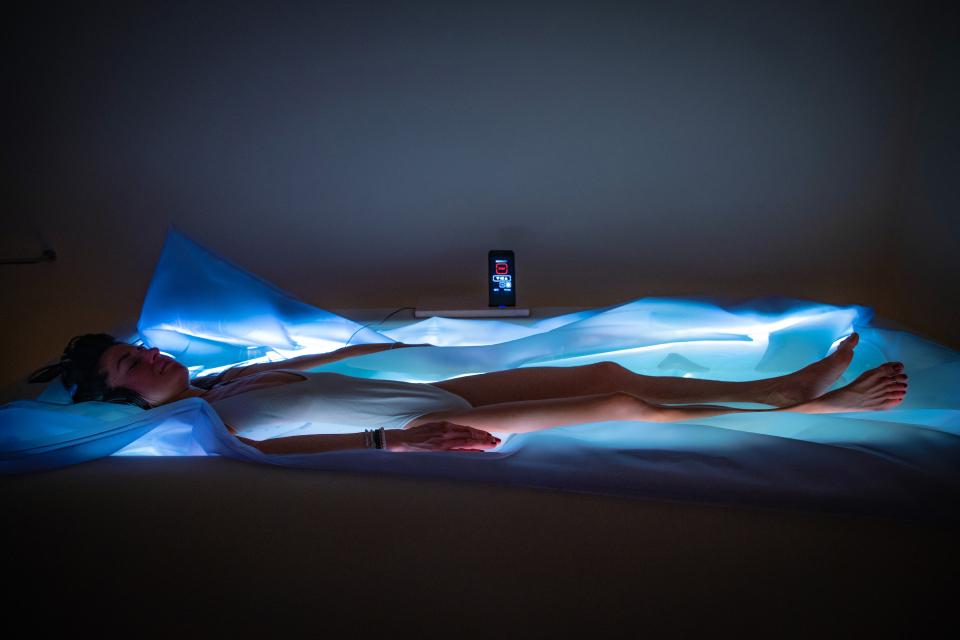
Zero Body Floating ©Paradiso Pure.Living Vegan Hotel
Conclusion: Less extreme; more feeling
Biohacking doesn’t have to be extreme. You don’t need to drink yak butter tea or transform your home into a wellness laboratory. And you certainly don’t have to permanently connect your life to devices. After all, we manage just fine without infrared cabins, floating tanks, and radio frequency technology in our everyday lives.
This is precisely why such applications can be useful — for a limited time. As an impulse. As an experience. They can be building blocks embedded in breaks, movement, rest, good food, and nature. They are not a promise of eternal youth or maximum performance, but rather an invitation to reconnect with your senses.
Travel offers the ideal setting for this, providing an opportunity to try things out instead of owning them and experience life instead of optimizing it. You have the freedom to take with you what feels really good.
Save this article on Pinterest.



 Loading...