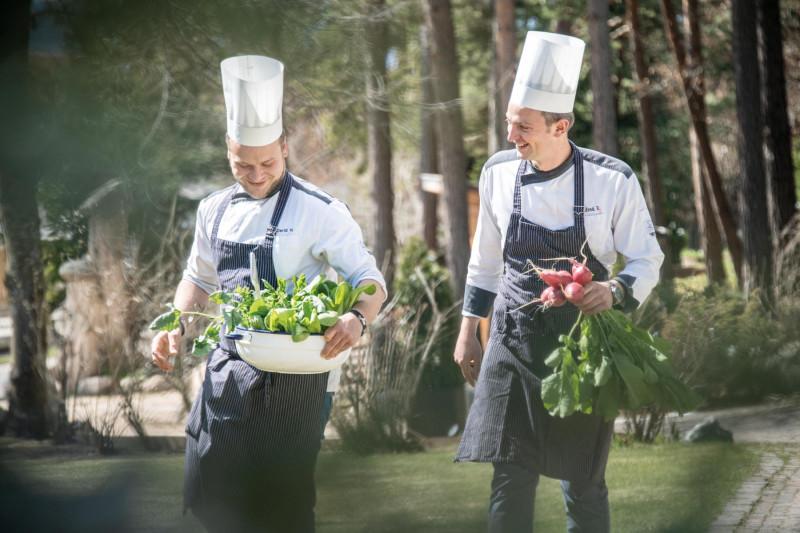
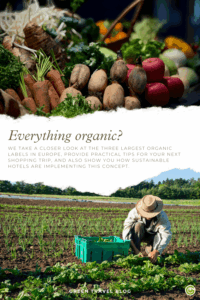
Imagine you’re standing in a supermarket. There’s a huge selection. You want to make conscious, sustainable purchasing decisions, but how can you tell which label to trust? In this blog article, we take a closer look at the three largest organic certifications in Germany. But we don’t just explain what the labels mean; we also address questions that many of us have: Are organic products really better or healthier? And wouldn’t it become too expensive if you implemented it consistently?
To answer these questions, we spoke with certified organic hotels from our network. As true pioneers in this field, they demonstrate that organic practices can be economical and suitable for everyday use while still being consistently implemented.
Are organic foods really healthier?
If a product has an “organic” label, it must be healthy, right? Not necessarily. Organic butter is still butter, and organic chocolate is still chocolate. Research shows that the same applies to fruits and vegetables. If you only consider vitamins, a conventional apple can be just as nutritious as an organic apple.
Our detailed Green Pearls® Insight on the state of research on organic food shows this, and we have summarized the most important scientific work of recent years.
If we stopped now, the answer to the question would remain “no.” However, that would leave out a large part of what makes organic food special.
Why organic food can be healthier overall
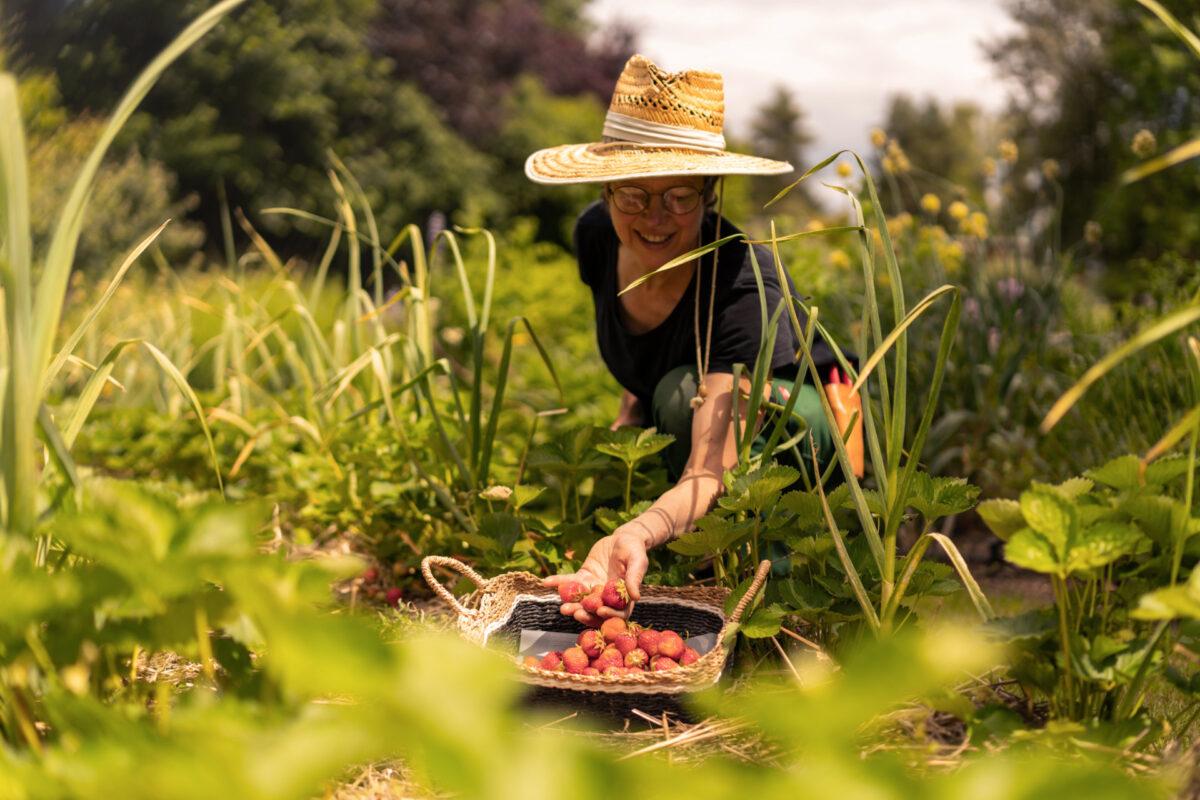
Things get interesting when you consider not only individual foods, but also the systems behind them. The most significant distinction between organic and conventional agriculture lies not in vitamins, but in the use of pesticides.
The absence of synthetic chemicals in organic farming has far-reaching consequences:
● Groundwater and drinking water are significantly less polluted.
● Soils remain more fertile and healthy
● Biodiversity is protected (keyword: insect decline).
● Water cycles are not disrupted by persistent pollutants.
● Harvest workers are exposed to fewer health risks.
● Harmful pesticide residues cannot remain on food.
Therefore, organic farming protects not only individual consumers, but also the basis of our entire life: water, soil and biodiversity. This is precisely where the added health value lies, and it cannot be measured in a vitamin table.
So, is organic food healthier? Perhaps not when it comes to individual food items. However, if we consider the health of both ourselves and the planet as a whole, organic food is definitely healthier.
Is organic better than regional?
Organic is considered sustainable. But isn’t food from the immediate vicinity, even if it has been grown conventionally, more sustainable than organic vegetables flown in from overseas?
This is a valid question that is often discussed controversially in the sustainable hotel industry. The short answer is: The best is both – organic and regional.
- Ideally, food should be sourced locally and carry an organic label.
- If this is not feasible, it is better to choose organic products from nearby regions, such as Europe, than to choose organic products from overseas.
- What if certain foods are only available in organic quality from distant regions? In that case, the most sustainable option is often simply to do without.
In a conversation with Fabienne Anhamatten from the Hotel Bella Vista in Zermatt, we learn how this can work in practice. The hotel exclusively serves organic products and has made a conscious decision not to serve exotic fruits. Her stance is clear: pineapple and papaya have no place on a Swiss breakfast buffet. Seasonal, regional alternatives are more sustainable and often more fitting for the location.
And what about the price? Organic doesn’t necessarily have to be expensive
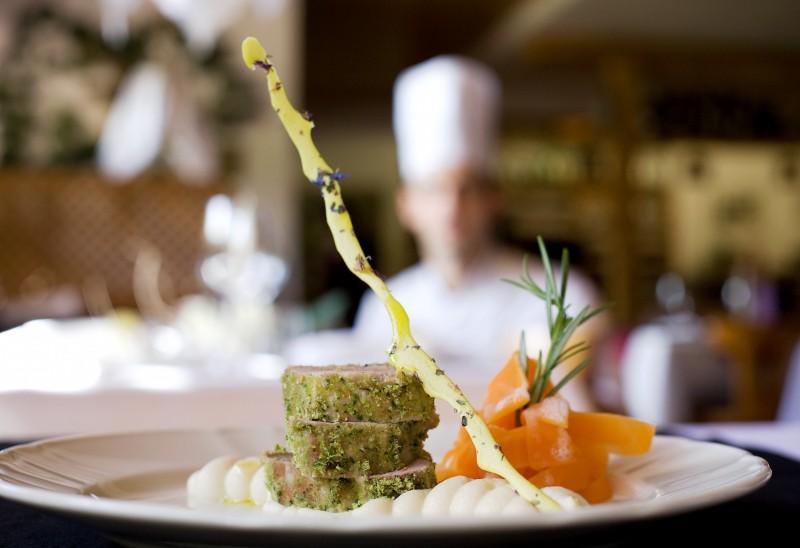
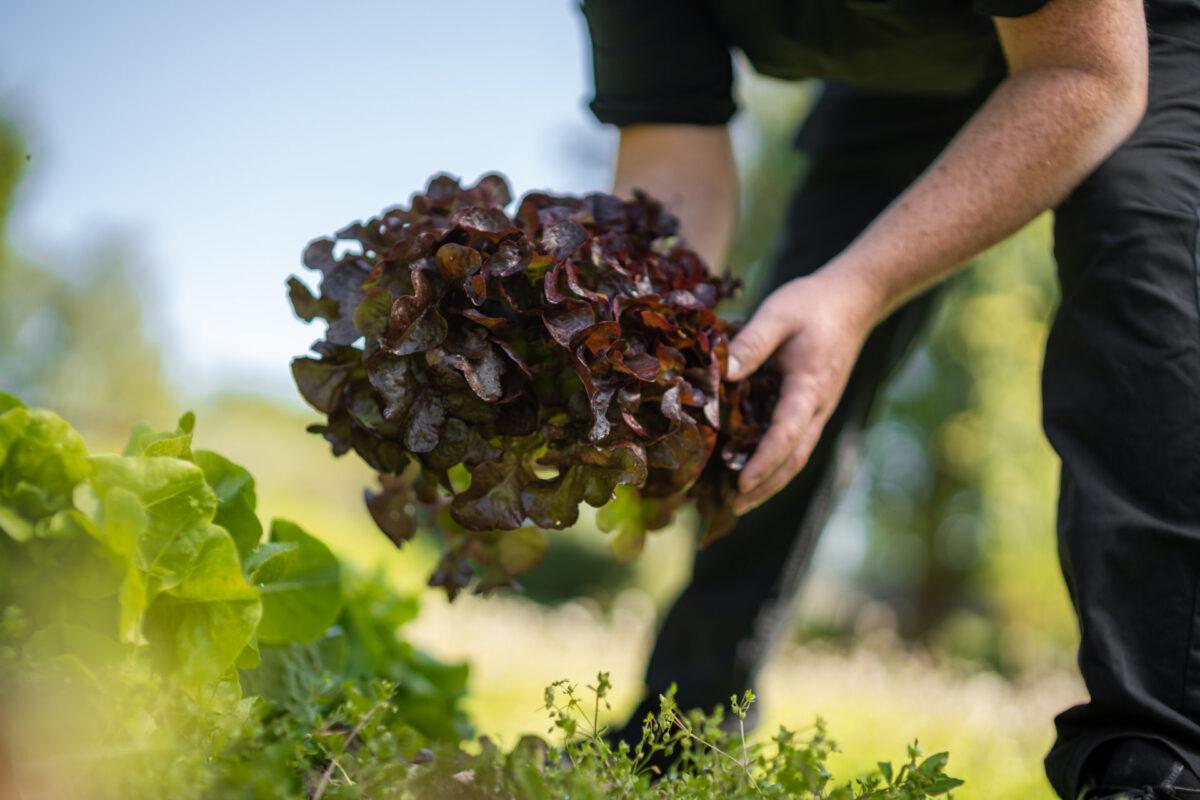
Now, let’s address the crucial question: Who is actually able to afford it? Organic food is clearly more expensive than food produced using conventional methods. One key to saving money on organic products is to buy in season. For example, the first local strawberries of the year are always the most expensive. The more strawberries that become available, the cheaper they become. Our tip: Cook according to the seasonal calendar. This not only saves money, but also adds variety to your plate.
Discount stores now offer organic products, too. It’s worth taking a closer look: Are these products regional as well? Often, they only carry the EU organic label. More on this in the section on labels. At least, though, they’re organic. This is a realistic and important first step.
What about organic hotels?
A look at our Green Pearls® network of sustainable hotels reveals something surprising: the hotels that consistently focus on organic products are not necessarily the most expensive.
A good example is the APIPURA hotel rinner on the Ritten in South Tyrol. Here you can stay sustainably for less than 100 euros – even though the hotel is one of the most committed advocates of organic products. Junior manager and chef Manfred Rinner even played a key role in bringing the Bio Fair Südtirol label to the catering and hotel industry.
His most important money-saving tip? Make the most of your ingredients (especially meat), and get creative with vegetable scraps.
When something costs a little more, you’re more conscious of how you use it. Buy in portions, use up leftovers, and don’t throw anything away. With organic food, you can even eat a lot of it with the skin on — just scrub potatoes, carrots, and apples thoroughly instead of peeling them.
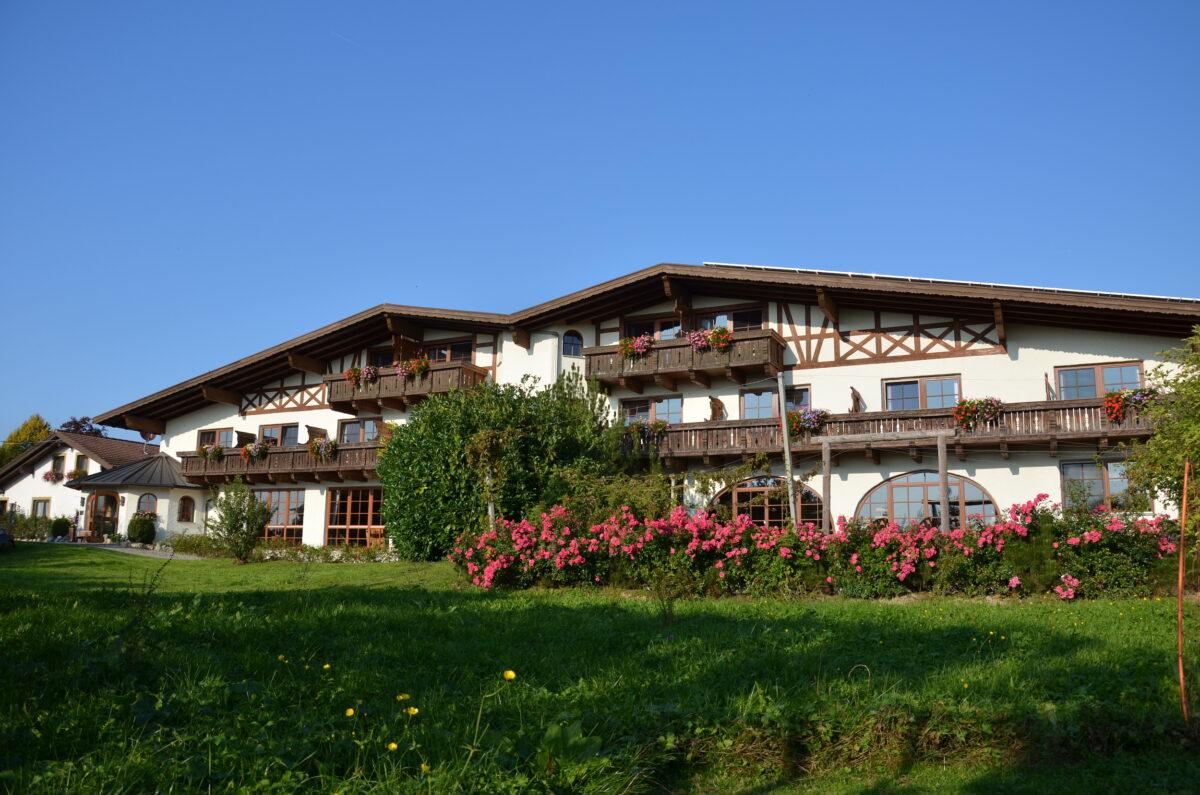
Here’s an experiment for you to try:
- For a month, write down how much you spend on food.
- Then, switch to organic food for a month.
- Compare your results and be sure to share them in the comments!
If you’re ready to take the next step in the shopping process, here’s some guidance:
The three most important organic labels in Germany — and what they really mean
There are many labels based on different criteria and awarded by various companies and organizations. Don’t worry; we won’t delve into this jungle. Instead, we’ll introduce you to the largest, most recognized organic labels you can trust.
EU organic label: A solid foundation with room for improvement
The EU Organic Seal, awarded by the European Union, identifies organic products produced in the EU in a standardized way. An authorized body explicitly checks the products and subsequently issues the seal. EU-Bio certification promotes organic and ecological agriculture.
Some requirements for the EU-Bio seal:
- At least 95% of the product has to be made of organic ingredients. For the remaining 5%, strict requirements apply.
- Renunciation of chemical-synthetic pesticides and fertilizers
- An animal-friendly husbandry with daylight and opportunities for exercise
- A ban on genetic engineering
- A low use of additives
Bioland: Strict requirements for products, catering, and accommodations
Bioland Verband für organisch-biologischen Landbau e.V. (“Bioland Association for Organic Farming”) is Germany’s leading organic farming association. The association focuses on species-appropriate animal husbandry, regional production, resource-efficient use of materials, and recycling management.
Some requirements for the Bioland seal:
- The animals are fed 100 percent organic feed, at least 50 percent of which comes from the company’s own farm or a regional cooperative.
- Generous specifications for grazing areas.
- The entire farm must be converted to organic (i.e., both animal husbandry and arable farming must meet Bioland standards; one cannot be certified without the other)
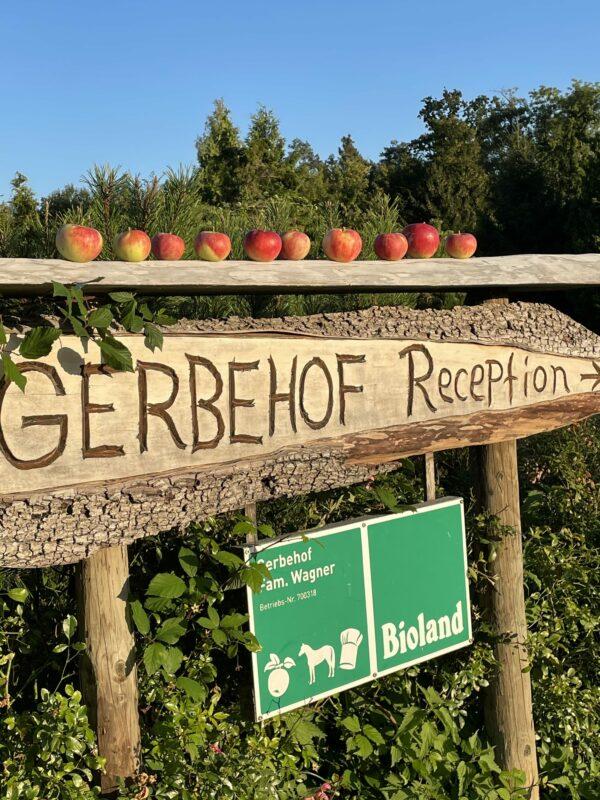
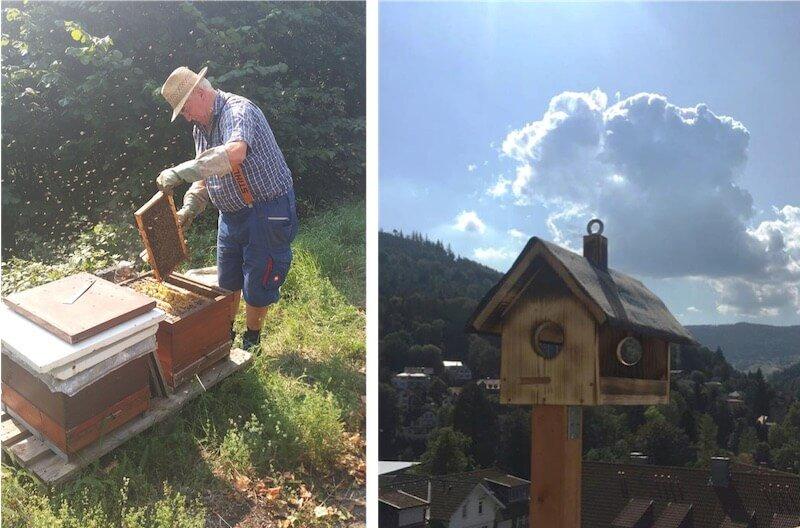
Bioland also certifies hotels and businesses. For example, the in-house apiary at the Apipura hotel rinner is a “Bioland apiary.” The SCHWARZWALD PANORAMA in Bad Herrenalb is “Bioland Gold” certified. To receive this certification, a hotel must offer at least 90% organic food. However, according to the hotel, they actually offer almost 100% organic food. The Naturresort Gerbehof also works closely with Bioland and has its own Bioland-certified cultivation.
Demeter: Very strict requirements and a biodynamic concept
Demeter e.V. is the oldest organic label (founded in 1924) and the strictest, focusing on the highest quality animal feed, for example. This democratically organised association prioritises a consistent circular economy, going far beyond EU regulations on animal welfare and food processing.
Some requirements for the Demeter seal:
- At least 50% of feed must be organic, with at least two thirds of this being Demeter quality.
- Antibiotics may only be used in animal husbandry in case of emergency.
- No painful dehorning of cows is permitted
- The use of chemical fertilisers is prohibited, and only a few pesticides are permitted. Fertiliser amounts are limited.
- Only own varieties (such as cereals, poultry and vegetables) may be used; for cereals, only seed-proof varieties and no hybrid seeds or seeds with cell fusion technology
- Only essential additives are permitted during processing, such as flavour extracts. Natural flavours, such as iodisation or nitrite curing salt, are not permitted (although they are still allowed under the EU organic regulation).
Critics of the Demeter certification scheme complain that all Demeter farms must keep animals, which is part of the concept of biodynamic agriculture. The association relies on esoteric and anthroposophical methods involving “cosmic forces”.
“Organic” is protected – unfortunately, other terms are not
The terms ‘organic’ and ‘eco’ have been legally protected in Europe since 1993. This means that they can only be used to advertise or label food products if certain requirements are met. These requirements are set out in the EC Organic Regulation. Organic products must always be labelled as such. This helps consumers identify more sustainable products.
Please note: terms such as ‘untreated’, ‘field-fresh’ and ‘from controlled cultivation’ are not protected and do not indicate that the food is organic. To be more sustainable in everyday life, look specifically for items marked with certified organic seals when shopping. (An exception to this is local produce from hobby farmers who cannot afford organic certification.)
Here are some tips on how to buy organic products from certified Green Pearls® hotels.
The Green Pearls® partners are ahead of the game when it comes to purchasing organic produce and serving certified organic cuisine, and their success proves them right. However, they don’t just use their knowledge of organic labels; the hotels also buy regionally and seasonally to conserve resources. By doing so, they contribute to the respectful treatment of our planet and may even inspire you for your next weekly shopping trip.
Organic certification for hotels
For some hotels, the kitchen is just the beginning of an organic approach to sustainability. One pioneer in this field is Stephan Bode, the current host of the SCHWARZWALD PANORAMA hotel.
Long before he took over the SCHWARZWALD PANORAMA, he was in charge of a large conference hotel, which he successfully converted to organic practices. At the time, hardly anyone in the industry believed that such a step was economically viable. It was considered too expensive, too complicated and impossible to implement in everyday hotel life. Stephan proved them wrong: the concept worked. And it still works today.
Bio Hotels: A network with clear standards
Bio Hotels is an association of hotels in the DACH region. Its member establishments are committed to serving 100 per cent organic food and sourcing 100 percent green electricity.
One such hotel is the Naturresort Gerbehof on Lake Constance, which is part of our Green Pearls® network. Ursula Wagner, the hotel’s host and vice-chair of Bio Hotels, lives organically both in and beyond the hotel. The Gerbehof runs its own Bioland-certified organic farm and is nestled among orchards and forests.
Guests can indulge in culinary delights, take an alkaline fasting cure, stay in rooms furnished with natural materials and experience wellness close to nature – an organic total experience, not just an individual measure.
Organic without a seal: when conviction remains
The STURM in Mellrichstadt proves that it’s possible to be organic without an official label. The sustainable hotel was certified organic for many years but later decided to continue on the organic path without a seal — maintaining the same high standards. Instead, they focus on communication – the hotel restaurant Otto’s has an open kitchen concept where food is cooked in front of guests, and the origin of the organic food is explained.
STURM’s tip for private shopping: If you value high-quality organic products, shop at the local farmer’s market or from the farmer next door. Direct contact allows you to get valuable tips on how to prepare and store food.
Our understanding of organic at Green Pearls®
At Green Pearls®, we never view “organic” in isolation. For us, the overall concept of a hotel is what matters most — from energy and architecture to social responsibility. Nutrition plays a central role, too. What ends up on our plates directly impacts the environment, health, and value chains.
Regional, organic quality is the gold standard for us — and for all hotels in our network. Every hotel that wants to join Green Pearls® must disclose its culinary concept. Using organic, regional, seasonal ingredients and practicing conscious consumption are fundamental principles, not optional extras. We are proud of this, and our green pearls show that sustainability can be credible and economical in the kitchen.
They are truly pioneering in doing so. A look at the figures: Organic food remains a niche market in Germany. Only around seven percent of all food sold is organic. Denmark leads the way with 12-13 percent.
According to a survey by BMUV and UBA (2023), just 3 percent of consumers said they buy exclusively organic food. (30 percent buy it “occasionally”).
So if you take on the one-month organic challenge we are proposing, you can consider yourself part of the avant-garde!
Are you in?
This is an update from November 11, 2022.
Save this article on Pinterest.

 (6 votes, average: 4.33 out of 5)
 Loading...