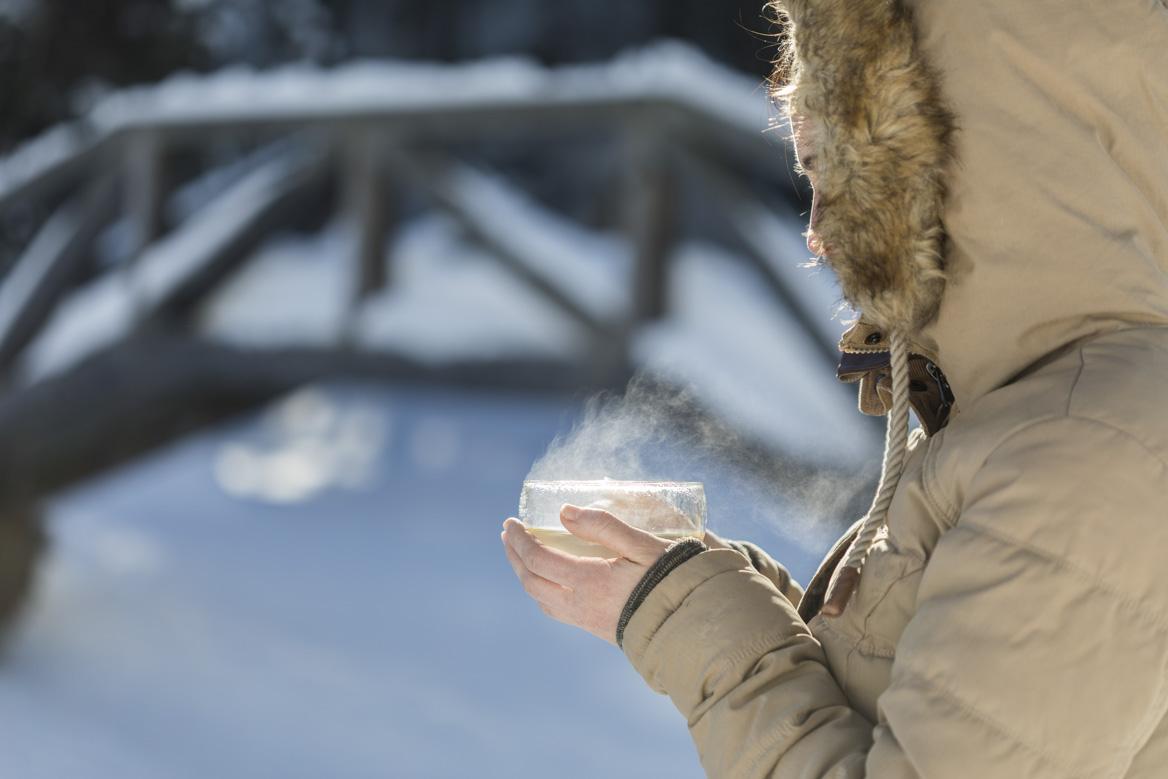
Is there anything more comforting and warming than a cup of tea? As soon as you hold it in your hands after a long winter walk and smell its warm aroma, you instantly feel relaxed. Time to enjoy! And it’s sustainable, too. Black and green teas, which stem from the tea plant, have a much better carbon footprint than coffee. In fact, homemade herbal tea is a climate-friendly hot beverage! Many of our Green PearlsⓇ partners offer special services for tea lovers and have shared their blend recipes with us. But first, let’s answer the most important question:
Is herbal tea even tea?
Strictly speaking, tea is an infusion of boiling water and leaves of the tea plant. In English, however, you can brew something other than “tea”; if you want to be more specific, you can call it herbal tea, fruit tea, flower tea, or spice tea.
Study: British tea culture is reinventing itself
Great Britain has long been considered a bastion of classic black tea. However, recent consumer studies show that British tea culture is changing. According to a 2025 Mintel analysis, younger generations in particular are open to new types of tea, from herbal and fruit teas (“infusions”) to matcha, which has become a daily staple for those under 35. Tea is increasingly seen as part of self-care routines, conscious nutrition, and emotional well-being rather than as a traditional hot beverage.
Arabic Chai must contain tea
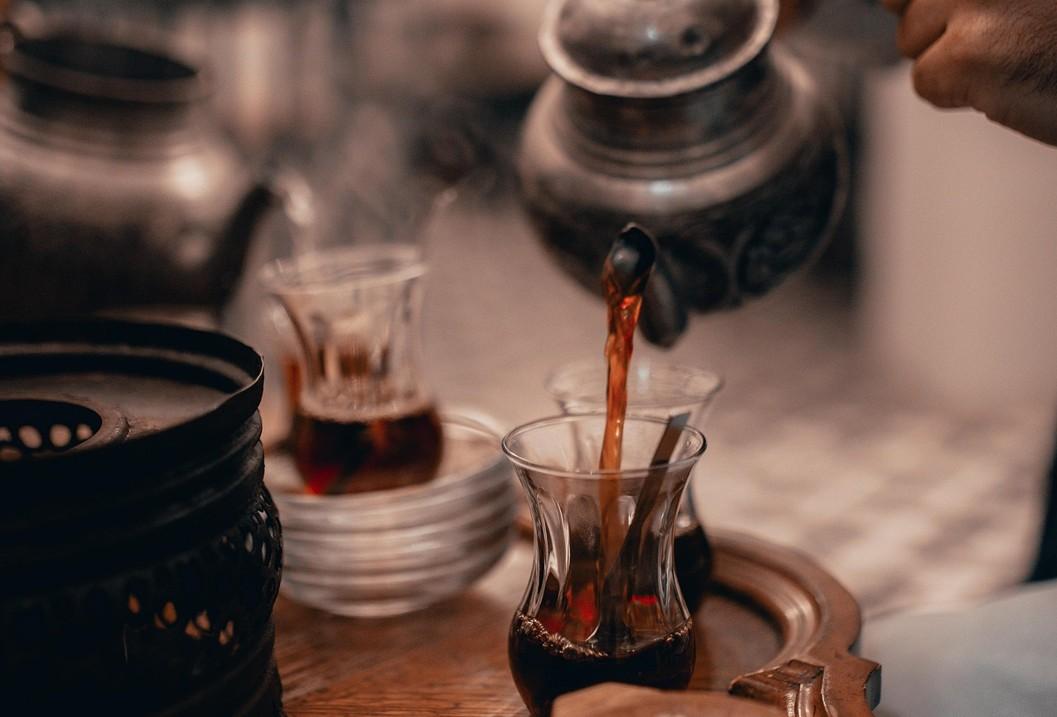
People in Arabic countries are even stricter about their “chai.” In Arabic, only black or green tea can be called “tea.” Moroccan mint tea is green tea with mint and lots of sugar. Tea brewed only with dried peppermint leaves, which is called “peppermint tea” or “spearmint tea” in English, is called “mint” in Arabic. Quite logical — it’s a peppermint tea without tea. I hope you can still follow!
Tea is more complex than you think! As someone from a tea-drinking family, I can tell you a thing or two. Speaking of Arabic tea, chai in Morocco and Libya should always have a nice layer of foam, but the surface of tea in Palestine must be as smooth as glass. If bubbles form when it’s poured, they must be skimmed off with a spoon before serving to guests..
Back to herbal tea: origins in healing medicine
First, let’s get back to herbal tea. It originated in medicine. Hundreds of years ago, Hildegard of Bingen (1098–1179) brewed teas from herbs in her garden to treat ailments. The German abbess, for example, recommended fennel for hoarseness and chest pain and to “strengthen the heart and mind.” This is why many fennel tea blends bear her name today.
Healing Tea Blends from Gut Sonnenhausen
Naturopath Kirsten Walter has her practice on the grounds of Gut Sonnenhausen, south of Munich, where vacation-guests are also welcome to visit. The sustainable hotel, which was created from a former stud farm, also includes a permaculture farm and medicinal herb garden. Kirsten regularly collects fresh herbs from the garden, dries them, and makes her own tea blends. Her “Sonnenhausen Blend” is available as a welcome tea in the farmhouse lounge.
Younique herbal tea blend from the Hotel Klosterbräu
The Hotel Klosterbräu in Seefeld also has its own unique blend. Here is the recipe:
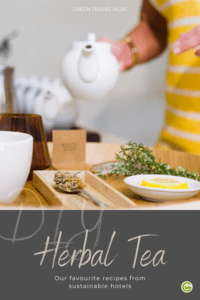
DIY Herbal tea blend "Younique"
Ingredients
- Lemon mint
- Peppermint
- Blackberry leaves
- Lemon balm
- Stinging nettle
- Mallow
- Mullein
- Marigold
Instructions
Herbal Tea Blend
- Dry the herbs mentioned above (e.g. spread out on a kitchen towel, as a hanging bundle or at low temperatures in the oven).
- Then remove the stems and place the dried leaves in a large bowl.
- Crush the leaves with a pestle or by hand
- Pour the herbal mixture into a tea caddy
Preparation of the herbal tea
- Pour one teaspoon of the herbal tea mixture per cup into a large glass jug and pour boiling water over it.
- Leave to infuse for 6 to 10 minutes
- Pour through a sieve into the cups.
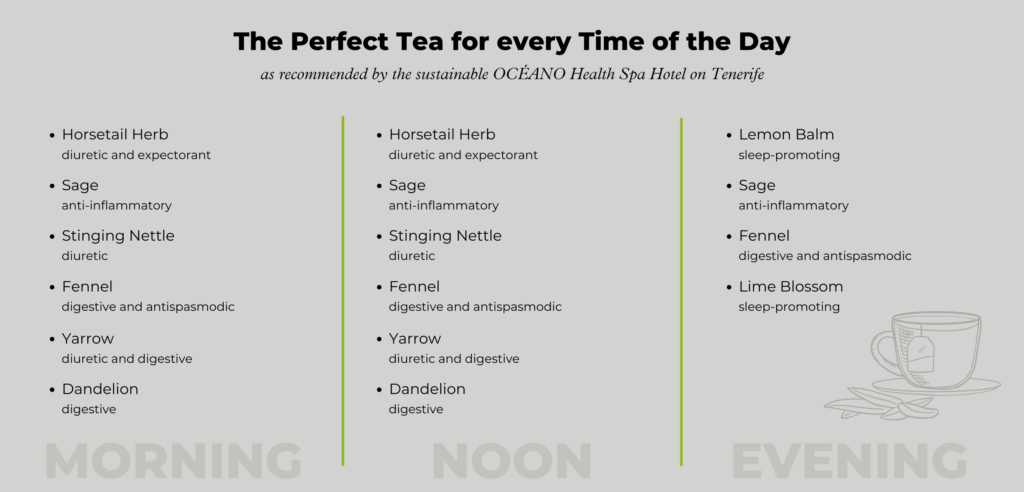
Fasting teas in the OCÉANO Health Spa Hotel
Many health-conscious people come to the OCÉANO Health Spa Hotel in Tenerife for a yoga retreat or a fasting cure to take a break from everyday life. “For fasting guests, there is an exclusive selection of natural herbal teas tailored for fasting, with appropriate recommendations,” the team reports, revealing the composition of these teas.
Tea, culture and travel

“Tea is drunk to forget the noise of the world,” according to an old Chinese proverb. But tea drinking is not only associated with leisure and contemplation in China. Maybe you do, too. If so, you may have felt the need to turn drinking tea into a little ceremony. You may even have your own tea-making rituals. This is true in all countries and cultures around the world. When you travel, you can learn a lot about a country’s culture and people by drinking tea.
Experience culture up close – through tea
A travel expert specializing in Asia and the Orient recommended that vacationers have tea at a bazaar during an appearance on the radio station WDR5. “But wouldn’t I have to buy something from the shop?” the radio host asked. “Oh, nonsense!” the expert replied. “You don’t have to buy a carpet just to get a few cents’ worth of tea!” In fact, having a glass of tea is a great way to soak up the atmosphere.
Only if you are in a very poor area where people now have to collect extra-rare firewood just to make tea should you decline. According to the travel expert, it’s best to say something like, “Oh, I’ve already had so much tea today. I’m afraid my stomach can’t take any more!”
Tea drinking in Japan
The Japanese are said to have the most complicated tea culture. To learn the (hour-long) tea ceremony, you need to be trained in a tea school. In addition to stirring the matcha tea with a bamboo whisk, you have to observe various gestures and postures. But don’t worry, I’ve heard that the rules are different for tourists – if you’re ever invited. All you have to do is learn the absolute basics, such as using two hands to take the bowl from the other person.
Kettle in the hotel room
“Do you have an electric kettle in your hotel room?” That’s one of the most important questions my mother asks when she travels. If not, she sometimes packs a travel kettle in her luggage. Unfortunately, the kettle is made of plastic, and I strongly advised her not to use it.
Studies have shown that every time you boil water in a plastic kettle, millions of microplastic particles are released and end up in your teacup! If you are trying to avoid microplastics, glass and stainless steel are the only suitable materials for a kettle.
At the Hotel Bella Vista Zermatt beneath the Matterhorn, for example, every room has a stainless steel electric kettle. If you wish, you can brew herbs from the garden in addition to the (packaged) organic teas. Peppermint, lemon balm, verbena and chamomile grow there.
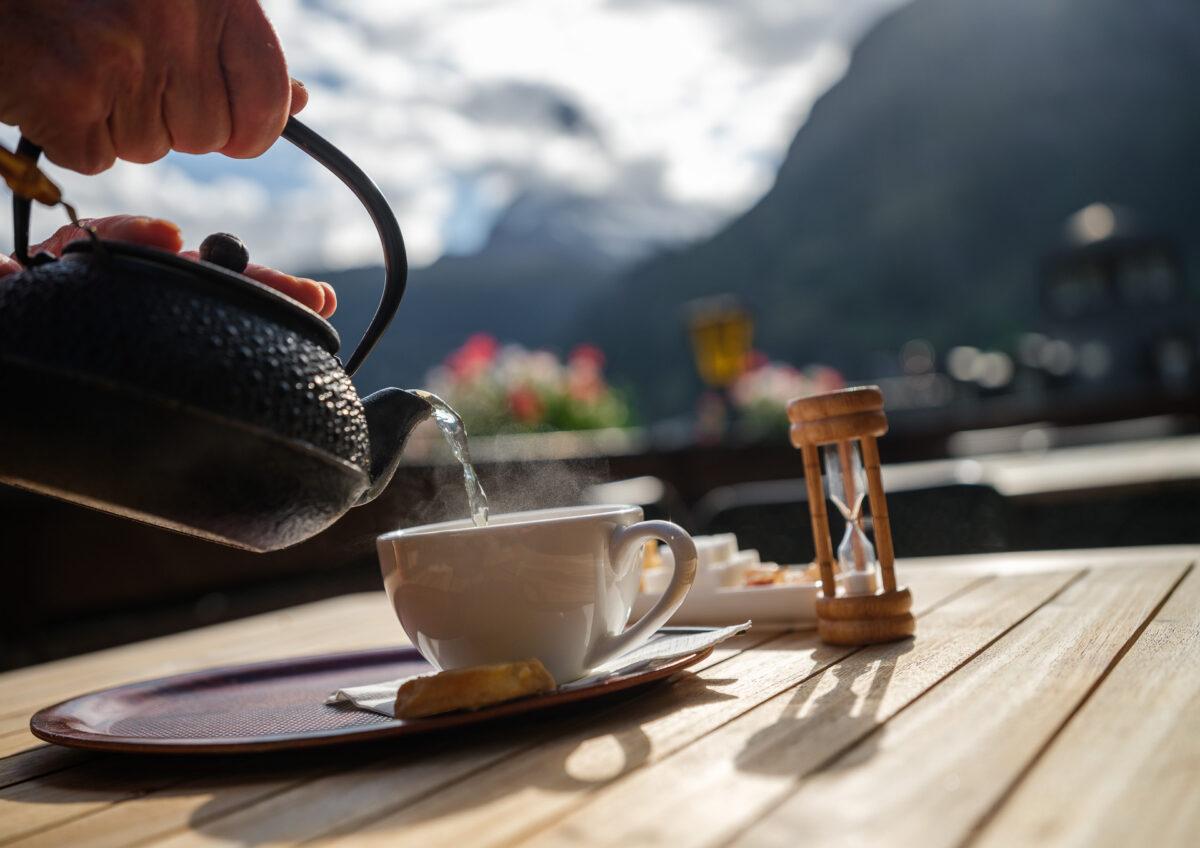
Tea and sustainability: Herbal tea can have a lower environmental impact than coffee, depending on cultivation and transport methods
Both tea (from the tea plant) and coffee are imported goods in Europe and the United States; most of the growing areas are in Asia. With brands like GEPA, you can rest assured that fair working conditions are maintained on the plantations.
In a sustainability comparison between tea and coffee, tea scores significantly higher. The reasons are:
- Tea plant requires less space
- Tea is more economical in preparation
- The environmental footprint (energy consumption) of tea production is lower than that of coffee. The latter also has the more complex roasting process.
Other factors include transportation, packaging waste, and the method of preparation. Add milk to the mix and the environmental impact of your favorite hot beverage is sure to worsen. Whether its tea or coffee.
But when you make herbal tea from fresh or dried herbs on your windowsill, there is no packaging, no storage, and no transportation. And herbal tea is rarely drunk with a swig of milk.
Tea with provenance: Tea grown on site at the Inkaterra Machu Picchu Pueblo Hotel

My colleague, Mara, recently had a very special tea experience at the Inkaterra Machu Picchu Pueblo Hotel. Surrounded by the Peruvian Andean cloud forest, just a few kilometers from Machu Picchu, she met employees who spoke with palpable pride about their passion project: green and black tea made from Camellia sinensis plants over 100 years old. These plants grow at an altitude of 2,050 meters in the shade of native trees, and the tea is picked and processed by hand.
In 2025, Inkaterra tea once again received international recognition at the Teas of the World Awards (AVPA, France). Their green tea was awarded a gourmet medal, and their black tea was awarded a bronze medal, bringing their total medal count to five. A tea with provenance, attitude, and history.
(Tip: Spanish speakers can also listen to a radio interview with founder José Koechlin.)
A look at Green PearlsⓇ accommodations: These are the favorite teas of sustainably managed hotels (and their guests’)
In the sustainably focused hotels and holiday accommodations of the Green PearlsⓇ partners, special care is taken to ensure that the tea is of organic quality. The absence of pesticides in organic farming promotes soil health and biodiversity.
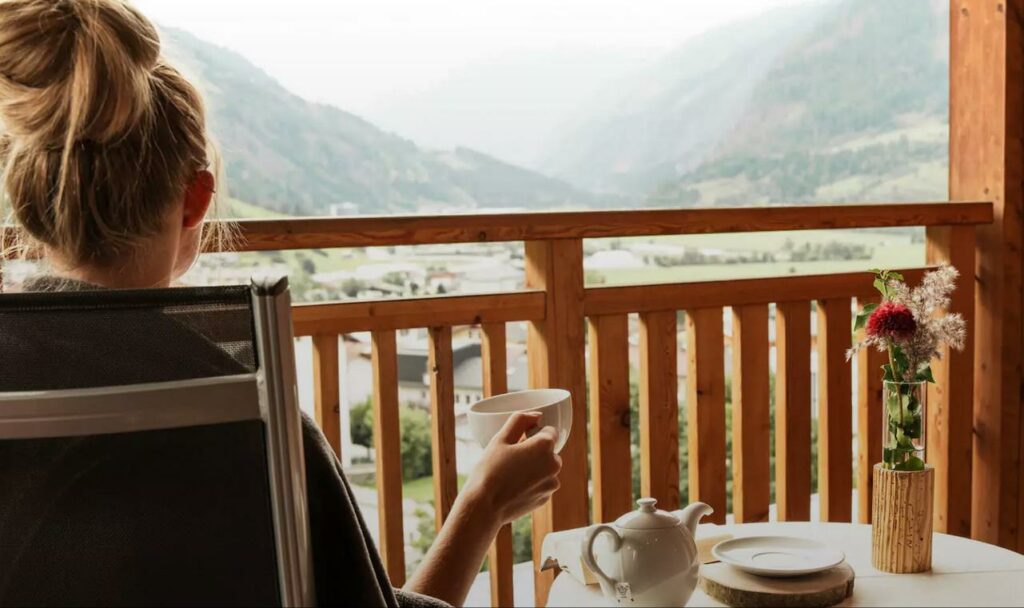
Organic ready-to-blend and home tea brands
Sonnentor
Both the East Tyrolean Naturhotel Outside and the German SCHWARZWALD PANORAMA use Sonnentor organic tea. In our blog post about organic spices, we have already reported in more detail on the Austrian tea and spice manufacturer. At SCHWARZWALD PANORAMA you will find Sonnentor organic tea in the rooms and at the breakfast buffet. For example, the “Kaminknistern” blend – a fruit tea blend with rose hip, apple and cinnamon – is currently popular.
Link: Sonnentor
Monthea
The South Tyrolean Forest hotel My Arbor on the Plose near Brixen is an enthusiastic customer of the South Tyrolean company Monthea. They produce organic teas with herbs and fruits from South Tyrolean farmers. You can find various wild berry teas among other options.
Link: Monthea
Bioteaque
The Hotel Das Rübezahl in Füssen, Algaü, uses teas from the tea company Bioteaque. Here you can find “delicious organic teas” with funny names like “Zapfige Zilli” or “Frostiga Fritzi”. In the suites of Das Rübezahl, you can choose from a selection of Bioteaque teas – interestingly, they even offer loose tea instead of tea bags.
Link: Bioteaque
DIY tea blends straight from your own garden
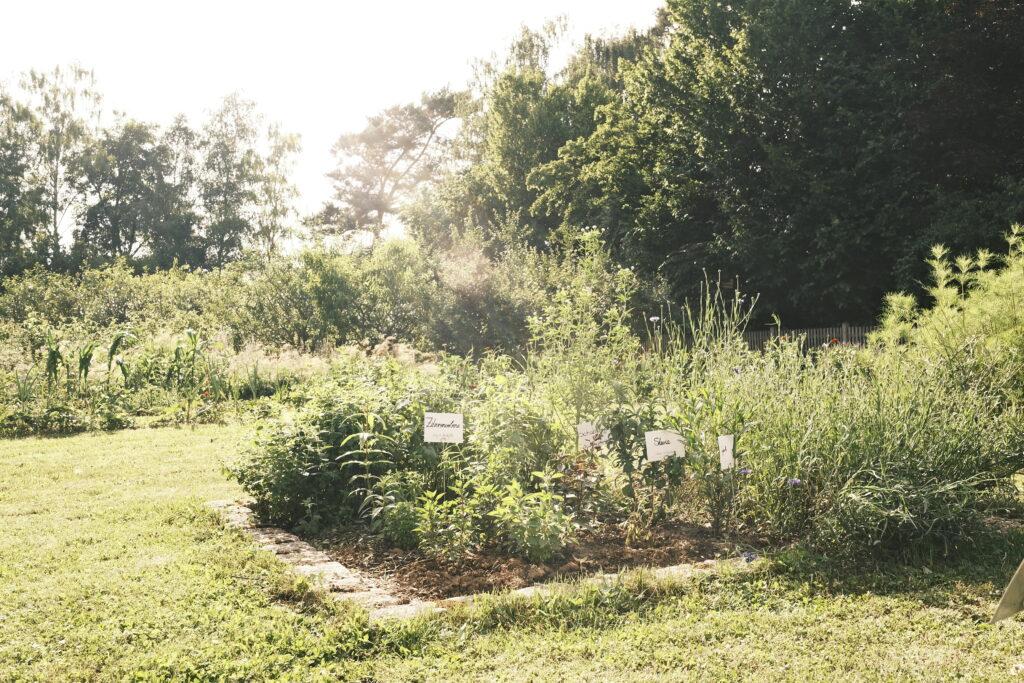
If you got a real tea craving after reading this. (I’m brewing some right now), here are a few DIY tea blends that you can easily make at home. And by the way, a homemade tea blend like this also makes a great gift!
“Garden herb mix” from the STURM
As a guest at STURM in the Bavarian Rhön, you have access to a tea bar all day long, where you can serve yourself for free. In addition to the Sonnentor tea, there is also a “garden herb mixture”. Its “recipe” is fairly simple:
“What the garden has to offer is dried. The combination of the colorful flowers, the flavor of the ripe herbs and the green of the nettle leaves make this tea so delicious” – STURM
Alternatively, you can pick the ingredients for your tea in the snack and herb garden. This is allowed and even encouraged at STURM.
Mountain herb tea from Weihrerhof
The Hotel Weihrerhof on the Ritten in South Tyrol is located at an altitude of over 1,200 meters. A wide variety of plants grow here which the hotel uses to make pure teas. These are:
- Peppermint
- Lemon Balm
- Yarrow
- Vermont
- Elderberry
- Calendula
In addition to the single origin teas, a mountain herbal blend is available next to the kettle in the rooms.
Our tips for a more sustainable tea drinking
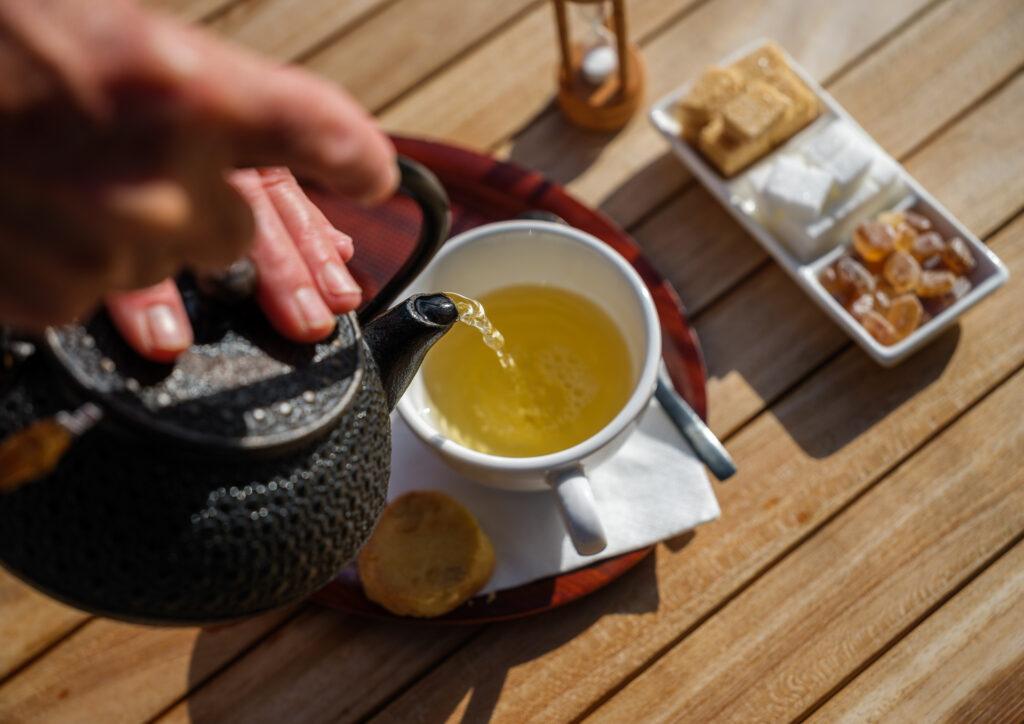
To be fair, your choice of drink contributes far less to your carbon footprint than your transportation or heating habits. But as so often in our blog, we believe that even small steps can make a difference. Here are a few tips to help you get started:
- Use a glass or stainless-steel teapot
- Brew tea in the pot and keep it warm on the stove or in a thermos (instead of boiling water for each cup)
- Tap water is the best water for tea in the DACH region. Consumer organizations now advise against water filters, as they can create germs that can make the water quality actually worse rather than improving it.
- When traveling abroad, check the quality of the tap water before you travel.
- Loose tea uses less packaging. The dosage is simple – one teaspoon per cup!
- Buy organic quality or use herbs, flowers, and fruits from your own garden.
Do you have any tips? Or your own tea blend that you would like to share with us? Let us know in the comments.
This is an update from December 19, 2023.
Save this article to Pinterest:

 Loading...